CWE-204
AllowedObservable Response Discrepancy
Abstraction: Base · Status: Incomplete
The product provides different responses to incoming requests in a way that reveals internal state information to an unauthorized actor outside of the intended control sphere.
341 vulnerabilities reference this CWE, most recent first.
GHSA-H7JV-6RQ7-JWQH
Vulnerability from github – Published: 2024-03-19 12:30 – Updated: 2024-03-19 12:30User enumeration vulnerability in Devklan's Alma Blog that affects versions 2.1.10 and earlier. This vulnerability could allow a remote user to retrieve all valid users registered in the application just by looking at the request response.
{
  "affected": [],
  "aliases": [
    "CVE-2024-1145"
  ],
  "database_specific": {
    "cwe_ids": [
      "CWE-204"
    ],
    "github_reviewed": false,
    "github_reviewed_at": null,
    "nvd_published_at": "2024-03-19T12:15:08Z",
    "severity": "MODERATE"
  },
  "details": "User enumeration vulnerability in Devklan\u0027s Alma Blog that affects versions 2.1.10 and earlier. This vulnerability could allow a remote user to retrieve all valid users registered in the application just by looking at the request response.",
  "id": "GHSA-h7jv-6rq7-jwqh",
  "modified": "2024-03-19T12:30:41Z",
  "published": "2024-03-19T12:30:41Z",
  "references": [
    {
      "type": "ADVISORY",
      "url": "https://nvd.nist.gov/vuln/detail/CVE-2024-1145"
    },
    {
      "type": "WEB",
      "url": "https://www.incibe.es/en/incibe-cert/notices/aviso/multiple-vulnerabilities-alma-devklan-blog"
    }
  ],
  "schema_version": "1.4.0",
  "severity": [
    {
      "score": "CVSS:3.1/AV:N/AC:L/PR:N/UI:N/S:U/C:L/I:N/A:N",
      "type": "CVSS_V3"
    }
  ]
}
GHSA-HCW2-2R9C-GC6P
Vulnerability from github – Published: 2024-04-01 15:48 – Updated: 2024-04-03 18:59Summary
The Casa OS Login page has disclosed the username enumeration vulnerability in the login page which was patched in CasaOS v0.4.7.
Details
It is observed that the attacker can enumerate the CasaOS username using the application response. If the username is incorrect the application gives the error "User does not exist" with success code "10006", If the password is incorrect the application gives the error "User does not exist or password is invalid" with success code "10013".
PoC
- If the Username is invalid application gives "User does not exist" with success code "10006".
- If the Password is invalid application gives "User does not exist or password is invalid" with success code "10013".
Impact
Using this error attacker can enumerate the username of CasaOS.
The logic behind the issue
The logic behind the issue If the username is incorrect, then throw an error "User does not exist" with success code "10006", else throw an error "User does not exist or password is invalid" with success code "10013".
This condition can be vice versa like:
If the password is incorrect, then throw an error "User does not exist or password is invalid" with success code "10013", else throw an error "User does not exist" with success code "10006".
Mitigation
Since this is the condition we have to implement a single error which can be "Username/Password is Incorrect!!!" with single success code.
{
"affected": [
{
"package": {
"ecosystem": "Go",
"name": "github.com/IceWhaleTech/CasaOS-UserService"
},
"ranges": [
{
"events": [
{
"introduced": "0.4.7"
},
{
"fixed": "0.4.8"
}
],
"type": "ECOSYSTEM"
}
],
"versions": [
"0.4.7"
]
}
],
"aliases": [
"CVE-2024-28232"
],
"database_specific": {
"cwe_ids": [
"CWE-204"
],
"github_reviewed": true,
"github_reviewed_at": "2024-04-01T15:48:15Z",
"nvd_published_at": "2024-04-01T17:15:45Z",
"severity": "MODERATE"
},
"details": "### Summary\n\nThe Casa OS Login page has disclosed the username enumeration vulnerability in the login page which was patched in `CasaOS v0.4.7`.\n\n### Details\n\nIt is observed that the attacker can enumerate the CasaOS username using the application response. If the username is incorrect the application gives the error \"**User does not exist**\" with success code \"**10006**\", If the password is incorrect the application gives the error \"**User does not exist or password is invalid**\" with success code \"**10013**\".\n\n### PoC\n\n1. If the Username is invalid application gives \"User does not exist\" with success code \"**10006**\".\n\n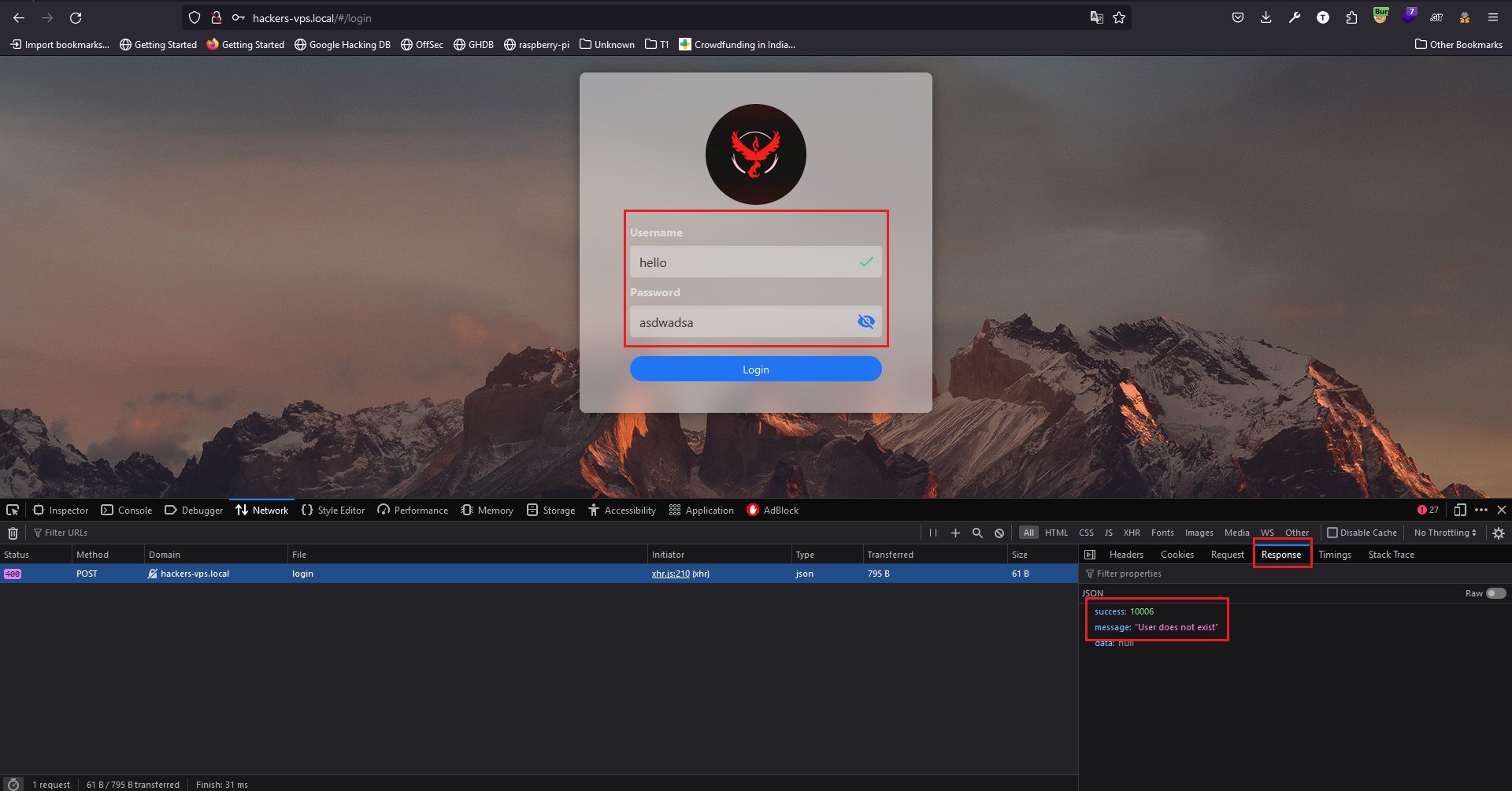\n\n2. If the Password is invalid application gives \"**User does not exist or password is invalid**\" with success code \"**10013**\".\n\n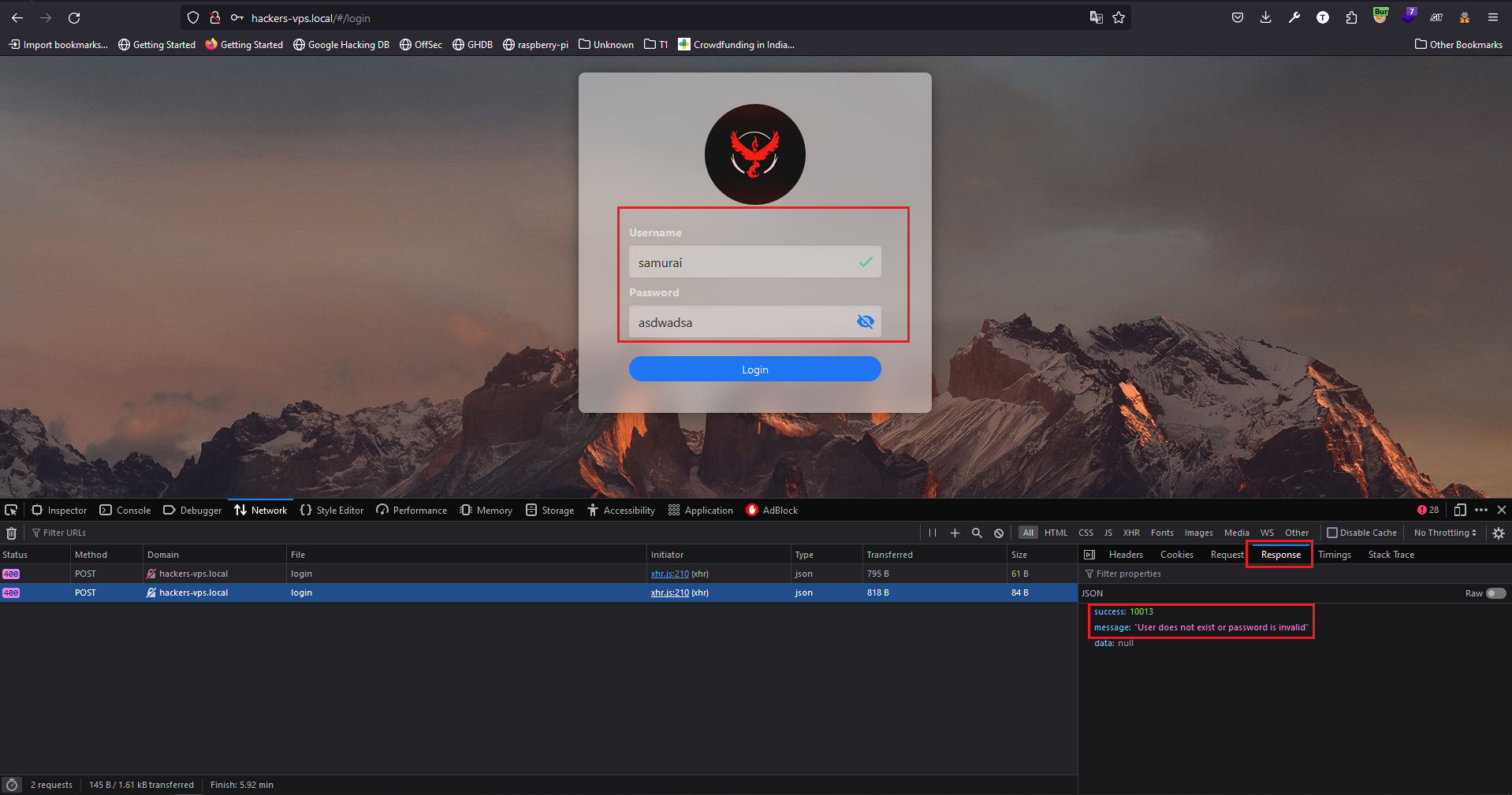\n\n\n### Impact\n\nUsing this error attacker can enumerate the username of CasaOS.\n\n### The logic behind the issue\n\nThe logic behind the issue\nIf the username is incorrect, then throw an error \"**User does not exist**\" with success code \"**10006**\", else throw an error \"**User does not exist or password is invalid**\" with success code \"**10013**\".\n\nThis condition can be vice versa like:\n\nIf the password is incorrect, then throw an error \"**User does not exist or password is invalid**\" with success code \"**10013**\", else throw an error \"**User does not exist**\" with success code \"**10006**\".\n\n### Mitigation\nSince this is the condition we have to implement a single error which can be \"**Username/Password is Incorrect!!!**\" with single success code.",
"id": "GHSA-hcw2-2r9c-gc6p",
"modified": "2024-04-03T18:59:29Z",
"published": "2024-04-01T15:48:15Z",
"references": [
{
"type": "WEB",
"url": "https://github.com/IceWhaleTech/CasaOS-UserService/security/advisories/GHSA-hcw2-2r9c-gc6p"
},
{
"type": "ADVISORY",
"url": "https://nvd.nist.gov/vuln/detail/CVE-2024-28232"
},
{
"type": "WEB",
"url": "https://github.com/IceWhaleTech/CasaOS-UserService/commit/dd927fe1c805e53790f73cfe10c7a4ded3bc5bdb"
},
{
"type": "PACKAGE",
"url": "https://github.com/IceWhaleTech/CasaOS-UserService"
}
],
"schema_version": "1.4.0",
"severity": [
{
"score": "CVSS:3.1/AV:L/AC:L/PR:N/UI:N/S:U/C:H/I:N/A:N",
"type": "CVSS_V3"
}
],
"summary": "CasaOS Username Enumeration - Bypass of CVE-2024-24766"
}
GHSA-HH7J-6X3Q-F52H
Vulnerability from github – Published: 2025-04-08 14:50 – Updated: 2025-09-10 21:09Impact
Through the store-api it is possible as a attacker to check if a specific e-mail address has an account in the shop.
Using the store-api endpoint /store-api/account/recovery-password you get the response
{"errors":[{"status":"404","code":"CHECKOUT__CUSTOMER_NOT_FOUND","title":"Not Found","detail":"No matching customer for the email \u0022asdasfd@asdads.de\u0022 was found.","meta":{"parameters":{"email":"asdasfd@asdads.de"}}}]}
which indicates clearly that there is no account for this customer. In contrast you get a success response if the account was found.
Patches
Update to Shopware 6.6.10.3
Workarounds
For older versions of 6.5 or 6.4, corresponding security measures are also available via a plugin. For the full range of functions, we recommend updating to the latest Shopware version.
{
  "affected": [
    {
      "database_specific": {
        "last_known_affected_version_range": "\u003c= 6.6.10.2"
      },
      "package": {
        "ecosystem": "Packagist",
        "name": "shopware/core"
      },
      "ranges": [
        {
          "events": [
            {
              "introduced": "6.6.0.0"
            },
            {
              "fixed": "6.6.10.3"
            }
          ],
          "type": "ECOSYSTEM"
        }
      ]
    },
    {
      "database_specific": {
        "last_known_affected_version_range": "\u003c= 6.6.10.2"
      },
      "package": {
        "ecosystem": "Packagist",
        "name": "shopware/platform"
      },
      "ranges": [
        {
          "events": [
            {
              "introduced": "6.6.0.0"
            },
            {
              "fixed": "6.6.10.3"
            }
          ],
          "type": "ECOSYSTEM"
        }
      ]
    },
    {
      "package": {
        "ecosystem": "Packagist",
        "name": "shopware/core"
      },
      "ranges": [
        {
          "events": [
            {
              "introduced": "6.7.0.0-rc1"
            },
            {
              "fixed": "6.7.0.0-rc2"
            }
          ],
          "type": "ECOSYSTEM"
        }
      ],
      "versions": [
        "6.7.0.0-rc1"
      ]
    },
    {
      "package": {
        "ecosystem": "Packagist",
        "name": "shopware/platform"
      },
      "ranges": [
        {
          "events": [
            {
              "introduced": "6.7.0.0-rc1"
            },
            {
              "fixed": "6.7.0.0-rc2"
            }
          ],
          "type": "ECOSYSTEM"
        }
      ],
      "versions": [
        "6.7.0.0-rc1"
      ]
    },
    {
      "database_specific": {
        "last_known_affected_version_range": "\u003c= 6.5.8.17"
      },
      "package": {
        "ecosystem": "Packagist",
        "name": "shopware/core"
      },
      "ranges": [
        {
          "events": [
            {
              "introduced": "0"
            },
            {
              "fixed": "6.5.8.18"
            }
          ],
          "type": "ECOSYSTEM"
        }
      ]
    },
    {
      "database_specific": {
        "last_known_affected_version_range": "\u003c= 6.5.8.17"
      },
      "package": {
        "ecosystem": "Packagist",
        "name": "shopware/platform"
      },
      "ranges": [
        {
          "events": [
            {
              "introduced": "0"
            },
            {
              "fixed": "6.5.8.18"
            }
          ],
          "type": "ECOSYSTEM"
        }
      ]
    }
  ],
  "aliases": [
    "CVE-2025-30150"
  ],
  "database_specific": {
    "cwe_ids": [
      "CWE-204"
    ],
    "github_reviewed": true,
    "github_reviewed_at": "2025-04-08T14:50:13Z",
    "nvd_published_at": "2025-04-08T14:15:34Z",
    "severity": "MODERATE"
  },
  "details": "### Impact\nThrough the store-api it is possible as a attacker to check if a specific e-mail address has an account in the shop.\n\nUsing the store-api endpoint `/store-api/account/recovery-password` you get the response\n```\n{\"errors\":[{\"status\":\"404\",\"code\":\"CHECKOUT__CUSTOMER_NOT_FOUND\",\"title\":\"Not Found\",\"detail\":\"No matching customer for the email \\u0022asdasfd@asdads.de\\u0022 was found.\",\"meta\":{\"parameters\":{\"email\":\"asdasfd@asdads.de\"}}}]}\n```\n\nwhich indicates clearly that there is no account for this customer. In contrast you get a success response if the account was found.\n\n### Patches\nUpdate to Shopware 6.6.10.3\n\n### Workarounds\nFor older versions of 6.5 or 6.4, corresponding security measures are also available via a plugin. For the full range of functions, we recommend updating to the latest Shopware version.",
  "id": "GHSA-hh7j-6x3q-f52h",
  "modified": "2025-09-10T21:09:30Z",
  "published": "2025-04-08T14:50:13Z",
  "references": [
    {
      "type": "WEB",
      "url": "https://github.com/shopware/shopware/security/advisories/GHSA-hh7j-6x3q-f52h"
    },
    {
      "type": "ADVISORY",
      "url": "https://nvd.nist.gov/vuln/detail/CVE-2025-30150"
    },
    {
      "type": "PACKAGE",
      "url": "https://github.com/shopware/shopware"
    },
    {
      "type": "WEB",
      "url": "https://github.com/shopware/shopware/releases/tag/v6.5.8.17"
    },
    {
      "type": "WEB",
      "url": "https://github.com/shopware/shopware/releases/tag/v6.6.10.3"
    },
    {
      "type": "WEB",
      "url": "https://github.com/shopware/shopware/releases/tag/v6.7.0.0-rc2"
    }
  ],
  "schema_version": "1.4.0",
  "severity": [
    {
      "score": "CVSS:3.1/AV:N/AC:L/PR:N/UI:N/S:U/C:L/I:N/A:N",
      "type": "CVSS_V3"
    },
    {
      "score": "CVSS:4.0/AV:N/AC:L/AT:N/PR:N/UI:N/VC:L/VI:N/VA:N/SC:N/SI:N/SA:N/E:P/U:Green",
      "type": "CVSS_V4"
    }
  ],
  "summary": "Shopware 6 allows attackers to check for registered accounts through the store-api"
}
GHSA-HHW5-J8RQ-43WG
Vulnerability from github – Published: 2025-01-29 18:31 – Updated: 2025-01-29 18:31IBM Aspera Faspex 5.0.0 through 5.0.10 could disclose sensitive username information due to an observable response discrepancy.
{
  "affected": [],
  "aliases": [
    "CVE-2023-37413"
  ],
  "database_specific": {
    "cwe_ids": [
      "CWE-203",
      "CWE-204"
    ],
    "github_reviewed": false,
    "github_reviewed_at": null,
    "nvd_published_at": "2025-01-29T17:15:26Z",
    "severity": "MODERATE"
  },
  "details": "IBM Aspera Faspex 5.0.0 through 5.0.10 could disclose sensitive username information due to an observable response discrepancy.",
  "id": "GHSA-hhw5-j8rq-43wg",
  "modified": "2025-01-29T18:31:22Z",
  "published": "2025-01-29T18:31:22Z",
  "references": [
    {
      "type": "ADVISORY",
      "url": "https://nvd.nist.gov/vuln/detail/CVE-2023-37413"
    },
    {
      "type": "WEB",
      "url": "https://www.ibm.com/support/pages/node/7181814"
    }
  ],
  "schema_version": "1.4.0",
  "severity": [
    {
      "score": "CVSS:3.1/AV:N/AC:L/PR:N/UI:N/S:U/C:L/I:N/A:N",
      "type": "CVSS_V3"
    }
  ]
}
GHSA-HHX9-GC5W-H4MC
Vulnerability from github – Published: 2026-03-16 15:30 – Updated: 2026-03-16 21:34Raytha CMS is vulnerable to User Enumeration in password reset functionality. Difference in messages could allow an attacker to determine if the login is valid or not, enabling a brute force attack with valid logins.
This issue was fixed in version 1.5.0.
{
  "affected": [],
  "aliases": [
    "CVE-2025-69243"
  ],
  "database_specific": {
    "cwe_ids": [
      "CWE-204"
    ],
    "github_reviewed": false,
    "github_reviewed_at": null,
    "nvd_published_at": "2026-03-16T14:18:01Z",
    "severity": "MODERATE"
  },
  "details": "Raytha CMS is vulnerable to User Enumeration in password reset functionality. Difference in messages could allow an attacker to determine if the login is valid or not, enabling a brute force attack with valid logins.\n\nThis issue was fixed in version 1.5.0.",
  "id": "GHSA-hhx9-gc5w-h4mc",
  "modified": "2026-03-16T21:34:32Z",
  "published": "2026-03-16T15:30:41Z",
  "references": [
    {
      "type": "ADVISORY",
      "url": "https://nvd.nist.gov/vuln/detail/CVE-2025-69243"
    },
    {
      "type": "WEB",
      "url": "https://cert.pl/en/posts/2026/03/CVE-2025-69236"
    },
    {
      "type": "WEB",
      "url": "https://raytha.com"
    }
  ],
  "schema_version": "1.4.0",
  "severity": [
    {
      "score": "CVSS:3.1/AV:N/AC:L/PR:N/UI:N/S:U/C:L/I:N/A:N",
      "type": "CVSS_V3"
    },
    {
      "score": "CVSS:4.0/AV:N/AC:L/AT:N/PR:N/UI:N/VC:L/VI:N/VA:N/SC:N/SI:N/SA:N/E:X/CR:X/IR:X/AR:X/MAV:X/MAC:X/MAT:X/MPR:X/MUI:X/MVC:X/MVI:X/MVA:X/MSC:X/MSI:X/MSA:X/S:X/AU:X/R:X/V:X/RE:X/U:X",
      "type": "CVSS_V4"
    }
  ]
}
GHSA-HP2M-55FJ-8MW5
Vulnerability from github – Published: 2026-08-13 15:34 – Updated: 2026-08-13 15:34Observable response discrepancy in PostgreSQL SCRAM authentication allows an unauthenticated user to test the existence of a user via observing the SCRAM iteration count. This requires the probed user to have a non-default scram_iterations count, because the authentication challenge for a nonexistent user reports the default scram_iterations. Within major versions 16-18, minor versions before PostgreSQL 18.5, 17.11, and 16.15 are affected. Versions before PostgreSQL 16 are unaffected.
{
  "affected": [],
  "aliases": [
    "CVE-2026-14672"
  ],
  "database_specific": {
    "cwe_ids": [
      "CWE-204"
    ],
    "github_reviewed": false,
    "github_reviewed_at": null,
    "nvd_published_at": "2026-08-13T13:17:44Z",
    "severity": "MODERATE"
  },
  "details": "Observable response discrepancy in PostgreSQL SCRAM authentication allows an unauthenticated user to test the existence of a user via observing the SCRAM iteration count.  This requires the probed user to have a non-default scram_iterations count, because the authentication challenge for a nonexistent user reports the default scram_iterations.  Within major versions 16-18, minor versions before PostgreSQL 18.5, 17.11, and 16.15 are affected.  Versions before PostgreSQL 16 are unaffected.",
  "id": "GHSA-hp2m-55fj-8mw5",
  "modified": "2026-08-13T15:34:35Z",
  "published": "2026-08-13T15:34:35Z",
  "references": [
    {
      "type": "ADVISORY",
      "url": "https://nvd.nist.gov/vuln/detail/CVE-2026-14672"
    },
    {
      "type": "WEB",
      "url": "https://www.postgresql.org/support/security/CVE-2026-14672"
    }
  ],
  "schema_version": "1.4.0",
  "severity": [
    {
      "score": "CVSS:3.1/AV:N/AC:L/PR:N/UI:N/S:U/C:L/I:N/A:N",
      "type": "CVSS_V3"
    }
  ]
}
GHSA-HXJ8-JJXP-P43W
Vulnerability from github – Published: 2025-11-12 18:31 – Updated: 2025-11-12 18:31Omnissa Workspace ONE UEM contains an observable response discrepancy vulnerability. A malicious actor may be able to enumerate sensitive information such as tenant ID and user accounts that could facilitate brute-force, password-spraying or credential-stuffing attacks.
{
  "affected": [],
  "aliases": [
    "CVE-2025-25236"
  ],
  "database_specific": {
    "cwe_ids": [
      "CWE-204"
    ],
    "github_reviewed": false,
    "github_reviewed_at": null,
    "nvd_published_at": "2025-11-12T18:15:35Z",
    "severity": "MODERATE"
  },
  "details": "Omnissa Workspace ONE UEM contains an observable response discrepancy vulnerability. A malicious actor may be able to enumerate sensitive information such as tenant ID and user accounts that could facilitate brute-force, password-spraying or credential-stuffing attacks.",
  "id": "GHSA-hxj8-jjxp-p43w",
  "modified": "2025-11-12T18:31:25Z",
  "published": "2025-11-12T18:31:25Z",
  "references": [
    {
      "type": "ADVISORY",
      "url": "https://nvd.nist.gov/vuln/detail/CVE-2025-25236"
    },
    {
      "type": "WEB",
      "url": "https://static.omnissa.com/sites/default/files/OMSA-2025-0005.pdf"
    },
    {
      "type": "WEB",
      "url": "https://www.omnissa.com/omnissa-security-response"
    }
  ],
  "schema_version": "1.4.0",
  "severity": [
    {
      "score": "CVSS:3.1/AV:N/AC:L/PR:N/UI:N/S:U/C:L/I:N/A:N",
      "type": "CVSS_V3"
    }
  ]
}
GHSA-J2HG-VP99-659F
Vulnerability from github – Published: 2026-02-13 00:32 – Updated: 2026-02-13 00:32DokuWiki 2018-04-22b contains a username enumeration vulnerability in its password reset functionality that allows attackers to identify valid user accounts. Attackers can submit different usernames to the password reset endpoint and distinguish between existing and non-existing accounts by analyzing the server's error response messages.
{
  "affected": [],
  "aliases": [
    "CVE-2019-25338"
  ],
  "database_specific": {
    "cwe_ids": [
      "CWE-204"
    ],
    "github_reviewed": false,
    "github_reviewed_at": null,
    "nvd_published_at": "2026-02-12T23:16:07Z",
    "severity": "MODERATE"
  },
  "details": "DokuWiki 2018-04-22b contains a username enumeration vulnerability in its password reset functionality that allows attackers to identify valid user accounts. Attackers can submit different usernames to the password reset endpoint and distinguish between existing and non-existing accounts by analyzing the server\u0027s error response messages.",
  "id": "GHSA-j2hg-vp99-659f",
  "modified": "2026-02-13T00:32:52Z",
  "published": "2026-02-13T00:32:52Z",
  "references": [
    {
      "type": "ADVISORY",
      "url": "https://nvd.nist.gov/vuln/detail/CVE-2019-25338"
    },
    {
      "type": "WEB",
      "url": "https://download.dokuwiki.org"
    },
    {
      "type": "WEB",
      "url": "https://www.dokuwiki.org/dokuwiki"
    },
    {
      "type": "WEB",
      "url": "https://www.exploit-db.com/exploits/47731"
    },
    {
      "type": "WEB",
      "url": "https://www.vulncheck.com/advisories/dokuwiki-b-username-enumeration"
    }
  ],
  "schema_version": "1.4.0",
  "severity": [
    {
      "score": "CVSS:3.1/AV:N/AC:L/PR:N/UI:N/S:U/C:H/I:N/A:N",
      "type": "CVSS_V3"
    },
    {
      "score": "CVSS:4.0/AV:N/AC:L/AT:N/PR:N/UI:N/VC:L/VI:N/VA:N/SC:N/SI:N/SA:N/E:X/CR:X/IR:X/AR:X/MAV:X/MAC:X/MAT:X/MPR:X/MUI:X/MVC:X/MVI:X/MVA:X/MSC:X/MSI:X/MSA:X/S:X/AU:X/R:X/V:X/RE:X/U:X",
      "type": "CVSS_V4"
    }
  ]
}
GHSA-J7F5-GFQM-PCX3
Vulnerability from github – Published: 2026-06-26 20:54 – Updated: 2026-06-26 20:54Summary
An unprotected user enumeration vulnerability exists in the account email update endpoint, allowing authenticated users to verify whether email addresses are registered on the panel through automated requests without rate limiting or CAPTCHA protection.
Details
The account settings page allows authenticated users to update their email address through a POST request. Unlike the login and password reset forms which implement reCAPTCHA and rate limiting protections, this endpoint lacks these safeguards entirely. An attacker can capture the email update request (for example, using Burp Suite's proxy) and modify the email field to test arbitrary addresses. The panel's response will confirm whether each tested email is already registered in the system. Because there are no rate limits implemented, attackers can send hundreds or thousands of requests to enumerate the user base.
This is concerning because:
- The login and password reset pages correctly implement protections against enumeration
- The account page has no reCAPTCHA option available
- No rate limiting exists in the panel for this endpoint
- Authentication is required, but any valid account (including free tier/trial accounts) can exploit this
PoC
- Log into the Pterodactyl panel with any valid account
- Navigate to Account Settings
- Open Burp Suite (or similar proxy tool) and configure your browser to proxy through it
- Attempt to change your email address and capture the POST request
- Send the captured request to Repeater
- Modify the email field to test different addresses (e.g., admin@example.com, test@example.com)
- Send multiple requests in rapid succession
- Observe the response messages which confirm whether each email exists or not
- Repeat indefinitely without encountering rate limits or CAPTCHA challenges
Impact
This is a user enumeration vulnerability (CWE-204: Observable Response Discrepancy).
Who is impacted:
- All Pterodactyl panel installations are affected
- Any registered user's email address can be discovered
- Particularly impacts administrators and high-value accounts
Potential consequences:
- Attackers can build a complete database of registered users
- Enumerated emails can be used for targeted phishing campaigns
- Combined with other attacks (credential stuffing, social engineering)
- Privacy violation for all users on the platform
- Competitive intelligence gathering (identifying which companies/individuals use specific panels)
{
  "affected": [
    {
      "package": {
        "ecosystem": "Packagist",
        "name": "pterodactyl/panel"
      },
      "ranges": [
        {
          "events": [
            {
              "introduced": "0"
            },
            {
              "fixed": "1.12.3"
            }
          ],
          "type": "ECOSYSTEM"
        }
      ]
    }
  ],
  "aliases": [],
  "database_specific": {
    "cwe_ids": [
      "CWE-204"
    ],
    "github_reviewed": true,
    "github_reviewed_at": "2026-06-26T20:54:38Z",
    "nvd_published_at": null,
    "severity": "MODERATE"
  },
  "details": "### Summary\nAn unprotected user enumeration vulnerability exists in the account email update endpoint, allowing authenticated users to verify whether email addresses are registered on the panel through automated requests without rate limiting or CAPTCHA protection.\n\n### Details\nThe account settings page allows authenticated users to update their email address through a POST request. Unlike the login and password reset forms which implement reCAPTCHA and rate limiting protections, this endpoint lacks these safeguards entirely.\nAn attacker can capture the email update request (for example, using Burp Suite\u0027s proxy) and modify the email field to test arbitrary addresses. The panel\u0027s response will confirm whether each tested email is already registered in the system. Because there are no rate limits implemented, attackers can send hundreds or thousands of requests to enumerate the user base.\n\nThis is concerning because:\n\n- The login and password reset pages correctly implement protections against enumeration\n- The account page has no reCAPTCHA option available\n- No rate limiting exists in the panel for this endpoint\n- Authentication is required, but any valid account (including free tier/trial accounts) can exploit this\n\n### PoC\n- Log into the Pterodactyl panel with any valid account\n- Navigate to Account Settings\n- Open Burp Suite (or similar proxy tool) and configure your browser to proxy through it\n- Attempt to change your email address and capture the POST request\n- Send the captured request to Repeater\n- Modify the email field to test different addresses (e.g., admin@example.com, test@example.com)\n- Send multiple requests in rapid succession\n- Observe the response messages which confirm whether each email exists or not \n- Repeat indefinitely without encountering rate limits or CAPTCHA challenges\n\n\n### Impact\nThis is a user enumeration vulnerability (CWE-204: Observable Response Discrepancy).\n\nWho is impacted:\n\n- All Pterodactyl panel installations are affected\n- Any registered user\u0027s email address can be discovered\n- Particularly impacts administrators and high-value accounts\n\nPotential consequences:\n\n- Attackers can build a complete database of registered users\n- Enumerated emails can be used for targeted phishing campaigns\n- Combined with other attacks (credential stuffing, social engineering)\n- Privacy violation for all users on the platform\n- Competitive intelligence gathering (identifying which companies/individuals use specific panels)",
  "id": "GHSA-j7f5-gfqm-pcx3",
  "modified": "2026-06-26T20:54:38Z",
  "published": "2026-06-26T20:54:38Z",
  "references": [
    {
      "type": "WEB",
      "url": "https://github.com/pterodactyl/panel/security/advisories/GHSA-j7f5-gfqm-pcx3"
    },
    {
      "type": "PACKAGE",
      "url": "https://github.com/pterodactyl/panel"
    }
  ],
  "schema_version": "1.4.0",
  "severity": [
    {
      "score": "CVSS:4.0/AV:N/AC:L/AT:N/PR:N/UI:N/VC:L/VI:N/VA:N/SC:N/SI:N/SA:N/E:P",
      "type": "CVSS_V4"
    }
  ],
  "summary": "Pterodactyl Panel: Client email change endpoint allows enumeration of accounts in system"
}
GHSA-J7QG-8R9M-WXM8
Vulnerability from github – Published: 2022-08-24 00:00 – Updated: 2022-08-27 00:00All CODESYS Visualization versions before V4.2.0.0 generate a login dialog vulnerable to information exposure allowing a remote, unauthenticated attacker to enumerate valid users.
{
  "affected": [],
  "aliases": [
    "CVE-2022-1989"
  ],
  "database_specific": {
    "cwe_ids": [
      "CWE-203",
      "CWE-204"
    ],
    "github_reviewed": false,
    "github_reviewed_at": null,
    "nvd_published_at": "2022-08-23T10:15:00Z",
    "severity": "MODERATE"
  },
  "details": "All CODESYS Visualization versions before V4.2.0.0 generate a login dialog vulnerable to information exposure allowing a remote, unauthenticated attacker to enumerate valid users.",
  "id": "GHSA-j7qg-8r9m-wxm8",
  "modified": "2022-08-27T00:00:49Z",
  "published": "2022-08-24T00:00:31Z",
  "references": [
    {
      "type": "ADVISORY",
      "url": "https://nvd.nist.gov/vuln/detail/CVE-2022-1989"
    },
    {
      "type": "WEB",
      "url": "https://customers.codesys.com/index.php?eID=dumpFile\u0026t=f\u0026f=17142\u0026token=a3696ab41fef800d2eaee8043d40d5fbe94277fd\u0026download="
    }
  ],
  "schema_version": "1.4.0",
  "severity": [
    {
      "score": "CVSS:3.1/AV:N/AC:L/PR:N/UI:N/S:U/C:L/I:N/A:N",
      "type": "CVSS_V3"
    }
  ]
}
Mitigation MIT-46
Strategy: Separation of Privilege
- Compartmentalize the system to have "safe" areas where trust boundaries can be unambiguously drawn. Do not allow sensitive data to go outside of the trust boundary and always be careful when interfacing with a compartment outside of the safe area.
- Ensure that appropriate compartmentalization is built into the system design, and the compartmentalization allows for and reinforces privilege separation functionality. Architects and designers should rely on the principle of least privilege to decide the appropriate time to use privileges and the time to drop privileges.
Mitigation MIT-39
- Ensure that error messages only contain minimal details that are useful to the intended audience and no one else. The messages need to strike the balance between being too cryptic (which can confuse users) or being too detailed (which may reveal more than intended). The messages should not reveal the methods that were used to determine the error. Attackers can use detailed information to refine or optimize their original attack, thereby increasing their chances of success.
- If errors must be captured in some detail, record them in log messages, but consider what could occur if the log messages can be viewed by attackers. Highly sensitive information such as passwords should never be saved to log files.
- Avoid inconsistent messaging that might accidentally tip off an attacker about internal state, such as whether a user account exists or not.
CAPEC-331: ICMP IP Total Length Field Probe
An adversary sends a UDP packet to a closed port on the target machine to solicit an IP Header's total length field value within the echoed 'Port Unreachable" error message. This type of behavior is useful for building a signature-base of operating system responses, particularly when error messages contain other types of information that is useful identifying specific operating system responses.
CAPEC-332: ICMP IP 'ID' Field Error Message Probe
An adversary sends a UDP datagram having an assigned value to its internet identification field (ID) to a closed port on a target to observe the manner in which this bit is echoed back in the ICMP error message. This allows the attacker to construct a fingerprint of specific OS behaviors.
CAPEC-541: Application Fingerprinting
An adversary engages in fingerprinting activities to determine the type or version of an application installed on a remote target.
CAPEC-580: System Footprinting
An adversary engages in active probing and exploration activities to determine security information about a remote target system. Often times adversaries will rely on remote applications that can be probed for system configurations.