CWE-79
AllowedImproper Neutralization of Input During Web Page Generation ('Cross-site Scripting')
Abstraction: Base · Status: Stable
The product does not neutralize or incorrectly neutralizes user-controllable input before it is placed in output that is used as a web page that is served to other users.
68596 vulnerabilities reference this CWE, most recent first.
CVE-2024-26157 (GCVE-0-2024-26157)
Vulnerability from cvelistv5 – Published: 2025-01-17 16:14 – Updated: 2025-01-21 15:04- CWE-79 - Cross-site Scripting
| Vendor | Product | Version | |
|---|---|---|---|
| ETIC Telecom | Remote Access Server (RAS) |
Affected:
0 , < 4.5.0
(custom)
|
{
  "containers": {
    "adp": [
      {
        "metrics": [
          {
            "other": {
              "content": {
                "id": "CVE-2024-26157",
                "options": [
                  {
                    "Exploitation": "none"
                  },
                  {
                    "Automatable": "no"
                  },
                  {
                    "Technical Impact": "partial"
                  }
                ],
                "role": "CISA Coordinator",
                "timestamp": "2025-01-21T15:04:28.693023Z",
                "version": "2.0.3"
              },
              "type": "ssvc"
            }
          }
        ],
        "providerMetadata": {
          "dateUpdated": "2025-01-21T15:04:39.958Z",
          "orgId": "134c704f-9b21-4f2e-91b3-4a467353bcc0",
          "shortName": "CISA-ADP"
        },
        "title": "CISA ADP Vulnrichment"
      }
    ],
    "cna": {
      "affected": [
        {
          "defaultStatus": "unaffected",
          "product": "Remote Access Server (RAS)",
          "vendor": "ETIC Telecom",
          "versions": [
            {
              "lessThan": "4.5.0",
              "status": "affected",
              "version": "0",
              "versionType": "custom"
            }
          ]
        }
      ],
      "credits": [
        {
          "lang": "en",
          "type": "finder",
          "value": "Haviv Vaizman, Hay Mizrachi, Alik Koldobsky, Ofir Manzur, and Nikolay Sokolik of OTORIO reported these vulnerabilities to CISA."
        }
      ],
      "descriptions": [
        {
          "lang": "en",
          "supportingMedia": [
            {
              "base64": false,
              "type": "text/html",
              "value": "All versions of ETIC Telecom Remote Access Server (RAS) prior to 4.5.0 \nare vulnerable to reflected cross site scripting (XSS) attacks in get \nview method under view parameter. The ETIC RAS web server uses dynamic \npages that get their input from the client side and reflect the input in\n their response to the client."
            }
          ],
          "value": "All versions of ETIC Telecom Remote Access Server (RAS) prior to 4.5.0 \nare vulnerable to reflected cross site scripting (XSS) attacks in get \nview method under view parameter. The ETIC RAS web server uses dynamic \npages that get their input from the client side and reflect the input in\n their response to the client."
        }
      ],
      "metrics": [
        {
          "cvssV3_1": {
            "attackComplexity": "LOW",
            "attackVector": "NETWORK",
            "availabilityImpact": "NONE",
            "baseScore": 6.1,
            "baseSeverity": "MEDIUM",
            "confidentialityImpact": "LOW",
            "integrityImpact": "LOW",
            "privilegesRequired": "NONE",
            "scope": "CHANGED",
            "userInteraction": "REQUIRED",
            "vectorString": "CVSS:3.1/AV:N/AC:L/PR:N/UI:R/S:C/C:L/I:L/A:N",
            "version": "3.1"
          },
          "format": "CVSS",
          "scenarios": [
            {
              "lang": "en",
              "value": "GENERAL"
            }
          ]
        },
        {
          "cvssV4_0": {
            "Automatable": "NOT_DEFINED",
            "Recovery": "NOT_DEFINED",
            "Safety": "NOT_DEFINED",
            "attackComplexity": "LOW",
            "attackRequirements": "NONE",
            "attackVector": "NETWORK",
            "baseScore": 5.3,
            "baseSeverity": "MEDIUM",
            "privilegesRequired": "NONE",
            "providerUrgency": "NOT_DEFINED",
            "subAvailabilityImpact": "NONE",
            "subConfidentialityImpact": "LOW",
            "subIntegrityImpact": "LOW",
            "userInteraction": "PASSIVE",
            "valueDensity": "NOT_DEFINED",
            "vectorString": "CVSS:4.0/AV:N/AC:L/AT:N/PR:N/UI:P/VC:N/VI:N/VA:N/SC:L/SI:L/SA:N",
            "version": "4.0",
            "vulnAvailabilityImpact": "NONE",
            "vulnConfidentialityImpact": "NONE",
            "vulnIntegrityImpact": "NONE",
            "vulnerabilityResponseEffort": "NOT_DEFINED"
          },
          "format": "CVSS",
          "scenarios": [
            {
              "lang": "en",
              "value": "GENERAL"
            }
          ]
        }
      ],
      "problemTypes": [
        {
          "descriptions": [
            {
              "cweId": "CWE-79",
              "description": "CWE-79 Cross-site Scripting",
              "lang": "en",
              "type": "CWE"
            }
          ]
        }
      ],
      "providerMetadata": {
        "dateUpdated": "2025-01-17T16:14:43.418Z",
        "orgId": "7d14cffa-0d7d-4270-9dc0-52cabd5a23a6",
        "shortName": "icscert"
      },
      "references": [
        {
          "url": "https://www.cisa.gov/news-events/ics-advisories/icsa-22-307-01"
        }
      ],
      "solutions": [
        {
          "lang": "en",
          "supportingMedia": [
            {
              "base64": false,
              "type": "text/html",
              "value": "This issue has been fixed in version 4.5.0. Update to firmware version \u003ca target=\"_blank\" rel=\"nofollow\" href=\"https://www.etictelecom.com/en/softwares-download/\"\u003e4.5.0\u003c/a\u003e and above.\n\n\u003cbr\u003e"
            }
          ],
          "value": "This issue has been fixed in version 4.5.0. Update to firmware version  4.5.0 https://www.etictelecom.com/en/softwares-download/  and above."
        }
      ],
      "source": {
        "advisory": "ICSA-22-307-01",
        "discovery": "EXTERNAL"
      },
      "title": "ETIC Telecom Remote Access Server (RAS) Cross-site Scripting",
      "x_generator": {
        "engine": "Vulnogram 0.2.0"
      }
    }
  },
  "cveMetadata": {
    "assignerOrgId": "7d14cffa-0d7d-4270-9dc0-52cabd5a23a6",
    "assignerShortName": "icscert",
    "cveId": "CVE-2024-26157",
    "datePublished": "2025-01-17T16:14:43.418Z",
    "dateReserved": "2024-02-14T22:03:32.381Z",
    "dateUpdated": "2025-01-21T15:04:39.958Z",
    "state": "PUBLISHED"
  },
  "dataType": "CVE_RECORD",
  "dataVersion": "5.1"
}
CVE-2024-26156 (GCVE-0-2024-26156)
Vulnerability from cvelistv5 – Published: 2025-01-17 16:12 – Updated: 2025-01-21 15:05- CWE-79 - Cross-site Scripting
| Vendor | Product | Version | |
|---|---|---|---|
| ETIC Telecom | Remote Access Server (RAS) |
Affected:
0 , < 4.5.0
(custom)
|
{
  "containers": {
    "adp": [
      {
        "metrics": [
          {
            "other": {
              "content": {
                "id": "CVE-2024-26156",
                "options": [
                  {
                    "Exploitation": "none"
                  },
                  {
                    "Automatable": "no"
                  },
                  {
                    "Technical Impact": "partial"
                  }
                ],
                "role": "CISA Coordinator",
                "timestamp": "2025-01-21T15:05:01.771280Z",
                "version": "2.0.3"
              },
              "type": "ssvc"
            }
          }
        ],
        "providerMetadata": {
          "dateUpdated": "2025-01-21T15:05:56.805Z",
          "orgId": "134c704f-9b21-4f2e-91b3-4a467353bcc0",
          "shortName": "CISA-ADP"
        },
        "title": "CISA ADP Vulnrichment"
      }
    ],
    "cna": {
      "affected": [
        {
          "defaultStatus": "unaffected",
          "product": "Remote Access Server (RAS)",
          "vendor": "ETIC Telecom",
          "versions": [
            {
              "lessThan": "4.5.0",
              "status": "affected",
              "version": "0",
              "versionType": "custom"
            }
          ]
        }
      ],
      "credits": [
        {
          "lang": "en",
          "type": "finder",
          "value": "Haviv Vaizman, Hay Mizrachi, Alik Koldobsky, Ofir Manzur, and Nikolay Sokolik of OTORIO reported these vulnerabilities to CISA."
        }
      ],
      "descriptions": [
        {
          "lang": "en",
          "supportingMedia": [
            {
              "base64": false,
              "type": "text/html",
              "value": "All versions of ETIC Telecom Remote Access Server (RAS) prior to 4.5.0 \nare vulnerable to reflected cross site scripting (XSS) attacks in the \nmethod parameter. The ETIC RAS web server uses dynamic pages that gets \ntheir input from the client side and reflects the input in its response \nto the client."
            }
          ],
          "value": "All versions of ETIC Telecom Remote Access Server (RAS) prior to 4.5.0 \nare vulnerable to reflected cross site scripting (XSS) attacks in the \nmethod parameter. The ETIC RAS web server uses dynamic pages that gets \ntheir input from the client side and reflects the input in its response \nto the client."
        }
      ],
      "metrics": [
        {
          "cvssV3_1": {
            "attackComplexity": "LOW",
            "attackVector": "NETWORK",
            "availabilityImpact": "NONE",
            "baseScore": 4.8,
            "baseSeverity": "MEDIUM",
            "confidentialityImpact": "LOW",
            "integrityImpact": "LOW",
            "privilegesRequired": "HIGH",
            "scope": "CHANGED",
            "userInteraction": "REQUIRED",
            "vectorString": "CVSS:3.1/AV:N/AC:L/PR:H/UI:R/S:C/C:L/I:L/A:N",
            "version": "3.1"
          },
          "format": "CVSS",
          "scenarios": [
            {
              "lang": "en",
              "value": "GENERAL"
            }
          ]
        },
        {
          "cvssV4_0": {
            "Automatable": "NOT_DEFINED",
            "Recovery": "NOT_DEFINED",
            "Safety": "NOT_DEFINED",
            "attackComplexity": "LOW",
            "attackRequirements": "NONE",
            "attackVector": "NETWORK",
            "baseScore": 4.8,
            "baseSeverity": "MEDIUM",
            "privilegesRequired": "HIGH",
            "providerUrgency": "NOT_DEFINED",
            "subAvailabilityImpact": "NONE",
            "subConfidentialityImpact": "LOW",
            "subIntegrityImpact": "LOW",
            "userInteraction": "PASSIVE",
            "valueDensity": "NOT_DEFINED",
            "vectorString": "CVSS:4.0/AV:N/AC:L/AT:N/PR:H/UI:P/VC:N/VI:N/VA:N/SC:L/SI:L/SA:N",
            "version": "4.0",
            "vulnAvailabilityImpact": "NONE",
            "vulnConfidentialityImpact": "NONE",
            "vulnIntegrityImpact": "NONE",
            "vulnerabilityResponseEffort": "NOT_DEFINED"
          },
          "format": "CVSS",
          "scenarios": [
            {
              "lang": "en",
              "value": "GENERAL"
            }
          ]
        }
      ],
      "problemTypes": [
        {
          "descriptions": [
            {
              "cweId": "CWE-79",
              "description": "CWE-79 Cross-site Scripting",
              "lang": "en",
              "type": "CWE"
            }
          ]
        }
      ],
      "providerMetadata": {
        "dateUpdated": "2025-01-17T16:12:26.288Z",
        "orgId": "7d14cffa-0d7d-4270-9dc0-52cabd5a23a6",
        "shortName": "icscert"
      },
      "references": [
        {
          "url": "https://www.cisa.gov/news-events/ics-advisories/icsa-22-307-01"
        }
      ],
      "solutions": [
        {
          "lang": "en",
          "supportingMedia": [
            {
              "base64": false,
              "type": "text/html",
              "value": "For all firmware versions \u003ca target=\"_blank\" rel=\"nofollow\" href=\"https://www.etictelecom.com/en/softwares-download/\"\u003e4.5.0\u003c/a\u003e\n and above, this issue is fixed. \u003cbr\u003e"
            }
          ],
          "value": "For all firmware versions  4.5.0 https://www.etictelecom.com/en/softwares-download/ \n and above, this issue is fixed."
        }
      ],
      "source": {
        "advisory": "ICSA-22-307-01",
        "discovery": "EXTERNAL"
      },
      "title": "ETIC Telecom Remote Access Server (RAS) Cross-site Scripting",
      "workarounds": [
        {
          "lang": "en",
          "supportingMedia": [
            {
              "base64": false,
              "type": "text/html",
              "value": "To reduce the attack surface in \nversions prior to 4.5.0, ETIC Telecom advises users to verify in the \nrouter configuration that: (1) The administration web page is accessible\n only through the LAN side over HTTPS, and (2) The administration web \npage is protected with authentication.\n\n\n\n\u003cbr\u003e"
            }
          ],
          "value": "To reduce the attack surface in \nversions prior to 4.5.0, ETIC Telecom advises users to verify in the \nrouter configuration that: (1) The administration web page is accessible\n only through the LAN side over HTTPS, and (2) The administration web \npage is protected with authentication."
        }
      ],
      "x_generator": {
        "engine": "Vulnogram 0.2.0"
      }
    }
  },
  "cveMetadata": {
    "assignerOrgId": "7d14cffa-0d7d-4270-9dc0-52cabd5a23a6",
    "assignerShortName": "icscert",
    "cveId": "CVE-2024-26156",
    "datePublished": "2025-01-17T16:12:26.288Z",
    "dateReserved": "2024-02-14T22:03:32.381Z",
    "dateUpdated": "2025-01-21T15:05:56.805Z",
    "state": "PUBLISHED"
  },
  "dataType": "CVE_RECORD",
  "dataVersion": "5.1"
}
CVE-2024-26154 (GCVE-0-2024-26154)
Vulnerability from cvelistv5 – Published: 2025-01-17 16:17 – Updated: 2025-01-21 14:56- CWE-79 - Cross-site Scripting
| Vendor | Product | Version | |
|---|---|---|---|
| ETIC Telecom | Remote Access Server (RAS) |
Affected:
0 , < 4.5.0
(custom)
|
{
  "containers": {
    "adp": [
      {
        "metrics": [
          {
            "other": {
              "content": {
                "id": "CVE-2024-26154",
                "options": [
                  {
                    "Exploitation": "none"
                  },
                  {
                    "Automatable": "no"
                  },
                  {
                    "Technical Impact": "partial"
                  }
                ],
                "role": "CISA Coordinator",
                "timestamp": "2025-01-21T14:55:51.814303Z",
                "version": "2.0.3"
              },
              "type": "ssvc"
            }
          }
        ],
        "providerMetadata": {
          "dateUpdated": "2025-01-21T14:56:13.407Z",
          "orgId": "134c704f-9b21-4f2e-91b3-4a467353bcc0",
          "shortName": "CISA-ADP"
        },
        "title": "CISA ADP Vulnrichment"
      }
    ],
    "cna": {
      "affected": [
        {
          "defaultStatus": "unaffected",
          "product": "Remote Access Server (RAS)",
          "vendor": "ETIC Telecom",
          "versions": [
            {
              "lessThan": "4.5.0",
              "status": "affected",
              "version": "0",
              "versionType": "custom"
            }
          ]
        }
      ],
      "credits": [
        {
          "lang": "en",
          "type": "finder",
          "value": "Haviv Vaizman, Hay Mizrachi, Alik Koldobsky, Ofir Manzur, and Nikolay Sokolik of OTORIO reported these vulnerabilities to CISA."
        }
      ],
      "descriptions": [
        {
          "lang": "en",
          "supportingMedia": [
            {
              "base64": false,
              "type": "text/html",
              "value": "All versions of ETIC Telecom Remote Access Server (RAS) prior to 4.5.0 \nare vulnerable to reflected cross site scripting in the appliance site \nname. The ETIC RAS web server saves the site name and then presents it \nto the administrators in a few different pages."
            }
          ],
          "value": "All versions of ETIC Telecom Remote Access Server (RAS) prior to 4.5.0 \nare vulnerable to reflected cross site scripting in the appliance site \nname. The ETIC RAS web server saves the site name and then presents it \nto the administrators in a few different pages."
        }
      ],
      "metrics": [
        {
          "cvssV3_1": {
            "attackComplexity": "LOW",
            "attackVector": "NETWORK",
            "availabilityImpact": "NONE",
            "baseScore": 4.8,
            "baseSeverity": "MEDIUM",
            "confidentialityImpact": "LOW",
            "integrityImpact": "LOW",
            "privilegesRequired": "HIGH",
            "scope": "CHANGED",
            "userInteraction": "REQUIRED",
            "vectorString": "CVSS:3.1/AV:N/AC:L/PR:H/UI:R/S:C/C:L/I:L/A:N",
            "version": "3.1"
          },
          "format": "CVSS",
          "scenarios": [
            {
              "lang": "en",
              "value": "GENERAL"
            }
          ]
        },
        {
          "cvssV4_0": {
            "Automatable": "NOT_DEFINED",
            "Recovery": "NOT_DEFINED",
            "Safety": "NOT_DEFINED",
            "attackComplexity": "LOW",
            "attackRequirements": "NONE",
            "attackVector": "NETWORK",
            "baseScore": 4.8,
            "baseSeverity": "MEDIUM",
            "privilegesRequired": "HIGH",
            "providerUrgency": "NOT_DEFINED",
            "subAvailabilityImpact": "NONE",
            "subConfidentialityImpact": "LOW",
            "subIntegrityImpact": "LOW",
            "userInteraction": "PASSIVE",
            "valueDensity": "NOT_DEFINED",
            "vectorString": "CVSS:4.0/AV:N/AC:L/AT:N/PR:H/UI:P/VC:N/VI:N/VA:N/SC:L/SI:L/SA:N",
            "version": "4.0",
            "vulnAvailabilityImpact": "NONE",
            "vulnConfidentialityImpact": "NONE",
            "vulnIntegrityImpact": "NONE",
            "vulnerabilityResponseEffort": "NOT_DEFINED"
          },
          "format": "CVSS",
          "scenarios": [
            {
              "lang": "en",
              "value": "GENERAL"
            }
          ]
        }
      ],
      "problemTypes": [
        {
          "descriptions": [
            {
              "cweId": "CWE-79",
              "description": "CWE-79 Cross-site Scripting",
              "lang": "en",
              "type": "CWE"
            }
          ]
        }
      ],
      "providerMetadata": {
        "dateUpdated": "2025-01-17T16:17:10.899Z",
        "orgId": "7d14cffa-0d7d-4270-9dc0-52cabd5a23a6",
        "shortName": "icscert"
      },
      "references": [
        {
          "url": "https://www.cisa.gov/news-events/ics-advisories/icsa-22-307-01"
        }
      ],
      "solutions": [
        {
          "lang": "en",
          "supportingMedia": [
            {
              "base64": false,
              "type": "text/html",
              "value": "For all firmware versions \u003ca target=\"_blank\" rel=\"nofollow\" href=\"https://www.etictelecom.com/en/softwares-download/\"\u003e4.5.0\u003c/a\u003e and above, this issue is fixed."
            }
          ],
          "value": "For all firmware versions  4.5.0 https://www.etictelecom.com/en/softwares-download/  and above, this issue is fixed."
        }
      ],
      "source": {
        "advisory": "ICSA-22-307-01",
        "discovery": "EXTERNAL"
      },
      "title": "ETIC Telecom Remote Access Server (RAS) Cross-site Scripting",
      "workarounds": [
        {
          "lang": "en",
          "supportingMedia": [
            {
              "base64": false,
              "type": "text/html",
              "value": "For versions prior to 4.5.0, to reduce the attack surface, ETIC Telecom \nadvise the user to verify in the router configuration that: (1) The \nadministration web page is accessible only through the LAN side over \nHTTPS, and (2) The administration web page is protected with \nauthentication.\n\n\u003cbr\u003e"
            }
          ],
          "value": "For versions prior to 4.5.0, to reduce the attack surface, ETIC Telecom \nadvise the user to verify in the router configuration that: (1) The \nadministration web page is accessible only through the LAN side over \nHTTPS, and (2) The administration web page is protected with \nauthentication."
        }
      ],
      "x_generator": {
        "engine": "Vulnogram 0.2.0"
      }
    }
  },
  "cveMetadata": {
    "assignerOrgId": "7d14cffa-0d7d-4270-9dc0-52cabd5a23a6",
    "assignerShortName": "icscert",
    "cveId": "CVE-2024-26154",
    "datePublished": "2025-01-17T16:17:10.899Z",
    "dateReserved": "2024-02-14T22:03:32.380Z",
    "dateUpdated": "2025-01-21T14:56:13.407Z",
    "state": "PUBLISHED"
  },
  "dataType": "CVE_RECORD",
  "dataVersion": "5.1"
}
CVE-2024-26152 (GCVE-0-2024-26152)
Vulnerability from cvelistv5 – Published: 2024-02-22 21:52 – Updated: 2024-08-14 15:32- CWE-79 - Improper Neutralization of Input During Web Page Generation ('Cross-site Scripting')
| URL | Tags |
|---|---|
| https://github.com/HumanSignal/label-studio/secur… | x_refsource_CONFIRM |
| https://github.com/HumanSignal/label-studio/pull/5232 | x_refsource_MISC |
| https://github.com/HumanSignal/label-studio/commi… | x_refsource_MISC |
| https://github.com/HumanSignal/label-studio/relea… | x_refsource_MISC |
| Vendor | Product | Version | |
|---|---|---|---|
| HumanSignal | label-studio |
Affected:
< 1.11.0
|
|
| humansignal | label_studio |
Affected:
0 , < 1.11.0
(custom)
cpe:2.3:a:humansignal:label_studio:*:*:*:*:*:*:*:* |
{
"containers": {
"adp": [
{
"providerMetadata": {
"dateUpdated": "2024-08-01T23:59:32.696Z",
"orgId": "af854a3a-2127-422b-91ae-364da2661108",
"shortName": "CVE"
},
"references": [
{
"name": "https://github.com/HumanSignal/label-studio/security/advisories/GHSA-6xv9-957j-qfhg",
"tags": [
"x_refsource_CONFIRM",
"x_transferred"
],
"url": "https://github.com/HumanSignal/label-studio/security/advisories/GHSA-6xv9-957j-qfhg"
},
{
"name": "https://github.com/HumanSignal/label-studio/pull/5232",
"tags": [
"x_refsource_MISC",
"x_transferred"
],
"url": "https://github.com/HumanSignal/label-studio/pull/5232"
},
{
"name": "https://github.com/HumanSignal/label-studio/commit/5df9ae3828b98652e9fa290a19f4deedf51ef6c8",
"tags": [
"x_refsource_MISC",
"x_transferred"
],
"url": "https://github.com/HumanSignal/label-studio/commit/5df9ae3828b98652e9fa290a19f4deedf51ef6c8"
},
{
"name": "https://github.com/HumanSignal/label-studio/releases/tag/1.11.0",
"tags": [
"x_refsource_MISC",
"x_transferred"
],
"url": "https://github.com/HumanSignal/label-studio/releases/tag/1.11.0"
}
],
"title": "CVE Program Container"
},
{
"affected": [
{
"cpes": [
"cpe:2.3:a:humansignal:label_studio:*:*:*:*:*:*:*:*"
],
"defaultStatus": "unknown",
"product": "label_studio",
"vendor": "humansignal",
"versions": [
{
"lessThan": "1.11.0",
"status": "affected",
"version": "0",
"versionType": "custom"
}
]
}
],
"metrics": [
{
"other": {
"content": {
"id": "CVE-2024-26152",
"options": [
{
"Exploitation": "poc"
},
{
"Automatable": "no"
},
{
"Technical Impact": "partial"
}
],
"role": "CISA Coordinator",
"timestamp": "2024-02-23T14:32:49.819252Z",
"version": "2.0.3"
},
"type": "ssvc"
}
}
],
"providerMetadata": {
"dateUpdated": "2024-08-14T15:32:05.054Z",
"orgId": "134c704f-9b21-4f2e-91b3-4a467353bcc0",
"shortName": "CISA-ADP"
},
"title": "CISA ADP Vulnrichment"
}
],
"cna": {
"affected": [
{
"product": "label-studio",
"vendor": "HumanSignal",
"versions": [
{
"status": "affected",
"version": "\u003c 1.11.0"
}
]
}
],
"descriptions": [
{
"lang": "en",
"value": "### Summary\nOn all Label Studio versions prior to 1.11.0, data imported via file upload feature is not properly sanitized prior to being rendered within a [`Choices`](https://labelstud.io/tags/choices) or [`Labels`](https://labelstud.io/tags/labels) tag, resulting in an XSS vulnerability.\n\n### Details\nNeed permission to use the \"data import\" function. This was reproduced on Label Studio 1.10.1.\n\n### PoC\n\n1. Create a project.\n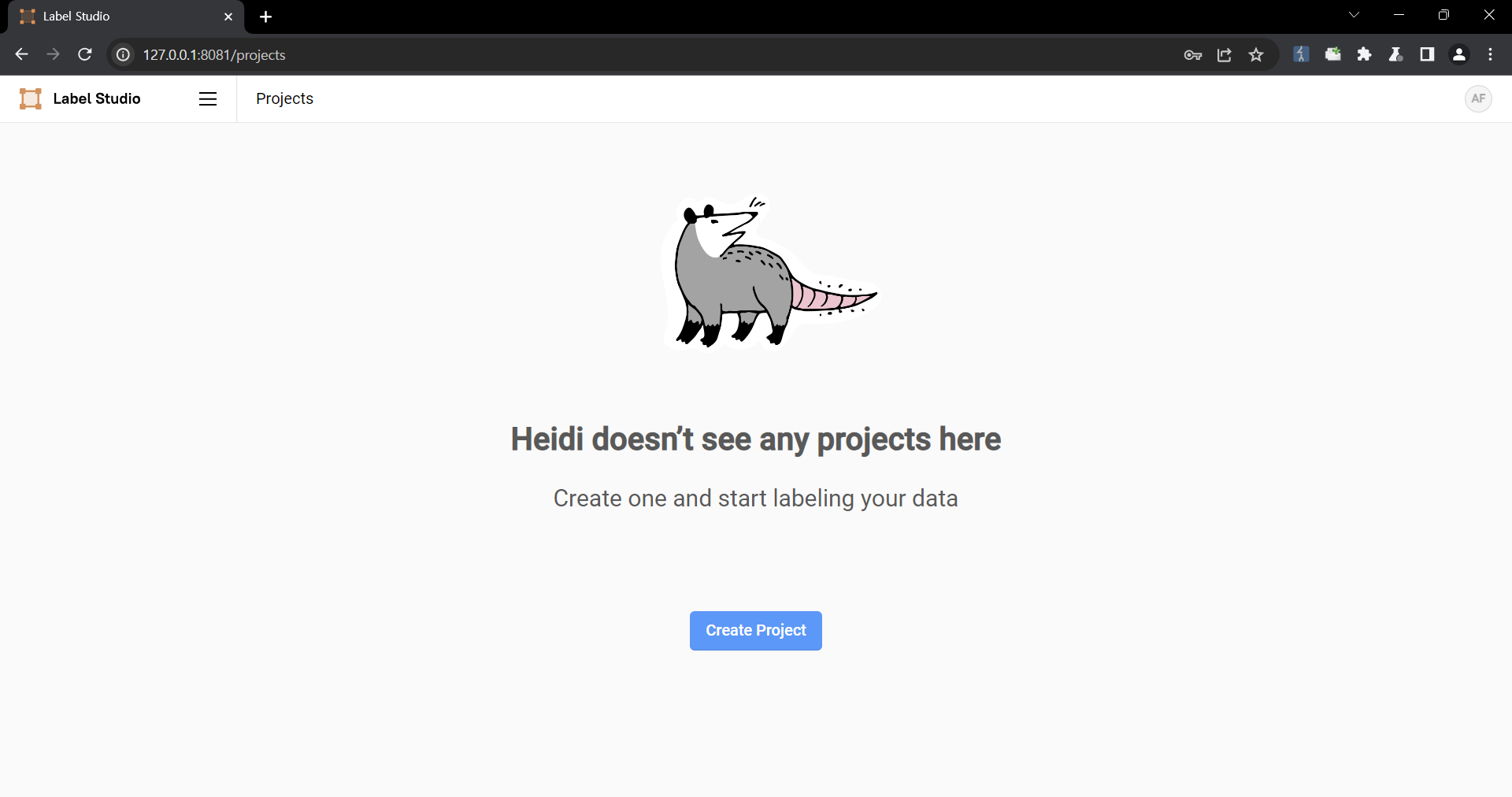\n\n2. Upload a file containing the payload using the \"Upload Files\" function.\n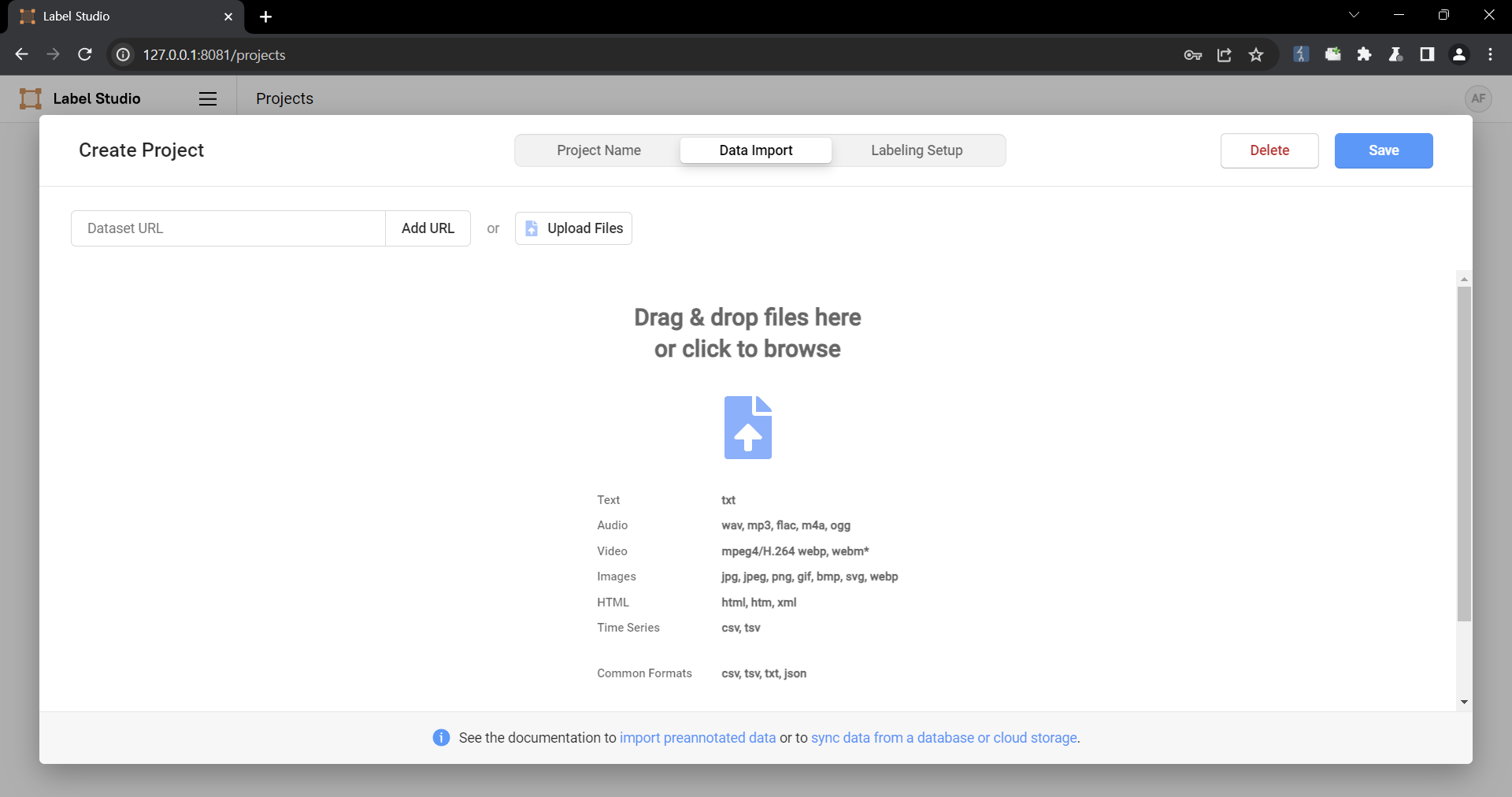\n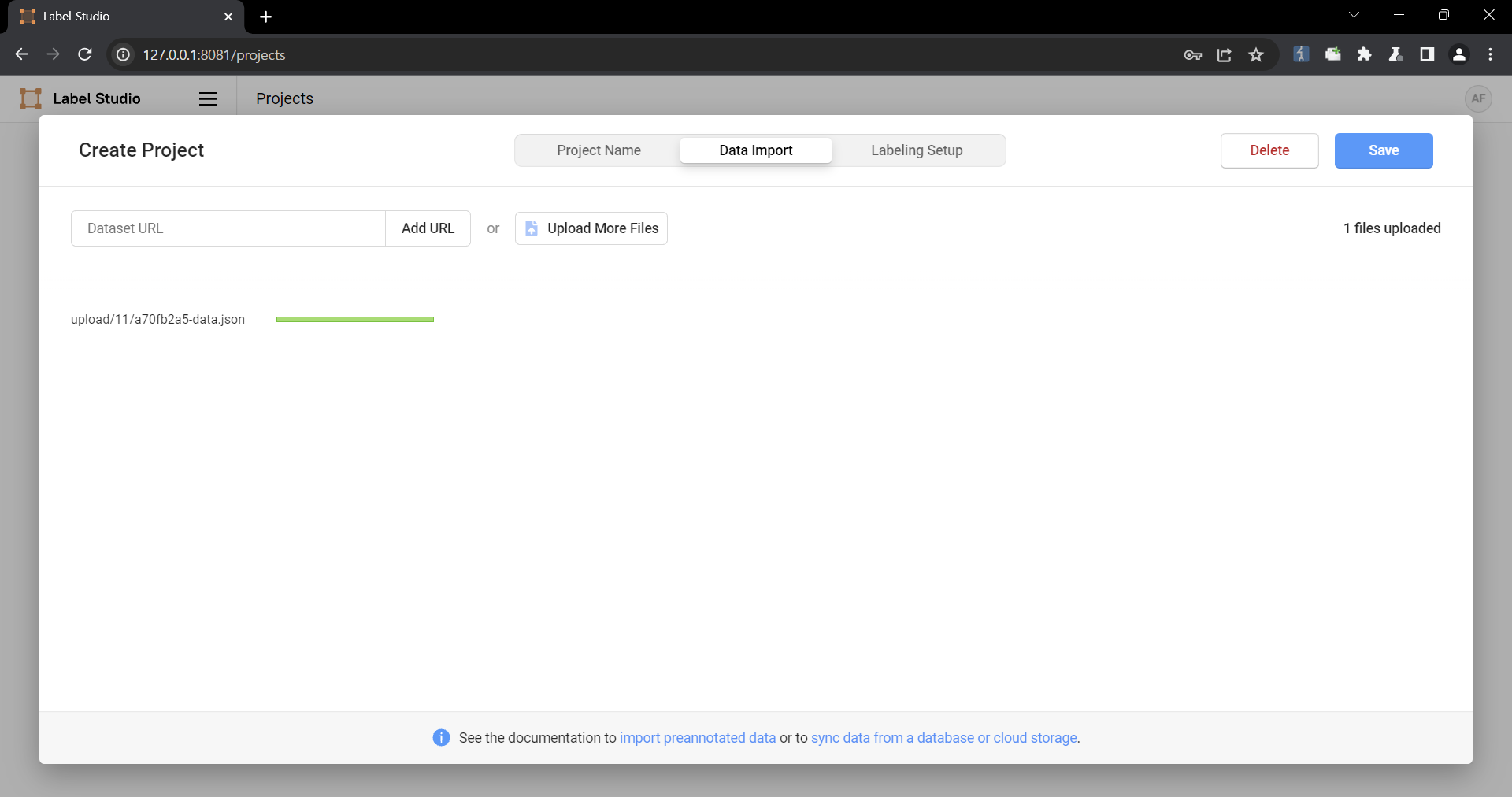\n\nThe following are the contents of the files used in the PoC\n```\n{\n \"data\": {\n \"prompt\": \"labelstudio universe image\",\n \"images\": [\n {\n \"value\": \"id123#0\",\n \"style\": \"margin: 5px\",\n \"html\": \"\u003cimg width=\u0027400\u0027 src=\u0027https://labelstud.io/_astro/images-tab.64279c16_ZaBSvC.avif\u0027 onload=alert(document.cookie)\u003e\"\n }\n ]\n }\n}\n```\n\n3. Select the text-to-image generation labeling template of Ranking and scoring\n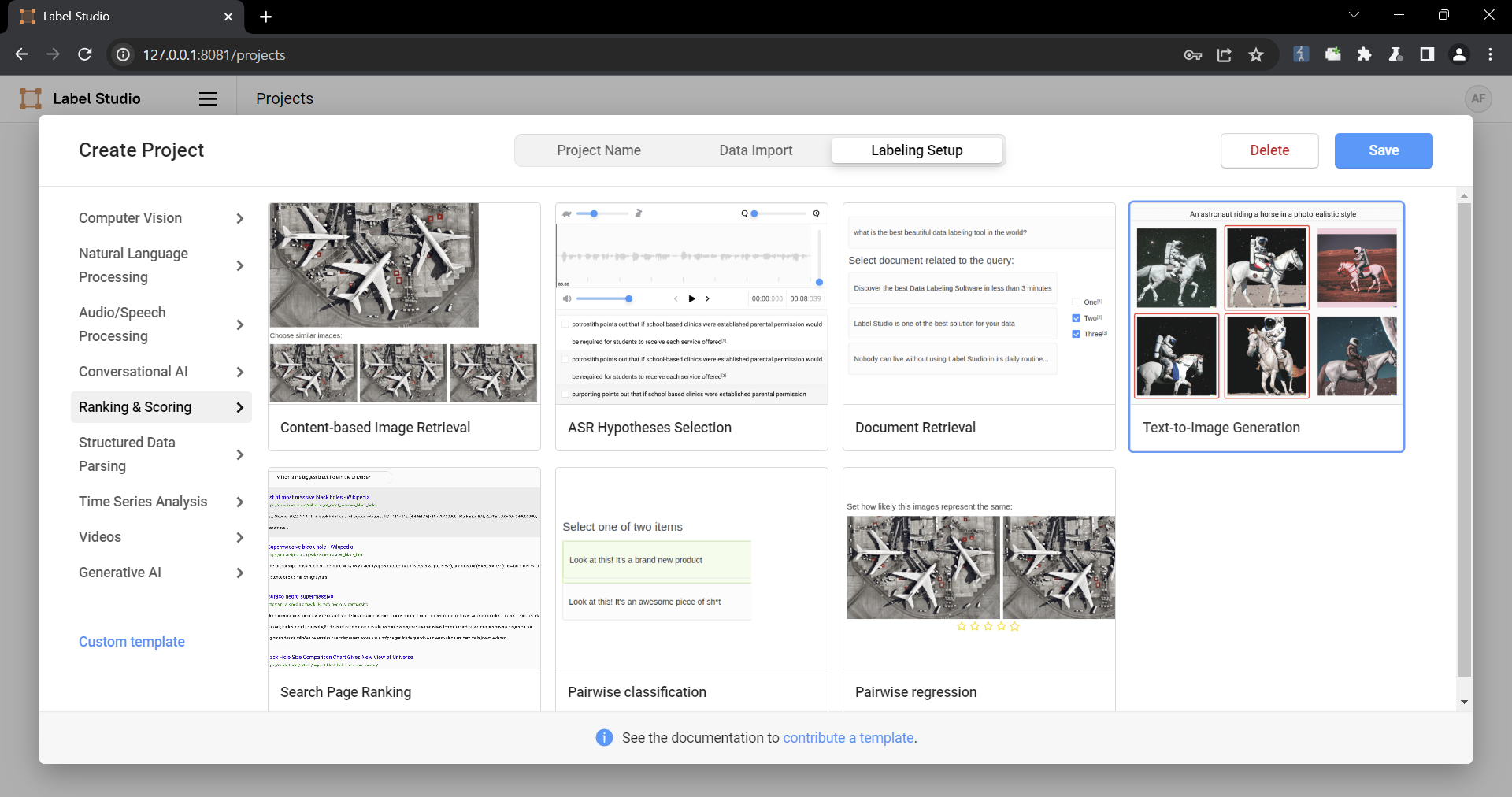\n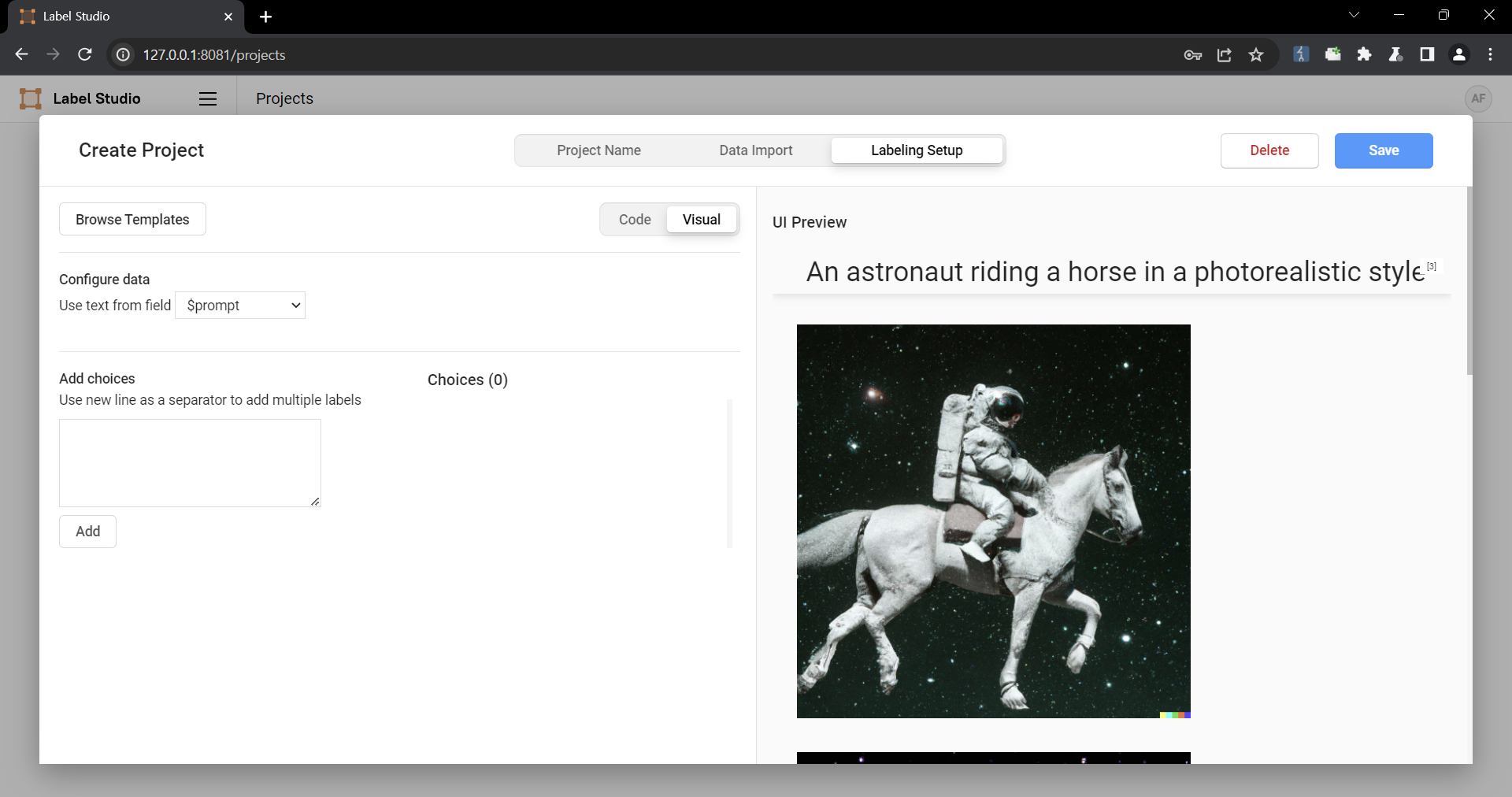\n\n4. Select a task\n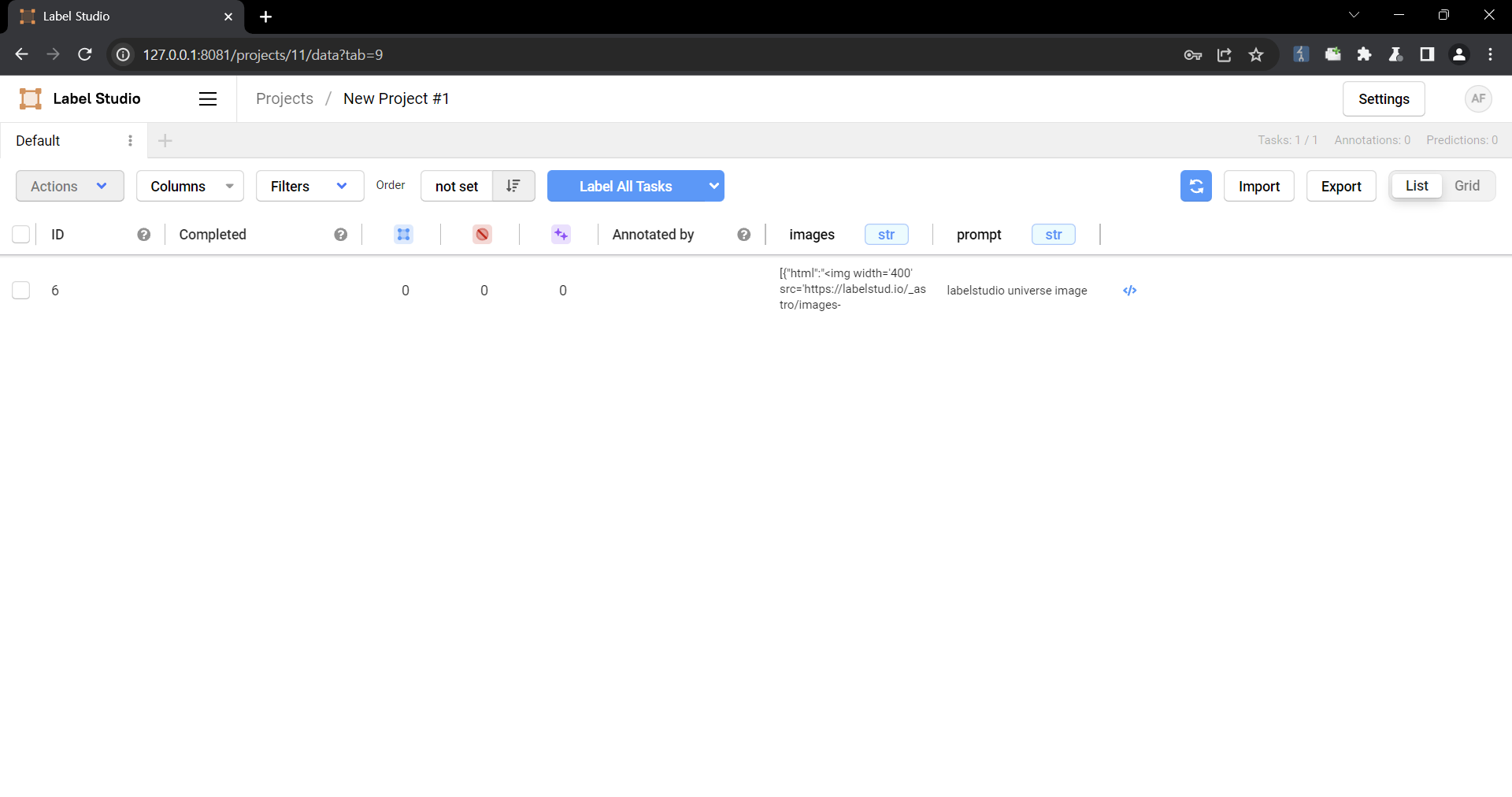\n\n5. Check that the script is running\n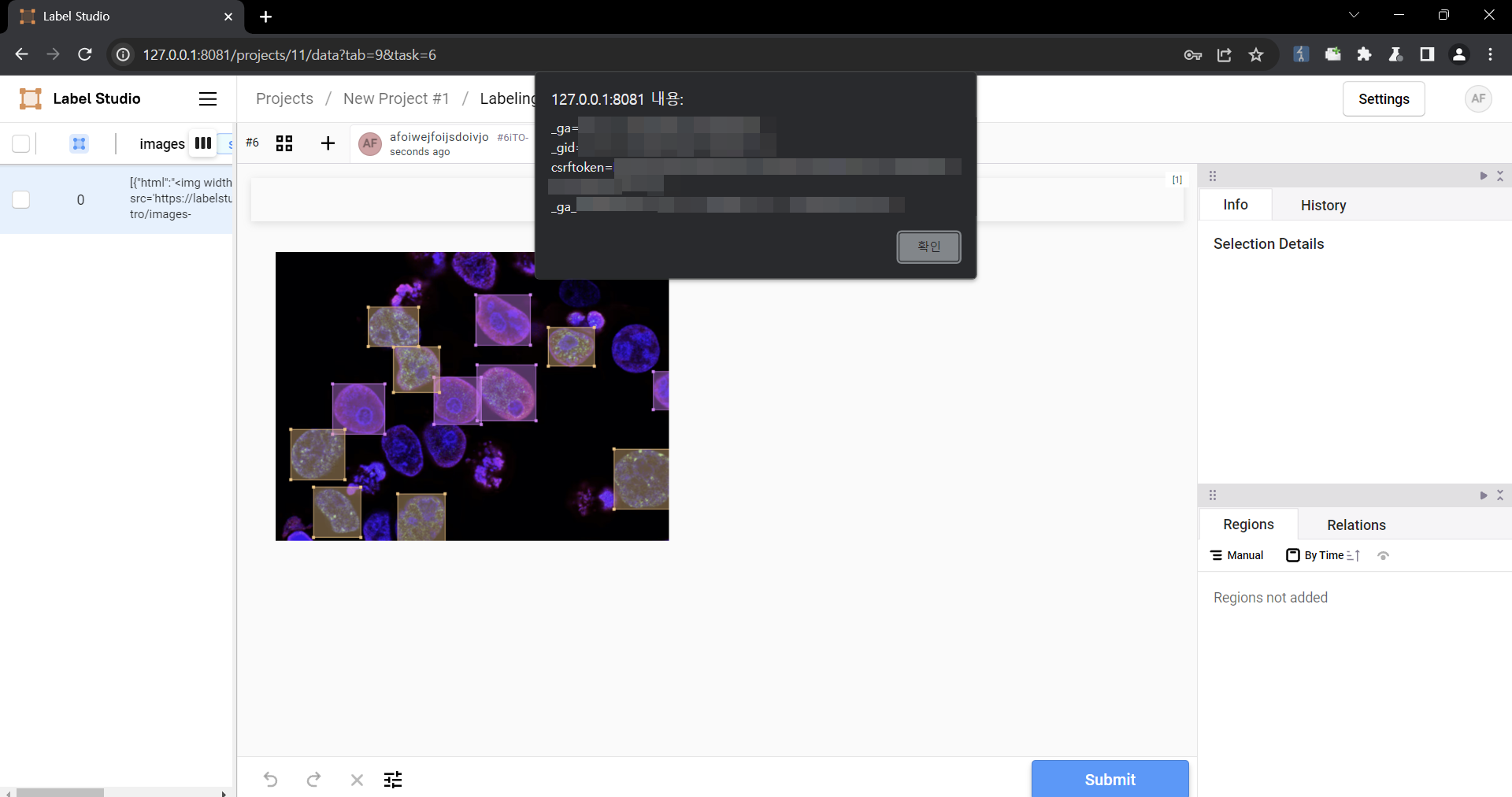\n\n### Impact\nMalicious scripts can be injected into the code, and when linked with vulnerabilities such as CSRF, it can cause even greater damage. In particular, It can become a source of further attacks, especially when linked to social engineering.\n"
}
],
"metrics": [
{
"cvssV3_1": {
"attackComplexity": "LOW",
"attackVector": "NETWORK",
"availabilityImpact": "NONE",
"baseScore": 4.7,
"baseSeverity": "MEDIUM",
"confidentialityImpact": "LOW",
"integrityImpact": "NONE",
"privilegesRequired": "NONE",
"scope": "CHANGED",
"userInteraction": "REQUIRED",
"vectorString": "CVSS:3.1/AV:N/AC:L/PR:N/UI:R/S:C/C:L/I:N/A:N",
"version": "3.1"
}
}
],
"problemTypes": [
{
"descriptions": [
{
"cweId": "CWE-79",
"description": "CWE-79: Improper Neutralization of Input During Web Page Generation (\u0027Cross-site Scripting\u0027)",
"lang": "en",
"type": "CWE"
}
]
}
],
"providerMetadata": {
"dateUpdated": "2024-02-22T21:52:26.193Z",
"orgId": "a0819718-46f1-4df5-94e2-005712e83aaa",
"shortName": "GitHub_M"
},
"references": [
{
"name": "https://github.com/HumanSignal/label-studio/security/advisories/GHSA-6xv9-957j-qfhg",
"tags": [
"x_refsource_CONFIRM"
],
"url": "https://github.com/HumanSignal/label-studio/security/advisories/GHSA-6xv9-957j-qfhg"
},
{
"name": "https://github.com/HumanSignal/label-studio/pull/5232",
"tags": [
"x_refsource_MISC"
],
"url": "https://github.com/HumanSignal/label-studio/pull/5232"
},
{
"name": "https://github.com/HumanSignal/label-studio/commit/5df9ae3828b98652e9fa290a19f4deedf51ef6c8",
"tags": [
"x_refsource_MISC"
],
"url": "https://github.com/HumanSignal/label-studio/commit/5df9ae3828b98652e9fa290a19f4deedf51ef6c8"
},
{
"name": "https://github.com/HumanSignal/label-studio/releases/tag/1.11.0",
"tags": [
"x_refsource_MISC"
],
"url": "https://github.com/HumanSignal/label-studio/releases/tag/1.11.0"
}
],
"source": {
"advisory": "GHSA-6xv9-957j-qfhg",
"discovery": "UNKNOWN"
},
"title": "Label Studio vulnerable to Cross-site Scripting if `\u003cChoices\u003e` or `\u003cLabels\u003e` are used in labeling config "
}
},
"cveMetadata": {
"assignerOrgId": "a0819718-46f1-4df5-94e2-005712e83aaa",
"assignerShortName": "GitHub_M",
"cveId": "CVE-2024-26152",
"datePublished": "2024-02-22T21:52:26.193Z",
"dateReserved": "2024-02-14T17:40:03.690Z",
"dateUpdated": "2024-08-14T15:32:05.054Z",
"state": "PUBLISHED"
},
"dataType": "CVE_RECORD",
"dataVersion": "5.1"
}
CVE-2024-26148 (GCVE-0-2024-26148)
Vulnerability from cvelistv5 – Published: 2024-02-21 22:35 – Updated: 2024-08-22 13:27- CWE-79 - Improper Neutralization of Input During Web Page Generation ('Cross-site Scripting')
| URL | Tags |
|---|---|
| https://github.com/pinterest/querybook/security/a… | x_refsource_CONFIRM |
| https://github.com/pinterest/querybook/pull/1412 | x_refsource_MISC |
| https://github.com/pinterest/querybook/commit/bc6… | x_refsource_MISC |
{
  "containers": {
    "adp": [
      {
        "providerMetadata": {
          "dateUpdated": "2024-08-01T23:59:32.705Z",
          "orgId": "af854a3a-2127-422b-91ae-364da2661108",
          "shortName": "CVE"
        },
        "references": [
          {
            "name": "https://github.com/pinterest/querybook/security/advisories/GHSA-fh6g-gvvp-587f",
            "tags": [
              "x_refsource_CONFIRM",
              "x_transferred"
            ],
            "url": "https://github.com/pinterest/querybook/security/advisories/GHSA-fh6g-gvvp-587f"
          },
          {
            "name": "https://github.com/pinterest/querybook/pull/1412",
            "tags": [
              "x_refsource_MISC",
              "x_transferred"
            ],
            "url": "https://github.com/pinterest/querybook/pull/1412"
          },
          {
            "name": "https://github.com/pinterest/querybook/commit/bc620dabaaf13ff1dcb30af0b46a490403fb9908",
            "tags": [
              "x_refsource_MISC",
              "x_transferred"
            ],
            "url": "https://github.com/pinterest/querybook/commit/bc620dabaaf13ff1dcb30af0b46a490403fb9908"
          }
        ],
        "title": "CVE Program Container"
      },
      {
        "affected": [
          {
            "cpes": [
              "cpe:2.3:a:pinterest:querybook:*:*:*:*:*:*:*:*"
            ],
            "defaultStatus": "unknown",
            "product": "querybook",
            "vendor": "pinterest",
            "versions": [
              {
                "lessThan": "3.31.1",
                "status": "affected",
                "version": "0",
                "versionType": "custom"
              }
            ]
          }
        ],
        "metrics": [
          {
            "other": {
              "content": {
                "id": "CVE-2024-26148",
                "options": [
                  {
                    "Exploitation": "poc"
                  },
                  {
                    "Automatable": "no"
                  },
                  {
                    "Technical Impact": "total"
                  }
                ],
                "role": "CISA Coordinator",
                "timestamp": "2024-02-22T16:57:39.408863Z",
                "version": "2.0.3"
              },
              "type": "ssvc"
            }
          }
        ],
        "providerMetadata": {
          "dateUpdated": "2024-08-22T13:27:05.633Z",
          "orgId": "134c704f-9b21-4f2e-91b3-4a467353bcc0",
          "shortName": "CISA-ADP"
        },
        "title": "CISA ADP Vulnrichment"
      }
    ],
    "cna": {
      "affected": [
        {
          "product": "querybook",
          "vendor": "pinterest",
          "versions": [
            {
              "status": "affected",
              "version": "\u003c 3.31.1"
            }
          ]
        }
      ],
      "descriptions": [
        {
          "lang": "en",
          "value": "Querybook is a user interface for querying big data. Prior to version 3.31.1, there is a vulnerability in Querybook\u0027s rich text editor that enables users to input arbitrary URLs without undergoing necessary validation. This particular security flaw allows the use of `javascript:` protocol which can potentially trigger arbitrary client-side execution. The most extreme exploit of this flaw could occur when an admin user unknowingly clicks on a cross-site scripting URL, thereby unintentionally compromising admin role access to the attacker. A patch to rectify this issue has been introduced in Querybook version `3.31.1`. The fix is backward compatible and automatically fixes existing DataDocs. There are no known workarounds for this issue, except for manually checking each URL prior to clicking on them."
        }
      ],
      "metrics": [
        {
          "cvssV3_1": {
            "attackComplexity": "LOW",
            "attackVector": "NETWORK",
            "availabilityImpact": "NONE",
            "baseScore": 6.1,
            "baseSeverity": "MEDIUM",
            "confidentialityImpact": "LOW",
            "integrityImpact": "LOW",
            "privilegesRequired": "NONE",
            "scope": "CHANGED",
            "userInteraction": "REQUIRED",
            "vectorString": "CVSS:3.1/AV:N/AC:L/PR:N/UI:R/S:C/C:L/I:L/A:N",
            "version": "3.1"
          }
        }
      ],
      "problemTypes": [
        {
          "descriptions": [
            {
              "cweId": "CWE-79",
              "description": "CWE-79: Improper Neutralization of Input During Web Page Generation (\u0027Cross-site Scripting\u0027)",
              "lang": "en",
              "type": "CWE"
            }
          ]
        }
      ],
      "providerMetadata": {
        "dateUpdated": "2024-02-21T22:35:17.041Z",
        "orgId": "a0819718-46f1-4df5-94e2-005712e83aaa",
        "shortName": "GitHub_M"
      },
      "references": [
        {
          "name": "https://github.com/pinterest/querybook/security/advisories/GHSA-fh6g-gvvp-587f",
          "tags": [
            "x_refsource_CONFIRM"
          ],
          "url": "https://github.com/pinterest/querybook/security/advisories/GHSA-fh6g-gvvp-587f"
        },
        {
          "name": "https://github.com/pinterest/querybook/pull/1412",
          "tags": [
            "x_refsource_MISC"
          ],
          "url": "https://github.com/pinterest/querybook/pull/1412"
        },
        {
          "name": "https://github.com/pinterest/querybook/commit/bc620dabaaf13ff1dcb30af0b46a490403fb9908",
          "tags": [
            "x_refsource_MISC"
          ],
          "url": "https://github.com/pinterest/querybook/commit/bc620dabaaf13ff1dcb30af0b46a490403fb9908"
        }
      ],
      "source": {
        "advisory": "GHSA-fh6g-gvvp-587f",
        "discovery": "UNKNOWN"
      },
      "title": "Querybook\u0027s Stored Cross-Site Scripting vulnerability allows Privilege Elevation"
    }
  },
  "cveMetadata": {
    "assignerOrgId": "a0819718-46f1-4df5-94e2-005712e83aaa",
    "assignerShortName": "GitHub_M",
    "cveId": "CVE-2024-26148",
    "datePublished": "2024-02-21T22:35:17.041Z",
    "dateReserved": "2024-02-14T17:40:03.689Z",
    "dateUpdated": "2024-08-22T13:27:05.633Z",
    "state": "PUBLISHED"
  },
  "dataType": "CVE_RECORD",
  "dataVersion": "5.1"
}
CVE-2024-26143 (GCVE-0-2024-26143)
Vulnerability from cvelistv5 – Published: 2024-02-27 15:33 – Updated: 2025-02-13 17:41- CWE-79 - Improper Neutralization of Input During Web Page Generation ('Cross-site Scripting')
| URL | Tags |
|---|---|
| https://github.com/rails/rails/security/advisorie… | x_refsource_CONFIRM |
| https://github.com/rails/rails/commit/4c83b331092… | x_refsource_MISC |
| https://github.com/rails/rails/commit/5187a9ef519… | x_refsource_MISC |
| https://discuss.rubyonrails.org/t/possible-xss-vu… | x_refsource_MISC |
| https://github.com/rubysec/ruby-advisory-db/blob/… | x_refsource_MISC |
| https://security.netapp.com/advisory/ntap-2024051… |
{
  "containers": {
    "adp": [
      {
        "metrics": [
          {
            "other": {
              "content": {
                "id": "CVE-2024-26143",
                "options": [
                  {
                    "Exploitation": "none"
                  },
                  {
                    "Automatable": "no"
                  },
                  {
                    "Technical Impact": "partial"
                  }
                ],
                "role": "CISA Coordinator",
                "timestamp": "2024-02-29T18:24:49.795683Z",
                "version": "2.0.3"
              },
              "type": "ssvc"
            }
          }
        ],
        "providerMetadata": {
          "dateUpdated": "2024-06-04T17:49:16.767Z",
          "orgId": "134c704f-9b21-4f2e-91b3-4a467353bcc0",
          "shortName": "CISA-ADP"
        },
        "title": "CISA ADP Vulnrichment"
      },
      {
        "providerMetadata": {
          "dateUpdated": "2024-08-01T23:59:32.584Z",
          "orgId": "af854a3a-2127-422b-91ae-364da2661108",
          "shortName": "CVE"
        },
        "references": [
          {
            "name": "https://github.com/rails/rails/security/advisories/GHSA-9822-6m93-xqf4",
            "tags": [
              "x_refsource_CONFIRM",
              "x_transferred"
            ],
            "url": "https://github.com/rails/rails/security/advisories/GHSA-9822-6m93-xqf4"
          },
          {
            "name": "https://github.com/rails/rails/commit/4c83b331092a79d58e4adffe4be5f250fa5782cc",
            "tags": [
              "x_refsource_MISC",
              "x_transferred"
            ],
            "url": "https://github.com/rails/rails/commit/4c83b331092a79d58e4adffe4be5f250fa5782cc"
          },
          {
            "name": "https://github.com/rails/rails/commit/5187a9ef51980ad1b8e81945ebe0462d28f84f9e",
            "tags": [
              "x_refsource_MISC",
              "x_transferred"
            ],
            "url": "https://github.com/rails/rails/commit/5187a9ef51980ad1b8e81945ebe0462d28f84f9e"
          },
          {
            "name": "https://discuss.rubyonrails.org/t/possible-xss-vulnerability-in-action-controller/84947",
            "tags": [
              "x_refsource_MISC",
              "x_transferred"
            ],
            "url": "https://discuss.rubyonrails.org/t/possible-xss-vulnerability-in-action-controller/84947"
          },
          {
            "name": "https://github.com/rubysec/ruby-advisory-db/blob/master/gems/actionpack/CVE-2024-26143.yml",
            "tags": [
              "x_refsource_MISC",
              "x_transferred"
            ],
            "url": "https://github.com/rubysec/ruby-advisory-db/blob/master/gems/actionpack/CVE-2024-26143.yml"
          },
          {
            "tags": [
              "x_transferred"
            ],
            "url": "https://security.netapp.com/advisory/ntap-20240510-0004/"
          }
        ],
        "title": "CVE Program Container"
      }
    ],
    "cna": {
      "affected": [
        {
          "product": "rails",
          "vendor": "rails",
          "versions": [
            {
              "status": "affected",
              "version": "\u003e= 7.0.0, \u003c 7.0.8.1"
            },
            {
              "status": "affected",
              "version": "\u003e= 7.1.0, \u003c 7.1.3.1"
            }
          ]
        }
      ],
      "descriptions": [
        {
          "lang": "en",
          "value": "Rails is a web-application framework. There is a possible XSS vulnerability when using the translation helpers in Action Controller. Applications using translation methods like translate, or t on a controller, with a key ending in \"_html\", a :default key which contains untrusted user input, and the resulting string is used in a view, may be susceptible to an XSS vulnerability. The vulnerability is fixed in 7.1.3.1 and 7.0.8.1."
        }
      ],
      "metrics": [
        {
          "cvssV3_1": {
            "attackComplexity": "LOW",
            "attackVector": "NETWORK",
            "availabilityImpact": "NONE",
            "baseScore": 6.1,
            "baseSeverity": "MEDIUM",
            "confidentialityImpact": "LOW",
            "integrityImpact": "LOW",
            "privilegesRequired": "NONE",
            "scope": "CHANGED",
            "userInteraction": "REQUIRED",
            "vectorString": "CVSS:3.1/AV:N/AC:L/PR:N/UI:R/S:C/C:L/I:L/A:N",
            "version": "3.1"
          }
        }
      ],
      "problemTypes": [
        {
          "descriptions": [
            {
              "cweId": "CWE-79",
              "description": "CWE-79: Improper Neutralization of Input During Web Page Generation (\u0027Cross-site Scripting\u0027)",
              "lang": "en",
              "type": "CWE"
            }
          ]
        }
      ],
      "providerMetadata": {
        "dateUpdated": "2024-06-10T16:11:24.075Z",
        "orgId": "a0819718-46f1-4df5-94e2-005712e83aaa",
        "shortName": "GitHub_M"
      },
      "references": [
        {
          "name": "https://github.com/rails/rails/security/advisories/GHSA-9822-6m93-xqf4",
          "tags": [
            "x_refsource_CONFIRM"
          ],
          "url": "https://github.com/rails/rails/security/advisories/GHSA-9822-6m93-xqf4"
        },
        {
          "name": "https://github.com/rails/rails/commit/4c83b331092a79d58e4adffe4be5f250fa5782cc",
          "tags": [
            "x_refsource_MISC"
          ],
          "url": "https://github.com/rails/rails/commit/4c83b331092a79d58e4adffe4be5f250fa5782cc"
        },
        {
          "name": "https://github.com/rails/rails/commit/5187a9ef51980ad1b8e81945ebe0462d28f84f9e",
          "tags": [
            "x_refsource_MISC"
          ],
          "url": "https://github.com/rails/rails/commit/5187a9ef51980ad1b8e81945ebe0462d28f84f9e"
        },
        {
          "name": "https://discuss.rubyonrails.org/t/possible-xss-vulnerability-in-action-controller/84947",
          "tags": [
            "x_refsource_MISC"
          ],
          "url": "https://discuss.rubyonrails.org/t/possible-xss-vulnerability-in-action-controller/84947"
        },
        {
          "name": "https://github.com/rubysec/ruby-advisory-db/blob/master/gems/actionpack/CVE-2024-26143.yml",
          "tags": [
            "x_refsource_MISC"
          ],
          "url": "https://github.com/rubysec/ruby-advisory-db/blob/master/gems/actionpack/CVE-2024-26143.yml"
        },
        {
          "url": "https://security.netapp.com/advisory/ntap-20240510-0004/"
        }
      ],
      "source": {
        "advisory": "GHSA-9822-6m93-xqf4",
        "discovery": "UNKNOWN"
      },
      "title": "Rails Possible XSS Vulnerability in Action Controller"
    }
  },
  "cveMetadata": {
    "assignerOrgId": "a0819718-46f1-4df5-94e2-005712e83aaa",
    "assignerShortName": "GitHub_M",
    "cveId": "CVE-2024-26143",
    "datePublished": "2024-02-27T15:33:54.643Z",
    "dateReserved": "2024-02-14T17:40:03.688Z",
    "dateUpdated": "2025-02-13T17:41:06.380Z",
    "state": "PUBLISHED"
  },
  "dataType": "CVE_RECORD",
  "dataVersion": "5.1"
}
CVE-2024-26140 (GCVE-0-2024-26140)
Vulnerability from cvelistv5 – Published: 2024-02-20 21:47 – Updated: 2024-08-01 23:59- CWE-79 - Improper Neutralization of Input During Web Page Generation ('Cross-site Scripting')
| URL | Tags |
|---|---|
| https://github.com/yetanalytics/lrs/security/advi… | x_refsource_CONFIRM |
| https://github.com/yetanalytics/lrs/commit/d7f488… | x_refsource_MISC |
| https://clojars.org/com.yetanalytics/lrs/versions… | x_refsource_MISC |
| https://github.com/yetanalytics/lrs/releases/tag/… | x_refsource_MISC |
| https://github.com/yetanalytics/lrsql/releases/ta… | x_refsource_MISC |
| Vendor | Product | Version | |
|---|---|---|---|
| yetanalytics | lrs |
Affected:
< 0.7.5
Affected: < 1.2.17 |
{
  "containers": {
    "adp": [
      {
        "metrics": [
          {
            "other": {
              "content": {
                "id": "CVE-2024-26140",
                "options": [
                  {
                    "Exploitation": "none"
                  },
                  {
                    "Automatable": "no"
                  },
                  {
                    "Technical Impact": "partial"
                  }
                ],
                "role": "CISA Coordinator",
                "timestamp": "2024-02-21T20:38:15.549793Z",
                "version": "2.0.3"
              },
              "type": "ssvc"
            }
          }
        ],
        "providerMetadata": {
          "dateUpdated": "2024-07-05T17:21:53.235Z",
          "orgId": "134c704f-9b21-4f2e-91b3-4a467353bcc0",
          "shortName": "CISA-ADP"
        },
        "title": "CISA ADP Vulnrichment"
      },
      {
        "providerMetadata": {
          "dateUpdated": "2024-08-01T23:59:32.684Z",
          "orgId": "af854a3a-2127-422b-91ae-364da2661108",
          "shortName": "CVE"
        },
        "references": [
          {
            "name": "https://github.com/yetanalytics/lrs/security/advisories/GHSA-7rw2-3hhp-rc46",
            "tags": [
              "x_refsource_CONFIRM",
              "x_transferred"
            ],
            "url": "https://github.com/yetanalytics/lrs/security/advisories/GHSA-7rw2-3hhp-rc46"
          },
          {
            "name": "https://github.com/yetanalytics/lrs/commit/d7f4883bc2252337d25e8bba2c7f9d172f5b0621",
            "tags": [
              "x_refsource_MISC",
              "x_transferred"
            ],
            "url": "https://github.com/yetanalytics/lrs/commit/d7f4883bc2252337d25e8bba2c7f9d172f5b0621"
          },
          {
            "name": "https://clojars.org/com.yetanalytics/lrs/versions/1.2.17",
            "tags": [
              "x_refsource_MISC",
              "x_transferred"
            ],
            "url": "https://clojars.org/com.yetanalytics/lrs/versions/1.2.17"
          },
          {
            "name": "https://github.com/yetanalytics/lrs/releases/tag/v1.2.17",
            "tags": [
              "x_refsource_MISC",
              "x_transferred"
            ],
            "url": "https://github.com/yetanalytics/lrs/releases/tag/v1.2.17"
          },
          {
            "name": "https://github.com/yetanalytics/lrsql/releases/tag/v0.7.5",
            "tags": [
              "x_refsource_MISC",
              "x_transferred"
            ],
            "url": "https://github.com/yetanalytics/lrsql/releases/tag/v0.7.5"
          }
        ],
        "title": "CVE Program Container"
      }
    ],
    "cna": {
      "affected": [
        {
          "product": "lrs",
          "vendor": "yetanalytics",
          "versions": [
            {
              "status": "affected",
              "version": "\u003c 0.7.5"
            },
            {
              "status": "affected",
              "version": "\u003c 1.2.17"
            }
          ]
        }
      ],
      "descriptions": [
        {
          "lang": "en",
          "value": "com.yetanalytics/lrs is the Yet Analytics Core LRS Library. Prior to version 1.2.17 of the LRS library and version 0.7.5 of SQL LRS, a maliciously crafted xAPI statement could be used to perform script or other tag injection in the LRS Statement Browser. The problem is patched in version 1.2.17 of the LRS library and version 0.7.5 of SQL LRS. No known workarounds exist."
        }
      ],
      "metrics": [
        {
          "cvssV3_1": {
            "attackComplexity": "LOW",
            "attackVector": "NETWORK",
            "availabilityImpact": "LOW",
            "baseScore": 4.6,
            "baseSeverity": "MEDIUM",
            "confidentialityImpact": "NONE",
            "integrityImpact": "LOW",
            "privilegesRequired": "LOW",
            "scope": "UNCHANGED",
            "userInteraction": "REQUIRED",
            "vectorString": "CVSS:3.1/AV:N/AC:L/PR:L/UI:R/S:U/C:N/I:L/A:L",
            "version": "3.1"
          }
        }
      ],
      "problemTypes": [
        {
          "descriptions": [
            {
              "cweId": "CWE-79",
              "description": "CWE-79: Improper Neutralization of Input During Web Page Generation (\u0027Cross-site Scripting\u0027)",
              "lang": "en",
              "type": "CWE"
            }
          ]
        }
      ],
      "providerMetadata": {
        "dateUpdated": "2024-02-20T21:47:08.027Z",
        "orgId": "a0819718-46f1-4df5-94e2-005712e83aaa",
        "shortName": "GitHub_M"
      },
      "references": [
        {
          "name": "https://github.com/yetanalytics/lrs/security/advisories/GHSA-7rw2-3hhp-rc46",
          "tags": [
            "x_refsource_CONFIRM"
          ],
          "url": "https://github.com/yetanalytics/lrs/security/advisories/GHSA-7rw2-3hhp-rc46"
        },
        {
          "name": "https://github.com/yetanalytics/lrs/commit/d7f4883bc2252337d25e8bba2c7f9d172f5b0621",
          "tags": [
            "x_refsource_MISC"
          ],
          "url": "https://github.com/yetanalytics/lrs/commit/d7f4883bc2252337d25e8bba2c7f9d172f5b0621"
        },
        {
          "name": "https://clojars.org/com.yetanalytics/lrs/versions/1.2.17",
          "tags": [
            "x_refsource_MISC"
          ],
          "url": "https://clojars.org/com.yetanalytics/lrs/versions/1.2.17"
        },
        {
          "name": "https://github.com/yetanalytics/lrs/releases/tag/v1.2.17",
          "tags": [
            "x_refsource_MISC"
          ],
          "url": "https://github.com/yetanalytics/lrs/releases/tag/v1.2.17"
        },
        {
          "name": "https://github.com/yetanalytics/lrsql/releases/tag/v0.7.5",
          "tags": [
            "x_refsource_MISC"
          ],
          "url": "https://github.com/yetanalytics/lrsql/releases/tag/v0.7.5"
        }
      ],
      "source": {
        "advisory": "GHSA-7rw2-3hhp-rc46",
        "discovery": "UNKNOWN"
      },
      "title": "com.yetanalytics/lrs has Cross-site Scripting Vulnerability in Statement Browser"
    }
  },
  "cveMetadata": {
    "assignerOrgId": "a0819718-46f1-4df5-94e2-005712e83aaa",
    "assignerShortName": "GitHub_M",
    "cveId": "CVE-2024-26140",
    "datePublished": "2024-02-20T21:47:08.027Z",
    "dateReserved": "2024-02-14T17:40:03.688Z",
    "dateUpdated": "2024-08-01T23:59:32.684Z",
    "state": "PUBLISHED"
  },
  "dataType": "CVE_RECORD",
  "dataVersion": "5.1"
}
CVE-2024-26128 (GCVE-0-2024-26128)
Vulnerability from cvelistv5 – Published: 2024-02-22 18:32 – Updated: 2024-08-01 23:59- CWE-79 - Improper Neutralization of Input During Web Page Generation ('Cross-site Scripting')
| URL | Tags |
|---|---|
| https://github.com/baserproject/basercms/security… | x_refsource_CONFIRM |
| https://github.com/baserproject/basercms/commit/1… | x_refsource_MISC |
| https://basercms.net/security/JVN_73283159 | x_refsource_MISC |
| Vendor | Product | Version | |
|---|---|---|---|
| baserproject | basercms |
Affected:
< 5.0.9
|
{
  "containers": {
    "adp": [
      {
        "metrics": [
          {
            "other": {
              "content": {
                "id": "CVE-2024-26128",
                "options": [
                  {
                    "Exploitation": "none"
                  },
                  {
                    "Automatable": "no"
                  },
                  {
                    "Technical Impact": "partial"
                  }
                ],
                "role": "CISA Coordinator",
                "timestamp": "2024-07-12T15:20:28.991506Z",
                "version": "2.0.3"
              },
              "type": "ssvc"
            }
          }
        ],
        "providerMetadata": {
          "dateUpdated": "2024-07-12T18:18:41.298Z",
          "orgId": "134c704f-9b21-4f2e-91b3-4a467353bcc0",
          "shortName": "CISA-ADP"
        },
        "title": "CISA ADP Vulnrichment"
      },
      {
        "providerMetadata": {
          "dateUpdated": "2024-08-01T23:59:32.303Z",
          "orgId": "af854a3a-2127-422b-91ae-364da2661108",
          "shortName": "CVE"
        },
        "references": [
          {
            "name": "https://github.com/baserproject/basercms/security/advisories/GHSA-jjxq-m8h3-4vw5",
            "tags": [
              "x_refsource_CONFIRM",
              "x_transferred"
            ],
            "url": "https://github.com/baserproject/basercms/security/advisories/GHSA-jjxq-m8h3-4vw5"
          },
          {
            "name": "https://github.com/baserproject/basercms/commit/18f426d63e752b4d22c40e9ea8d1f6e692ef601c",
            "tags": [
              "x_refsource_MISC",
              "x_transferred"
            ],
            "url": "https://github.com/baserproject/basercms/commit/18f426d63e752b4d22c40e9ea8d1f6e692ef601c"
          },
          {
            "name": "https://basercms.net/security/JVN_73283159",
            "tags": [
              "x_refsource_MISC",
              "x_transferred"
            ],
            "url": "https://basercms.net/security/JVN_73283159"
          }
        ],
        "title": "CVE Program Container"
      }
    ],
    "cna": {
      "affected": [
        {
          "product": "basercms",
          "vendor": "baserproject",
          "versions": [
            {
              "status": "affected",
              "version": "\u003c 5.0.9"
            }
          ]
        }
      ],
      "descriptions": [
        {
          "lang": "en",
          "value": "baserCMS is a website development framework. Prior to version 5.0.9, there is a cross-site scripting vulnerability in the content management feature. Version 5.0.9 contains a fix for this vulnerability."
        }
      ],
      "metrics": [
        {
          "cvssV3_1": {
            "attackComplexity": "LOW",
            "attackVector": "NETWORK",
            "availabilityImpact": "NONE",
            "baseScore": 5.4,
            "baseSeverity": "MEDIUM",
            "confidentialityImpact": "LOW",
            "integrityImpact": "LOW",
            "privilegesRequired": "LOW",
            "scope": "CHANGED",
            "userInteraction": "REQUIRED",
            "vectorString": "CVSS:3.1/AV:N/AC:L/PR:L/UI:R/S:C/C:L/I:L/A:N",
            "version": "3.1"
          }
        }
      ],
      "problemTypes": [
        {
          "descriptions": [
            {
              "cweId": "CWE-79",
              "description": "CWE-79: Improper Neutralization of Input During Web Page Generation (\u0027Cross-site Scripting\u0027)",
              "lang": "en",
              "type": "CWE"
            }
          ]
        }
      ],
      "providerMetadata": {
        "dateUpdated": "2024-02-22T18:32:43.866Z",
        "orgId": "a0819718-46f1-4df5-94e2-005712e83aaa",
        "shortName": "GitHub_M"
      },
      "references": [
        {
          "name": "https://github.com/baserproject/basercms/security/advisories/GHSA-jjxq-m8h3-4vw5",
          "tags": [
            "x_refsource_CONFIRM"
          ],
          "url": "https://github.com/baserproject/basercms/security/advisories/GHSA-jjxq-m8h3-4vw5"
        },
        {
          "name": "https://github.com/baserproject/basercms/commit/18f426d63e752b4d22c40e9ea8d1f6e692ef601c",
          "tags": [
            "x_refsource_MISC"
          ],
          "url": "https://github.com/baserproject/basercms/commit/18f426d63e752b4d22c40e9ea8d1f6e692ef601c"
        },
        {
          "name": "https://basercms.net/security/JVN_73283159",
          "tags": [
            "x_refsource_MISC"
          ],
          "url": "https://basercms.net/security/JVN_73283159"
        }
      ],
      "source": {
        "advisory": "GHSA-jjxq-m8h3-4vw5",
        "discovery": "UNKNOWN"
      },
      "title": "baserCMS Cross-site Scripting vulnerability in Content Management"
    }
  },
  "cveMetadata": {
    "assignerOrgId": "a0819718-46f1-4df5-94e2-005712e83aaa",
    "assignerShortName": "GitHub_M",
    "cveId": "CVE-2024-26128",
    "datePublished": "2024-02-22T18:32:43.866Z",
    "dateReserved": "2024-02-14T17:40:03.687Z",
    "dateUpdated": "2024-08-01T23:59:32.303Z",
    "state": "PUBLISHED"
  },
  "dataType": "CVE_RECORD",
  "dataVersion": "5.1"
}
CVE-2024-26125 (GCVE-0-2024-26125)
Vulnerability from cvelistv5 – Published: 2024-03-18 17:54 – Updated: 2024-10-07 13:09- CWE-79 - Cross-site Scripting (Stored XSS) (CWE-79)
| URL | Tags |
|---|---|
| https://helpx.adobe.com/security/products/experie… | vendor-advisory |
| Vendor | Product | Version | |
|---|---|---|---|
| Adobe | Adobe Experience Manager |
Affected:
0 , ≤ 6.5.19
(semver)
|
|
| adobe | experience_manager |
Affected:
0 , ≤ 6.5.19
(custom)
cpe:2.3:a:adobe:experience_manager:-:*:*:*:*:*:*:* |
|
| adobe | experience_manager_cloud_service |
Affected:
0 , ≤ *
(custom)
cpe:2.3:a:adobe:experience_manager_cloud_service:-:*:*:*:*:*:*:* |
{
  "containers": {
    "adp": [
      {
        "affected": [
          {
            "cpes": [
              "cpe:2.3:a:adobe:experience_manager:-:*:*:*:*:*:*:*"
            ],
            "defaultStatus": "unknown",
            "product": "experience_manager",
            "vendor": "adobe",
            "versions": [
              {
                "lessThanOrEqual": "6.5.19",
                "status": "affected",
                "version": "0",
                "versionType": "custom"
              }
            ]
          },
          {
            "cpes": [
              "cpe:2.3:a:adobe:experience_manager_cloud_service:-:*:*:*:*:*:*:*"
            ],
            "defaultStatus": "unknown",
            "product": "experience_manager_cloud_service",
            "vendor": "adobe",
            "versions": [
              {
                "lessThanOrEqual": "*",
                "status": "affected",
                "version": "0",
                "versionType": "custom"
              }
            ]
          }
        ],
        "metrics": [
          {
            "other": {
              "content": {
                "id": "CVE-2024-26125",
                "options": [
                  {
                    "Exploitation": "none"
                  },
                  {
                    "Automatable": "no"
                  },
                  {
                    "Technical Impact": "partial"
                  }
                ],
                "role": "CISA Coordinator",
                "timestamp": "2024-03-18T18:39:05.381705Z",
                "version": "2.0.3"
              },
              "type": "ssvc"
            }
          }
        ],
        "providerMetadata": {
          "dateUpdated": "2024-06-19T16:52:14.430Z",
          "orgId": "134c704f-9b21-4f2e-91b3-4a467353bcc0",
          "shortName": "CISA-ADP"
        },
        "title": "CISA ADP Vulnrichment"
      },
      {
        "providerMetadata": {
          "dateUpdated": "2024-08-01T23:59:32.460Z",
          "orgId": "af854a3a-2127-422b-91ae-364da2661108",
          "shortName": "CVE"
        },
        "references": [
          {
            "tags": [
              "vendor-advisory",
              "x_transferred"
            ],
            "url": "https://helpx.adobe.com/security/products/experience-manager/apsb24-05.html"
          }
        ],
        "title": "CVE Program Container"
      }
    ],
    "cna": {
      "affected": [
        {
          "defaultStatus": "affected",
          "product": "Adobe Experience Manager",
          "vendor": "Adobe",
          "versions": [
            {
              "lessThanOrEqual": "6.5.19",
              "status": "affected",
              "version": "0",
              "versionType": "semver"
            }
          ]
        }
      ],
      "datePublic": "2024-03-12T17:00:00.000Z",
      "descriptions": [
        {
          "lang": "en",
          "value": "Adobe Experience Manager versions 6.5.19 and earlier are affected by a stored Cross-Site Scripting (XSS) vulnerability that could be abused by an attacker to inject malicious scripts into vulnerable form fields. Malicious JavaScript may be executed in a victim\u2019s browser when they browse to the page containing the vulnerable field."
        }
      ],
      "metrics": [
        {
          "cvssV3_1": {
            "attackComplexity": "LOW",
            "attackVector": "NETWORK",
            "availabilityImpact": "NONE",
            "availabilityRequirement": "NOT_DEFINED",
            "baseScore": 5.4,
            "baseSeverity": "MEDIUM",
            "confidentialityImpact": "LOW",
            "confidentialityRequirement": "NOT_DEFINED",
            "environmentalScore": 5.4,
            "environmentalSeverity": "MEDIUM",
            "exploitCodeMaturity": "NOT_DEFINED",
            "integrityImpact": "LOW",
            "integrityRequirement": "NOT_DEFINED",
            "modifiedAttackComplexity": "LOW",
            "modifiedAttackVector": "NETWORK",
            "modifiedAvailabilityImpact": "NONE",
            "modifiedConfidentialityImpact": "LOW",
            "modifiedIntegrityImpact": "LOW",
            "modifiedPrivilegesRequired": "LOW",
            "modifiedScope": "CHANGED",
            "modifiedUserInteraction": "REQUIRED",
            "privilegesRequired": "LOW",
            "remediationLevel": "NOT_DEFINED",
            "reportConfidence": "NOT_DEFINED",
            "scope": "CHANGED",
            "temporalScore": 5.4,
            "temporalSeverity": "MEDIUM",
            "userInteraction": "REQUIRED",
            "vectorString": "CVSS:3.1/AV:N/AC:L/PR:L/UI:R/S:C/C:L/I:L/A:N",
            "version": "3.1"
          },
          "format": "CVSS",
          "scenarios": [
            {
              "lang": "en",
              "value": "GENERAL"
            }
          ]
        }
      ],
      "problemTypes": [
        {
          "descriptions": [
            {
              "cweId": "CWE-79",
              "description": "Cross-site Scripting (Stored XSS) (CWE-79)",
              "lang": "en",
              "type": "CWE"
            }
          ]
        }
      ],
      "providerMetadata": {
        "dateUpdated": "2024-10-07T13:09:29.403Z",
        "orgId": "078d4453-3bcd-4900-85e6-15281da43538",
        "shortName": "adobe"
      },
      "references": [
        {
          "tags": [
            "vendor-advisory"
          ],
          "url": "https://helpx.adobe.com/security/products/experience-manager/apsb24-05.html"
        }
      ],
      "source": {
        "discovery": "EXTERNAL"
      },
      "title": "Adobe Experience Manager | Cross-site Scripting (Stored XSS) (CWE-79)"
    }
  },
  "cveMetadata": {
    "assignerOrgId": "078d4453-3bcd-4900-85e6-15281da43538",
    "assignerShortName": "adobe",
    "cveId": "CVE-2024-26125",
    "datePublished": "2024-03-18T17:54:13.503Z",
    "dateReserved": "2024-02-14T17:37:23.406Z",
    "dateUpdated": "2024-10-07T13:09:29.403Z",
    "state": "PUBLISHED"
  },
  "dataType": "CVE_RECORD",
  "dataVersion": "5.1"
}
CVE-2024-26124 (GCVE-0-2024-26124)
Vulnerability from cvelistv5 – Published: 2024-03-18 17:54 – Updated: 2024-10-07 13:09- CWE-79 - Cross-site Scripting (Stored XSS) (CWE-79)
| URL | Tags |
|---|---|
| https://helpx.adobe.com/security/products/experie… | vendor-advisory |
| Vendor | Product | Version | |
|---|---|---|---|
| Adobe | Adobe Experience Manager |
Affected:
0 , ≤ 6.5.19
(semver)
|
|
| adobe | experience_manager |
Affected:
0 , ≤ 6.5.19
(custom)
cpe:2.3:a:adobe:experience_manager:-:*:*:*:*:*:*:* |
|
| adobe | experience_manager_cloud_service |
Affected:
0 , ≤ *
(custom)
cpe:2.3:a:adobe:experience_manager_cloud_service:-:*:*:*:*:*:*:* |
{
  "containers": {
    "adp": [
      {
        "affected": [
          {
            "cpes": [
              "cpe:2.3:a:adobe:experience_manager:-:*:*:*:*:*:*:*"
            ],
            "defaultStatus": "unknown",
            "product": "experience_manager",
            "vendor": "adobe",
            "versions": [
              {
                "lessThanOrEqual": "6.5.19",
                "status": "affected",
                "version": "0",
                "versionType": "custom"
              }
            ]
          },
          {
            "cpes": [
              "cpe:2.3:a:adobe:experience_manager_cloud_service:-:*:*:*:*:*:*:*"
            ],
            "defaultStatus": "unknown",
            "product": "experience_manager_cloud_service",
            "vendor": "adobe",
            "versions": [
              {
                "lessThanOrEqual": "*",
                "status": "affected",
                "version": "0",
                "versionType": "custom"
              }
            ]
          }
        ],
        "metrics": [
          {
            "other": {
              "content": {
                "id": "CVE-2024-26124",
                "options": [
                  {
                    "Exploitation": "none"
                  },
                  {
                    "Automatable": "no"
                  },
                  {
                    "Technical Impact": "partial"
                  }
                ],
                "role": "CISA Coordinator",
                "timestamp": "2024-03-18T18:41:19.522134Z",
                "version": "2.0.3"
              },
              "type": "ssvc"
            }
          }
        ],
        "providerMetadata": {
          "dateUpdated": "2024-06-19T16:52:45.505Z",
          "orgId": "134c704f-9b21-4f2e-91b3-4a467353bcc0",
          "shortName": "CISA-ADP"
        },
        "title": "CISA ADP Vulnrichment"
      },
      {
        "providerMetadata": {
          "dateUpdated": "2024-08-01T23:59:32.213Z",
          "orgId": "af854a3a-2127-422b-91ae-364da2661108",
          "shortName": "CVE"
        },
        "references": [
          {
            "tags": [
              "vendor-advisory",
              "x_transferred"
            ],
            "url": "https://helpx.adobe.com/security/products/experience-manager/apsb24-05.html"
          }
        ],
        "title": "CVE Program Container"
      }
    ],
    "cna": {
      "affected": [
        {
          "defaultStatus": "affected",
          "product": "Adobe Experience Manager",
          "vendor": "Adobe",
          "versions": [
            {
              "lessThanOrEqual": "6.5.19",
              "status": "affected",
              "version": "0",
              "versionType": "semver"
            }
          ]
        }
      ],
      "datePublic": "2024-03-12T17:00:00.000Z",
      "descriptions": [
        {
          "lang": "en",
          "value": "Adobe Experience Manager versions 6.5.19 and earlier are affected by a stored Cross-Site Scripting (XSS) vulnerability that could be abused by an attacker to inject malicious scripts into vulnerable form fields. Malicious JavaScript may be executed in a victim\u2019s browser when they browse to the page containing the vulnerable field."
        }
      ],
      "metrics": [
        {
          "cvssV3_1": {
            "attackComplexity": "LOW",
            "attackVector": "NETWORK",
            "availabilityImpact": "NONE",
            "availabilityRequirement": "NOT_DEFINED",
            "baseScore": 5.4,
            "baseSeverity": "MEDIUM",
            "confidentialityImpact": "LOW",
            "confidentialityRequirement": "NOT_DEFINED",
            "environmentalScore": 5.4,
            "environmentalSeverity": "MEDIUM",
            "exploitCodeMaturity": "NOT_DEFINED",
            "integrityImpact": "LOW",
            "integrityRequirement": "NOT_DEFINED",
            "modifiedAttackComplexity": "LOW",
            "modifiedAttackVector": "NETWORK",
            "modifiedAvailabilityImpact": "NONE",
            "modifiedConfidentialityImpact": "LOW",
            "modifiedIntegrityImpact": "LOW",
            "modifiedPrivilegesRequired": "LOW",
            "modifiedScope": "CHANGED",
            "modifiedUserInteraction": "REQUIRED",
            "privilegesRequired": "LOW",
            "remediationLevel": "NOT_DEFINED",
            "reportConfidence": "NOT_DEFINED",
            "scope": "CHANGED",
            "temporalScore": 5.4,
            "temporalSeverity": "MEDIUM",
            "userInteraction": "REQUIRED",
            "vectorString": "CVSS:3.1/AV:N/AC:L/PR:L/UI:R/S:C/C:L/I:L/A:N",
            "version": "3.1"
          },
          "format": "CVSS",
          "scenarios": [
            {
              "lang": "en",
              "value": "GENERAL"
            }
          ]
        }
      ],
      "problemTypes": [
        {
          "descriptions": [
            {
              "cweId": "CWE-79",
              "description": "Cross-site Scripting (Stored XSS) (CWE-79)",
              "lang": "en",
              "type": "CWE"
            }
          ]
        }
      ],
      "providerMetadata": {
        "dateUpdated": "2024-10-07T13:09:52.049Z",
        "orgId": "078d4453-3bcd-4900-85e6-15281da43538",
        "shortName": "adobe"
      },
      "references": [
        {
          "tags": [
            "vendor-advisory"
          ],
          "url": "https://helpx.adobe.com/security/products/experience-manager/apsb24-05.html"
        }
      ],
      "source": {
        "discovery": "EXTERNAL"
      },
      "title": "Adobe Experience Manager | Cross-site Scripting (Stored XSS) (CWE-79)"
    }
  },
  "cveMetadata": {
    "assignerOrgId": "078d4453-3bcd-4900-85e6-15281da43538",
    "assignerShortName": "adobe",
    "cveId": "CVE-2024-26124",
    "datePublished": "2024-03-18T17:54:31.429Z",
    "dateReserved": "2024-02-14T17:37:23.406Z",
    "dateUpdated": "2024-10-07T13:09:52.049Z",
    "state": "PUBLISHED"
  },
  "dataType": "CVE_RECORD",
  "dataVersion": "5.1"
}
Mitigation MIT-4
Strategy: Libraries or Frameworks
- Use a vetted library or framework that does not allow this weakness to occur or provides constructs that make this weakness easier to avoid [REF-1482].
- Examples of libraries and frameworks that make it easier to generate properly encoded output include Microsoft's Anti-XSS library, the OWASP ESAPI Encoding module, and Apache Wicket.
Mitigation
- Understand the context in which your data will be used and the encoding that will be expected. This is especially important when transmitting data between different components, or when generating outputs that can contain multiple encodings at the same time, such as web pages or multi-part mail messages. Study all expected communication protocols and data representations to determine the required encoding strategies.
- For any data that will be output to another web page, especially any data that was received from external inputs, use the appropriate encoding on all non-alphanumeric characters.
- Parts of the same output document may require different encodings, which will vary depending on whether the output is in the:
- etc. Note that HTML Entity Encoding is only appropriate for the HTML body.
- Consult the XSS Prevention Cheat Sheet [REF-724] for more details on the types of encoding and escaping that are needed.
- HTML body
- Element attributes (such as src="XYZ")
- URIs
- JavaScript sections
- Cascading Style Sheets and style property
Mitigation MIT-6
Strategy: Attack Surface Reduction
Understand all the potential areas where untrusted inputs can enter your software: parameters or arguments, cookies, anything read from the network, environment variables, reverse DNS lookups, query results, request headers, URL components, e-mail, files, filenames, databases, and any external systems that provide data to the application. Remember that such inputs may be obtained indirectly through API calls.
Mitigation MIT-15
For any security checks that are performed on the client side, ensure that these checks are duplicated on the server side, in order to avoid CWE-602. Attackers can bypass the client-side checks by modifying values after the checks have been performed, or by changing the client to remove the client-side checks entirely. Then, these modified values would be submitted to the server.
Mitigation MIT-27
Strategy: Parameterization
If available, use structured mechanisms that automatically enforce the separation between data and code. These mechanisms may be able to provide the relevant quoting, encoding, and validation automatically, instead of relying on the developer to provide this capability at every point where output is generated.
Mitigation MIT-30.1
Strategy: Output Encoding
- Use and specify an output encoding that can be handled by the downstream component that is reading the output. Common encodings include ISO-8859-1, UTF-7, and UTF-8. When an encoding is not specified, a downstream component may choose a different encoding, either by assuming a default encoding or automatically inferring which encoding is being used, which can be erroneous. When the encodings are inconsistent, the downstream component might treat some character or byte sequences as special, even if they are not special in the original encoding. Attackers might then be able to exploit this discrepancy and conduct injection attacks; they even might be able to bypass protection mechanisms that assume the original encoding is also being used by the downstream component.
- The problem of inconsistent output encodings often arises in web pages. If an encoding is not specified in an HTTP header, web browsers often guess about which encoding is being used. This can open up the browser to subtle XSS attacks.
Mitigation MIT-43
With Struts, write all data from form beans with the bean's filter attribute set to true.
Mitigation MIT-31
Strategy: Attack Surface Reduction
To help mitigate XSS attacks against the user's session cookie, set the session cookie to be HttpOnly. In browsers that support the HttpOnly feature (such as more recent versions of Internet Explorer and Firefox), this attribute can prevent the user's session cookie from being accessible to malicious client-side scripts that use document.cookie. This is not a complete solution, since HttpOnly is not supported by all browsers. More importantly, XmlHttpRequest and other powerful browser technologies provide read access to HTTP headers, including the Set-Cookie header in which the HttpOnly flag is set.
Mitigation MIT-5
Strategy: Input Validation
- Assume all input is malicious. Use an "accept known good" input validation strategy, i.e., use a list of acceptable inputs that strictly conform to specifications. Reject any input that does not strictly conform to specifications, or transform it into something that does.
- When performing input validation, consider all potentially relevant properties, including length, type of input, the full range of acceptable values, missing or extra inputs, syntax, consistency across related fields, and conformance to business rules. As an example of business rule logic, "boat" may be syntactically valid because it only contains alphanumeric characters, but it is not valid if the input is only expected to contain colors such as "red" or "blue."
- Do not rely exclusively on looking for malicious or malformed inputs. This is likely to miss at least one undesirable input, especially if the code's environment changes. This can give attackers enough room to bypass the intended validation. However, denylists can be useful for detecting potential attacks or determining which inputs are so malformed that they should be rejected outright.
- When dynamically constructing web pages, use stringent allowlists that limit the character set based on the expected value of the parameter in the request. All input should be validated and cleansed, not just parameters that the user is supposed to specify, but all data in the request, including hidden fields, cookies, headers, the URL itself, and so forth. A common mistake that leads to continuing XSS vulnerabilities is to validate only fields that are expected to be redisplayed by the site. It is common to see data from the request that is reflected by the application server or the application that the development team did not anticipate. Also, a field that is not currently reflected may be used by a future developer. Therefore, validating ALL parts of the HTTP request is recommended.
- Note that proper output encoding, escaping, and quoting is the most effective solution for preventing XSS, although input validation may provide some defense-in-depth. This is because it effectively limits what will appear in output. Input validation will not always prevent XSS, especially if you are required to support free-form text fields that could contain arbitrary characters. For example, in a chat application, the heart emoticon ("<3") would likely pass the validation step, since it is commonly used. However, it cannot be directly inserted into the web page because it contains the "<" character, which would need to be escaped or otherwise handled. In this case, stripping the "<" might reduce the risk of XSS, but it would produce incorrect behavior because the emoticon would not be recorded. This might seem to be a minor inconvenience, but it would be more important in a mathematical forum that wants to represent inequalities.
- Even if you make a mistake in your validation (such as forgetting one out of 100 input fields), appropriate encoding is still likely to protect you from injection-based attacks. As long as it is not done in isolation, input validation is still a useful technique, since it may significantly reduce your attack surface, allow you to detect some attacks, and provide other security benefits that proper encoding does not address.
- Ensure that you perform input validation at well-defined interfaces within the application. This will help protect the application even if a component is reused or moved elsewhere.
Mitigation MIT-21
Strategy: Enforcement by Conversion
When the set of acceptable objects, such as filenames or URLs, is limited or known, create a mapping from a set of fixed input values (such as numeric IDs) to the actual filenames or URLs, and reject all other inputs.
Mitigation MIT-29
Strategy: Firewall
Use an application firewall that can detect attacks against this weakness. It can be beneficial in cases in which the code cannot be fixed (because it is controlled by a third party), as an emergency prevention measure while more comprehensive software assurance measures are applied, or to provide defense in depth [REF-1481].
Mitigation MIT-16
Strategy: Environment Hardening
When using PHP, configure the application so that it does not use register_globals. During implementation, develop the application so that it does not rely on this feature, but be wary of implementing a register_globals emulation that is subject to weaknesses such as CWE-95, CWE-621, and similar issues.
CAPEC-209: XSS Using MIME Type Mismatch
An adversary creates a file with scripting content but where the specified MIME type of the file is such that scripting is not expected. The adversary tricks the victim into accessing a URL that responds with the script file. Some browsers will detect that the specified MIME type of the file does not match the actual type of its content and will automatically switch to using an interpreter for the real content type. If the browser does not invoke script filters before doing this, the adversary's script may run on the target unsanitized, possibly revealing the victim's cookies or executing arbitrary script in their browser.
CAPEC-588: DOM-Based XSS
This type of attack is a form of Cross-Site Scripting (XSS) where a malicious script is inserted into the client-side HTML being parsed by a web browser. Content served by a vulnerable web application includes script code used to manipulate the Document Object Model (DOM). This script code either does not properly validate input, or does not perform proper output encoding, thus creating an opportunity for an adversary to inject a malicious script launch a XSS attack. A key distinction between other XSS attacks and DOM-based attacks is that in other XSS attacks, the malicious script runs when the vulnerable web page is initially loaded, while a DOM-based attack executes sometime after the page loads. Another distinction of DOM-based attacks is that in some cases, the malicious script is never sent to the vulnerable web server at all. An attack like this is guaranteed to bypass any server-side filtering attempts to protect users.
CAPEC-591: Reflected XSS
This type of attack is a form of Cross-Site Scripting (XSS) where a malicious script is "reflected" off a vulnerable web application and then executed by a victim's browser. The process starts with an adversary delivering a malicious script to a victim and convincing the victim to send the script to the vulnerable web application.
CAPEC-592: Stored XSS
An adversary utilizes a form of Cross-site Scripting (XSS) where a malicious script is persistently "stored" within the data storage of a vulnerable web application as valid input.
CAPEC-63: Cross-Site Scripting (XSS)
An adversary embeds malicious scripts in content that will be served to web browsers. The goal of the attack is for the target software, the client-side browser, to execute the script with the users' privilege level. An attack of this type exploits a programs' vulnerabilities that are brought on by allowing remote hosts to execute code and scripts. Web browsers, for example, have some simple security controls in place, but if a remote attacker is allowed to execute scripts (through injecting them in to user-generated content like bulletin boards) then these controls may be bypassed. Further, these attacks are very difficult for an end user to detect.
CAPEC-85: AJAX Footprinting
This attack utilizes the frequent client-server roundtrips in Ajax conversation to scan a system. While Ajax does not open up new vulnerabilities per se, it does optimize them from an attacker point of view. A common first step for an attacker is to footprint the target environment to understand what attacks will work. Since footprinting relies on enumeration, the conversational pattern of rapid, multiple requests and responses that are typical in Ajax applications enable an attacker to look for many vulnerabilities, well-known ports, network locations and so on. The knowledge gained through Ajax fingerprinting can be used to support other attacks, such as XSS.