CWE-601
AllowedURL Redirection to Untrusted Site ('Open Redirect')
Abstraction: Base · Status: Draft
The web application accepts a user-controlled input that specifies a link to an external site, and uses that link in a redirect.
2575 vulnerabilities reference this CWE, most recent first.
GHSA-FX3V-RGV7-QQ3X
Vulnerability from github – Published: 2026-02-18 06:30 – Updated: 2026-02-18 06:30The URL Shortify plugin for WordPress is vulnerable to Open Redirect in all versions up to, and including, 1.12.1 due to insufficient validation on the 'redirect_to' parameter in the promotional dismissal handler. This makes it possible for unauthenticated attackers to redirect users to potentially malicious sites via a crafted link.
{
  "affected": [],
  "aliases": [
    "CVE-2026-1277"
  ],
  "database_specific": {
    "cwe_ids": [
      "CWE-601"
    ],
    "github_reviewed": false,
    "github_reviewed_at": null,
    "nvd_published_at": "2026-02-18T05:16:24Z",
    "severity": "MODERATE"
  },
  "details": "The URL Shortify plugin for WordPress is vulnerable to Open Redirect in all versions up to, and including, 1.12.1 due to insufficient validation on the \u0027redirect_to\u0027 parameter in the promotional dismissal handler. This makes it possible for unauthenticated attackers to redirect users to potentially malicious sites via a crafted link.",
  "id": "GHSA-fx3v-rgv7-qq3x",
  "modified": "2026-02-18T06:30:19Z",
  "published": "2026-02-18T06:30:18Z",
  "references": [
    {
      "type": "ADVISORY",
      "url": "https://nvd.nist.gov/vuln/detail/CVE-2026-1277"
    },
    {
      "type": "WEB",
      "url": "https://plugins.trac.wordpress.org/browser/url-shortify/tags/1.11.4/lite/includes/Promo.php#L64"
    },
    {
      "type": "WEB",
      "url": "https://plugins.trac.wordpress.org/changeset?sfp_email=\u0026sfph_mail=\u0026reponame=\u0026new=3451740%40url-shortify\u0026old=3445491%40url-shortify\u0026sfp_email=\u0026sfph_mail=#file1049"
    },
    {
      "type": "WEB",
      "url": "https://www.wordfence.com/threat-intel/vulnerabilities/id/c7c1dc51-47ca-4b2f-9ff9-275bd8b1c106?source=cve"
    }
  ],
  "schema_version": "1.4.0",
  "severity": [
    {
      "score": "CVSS:3.1/AV:N/AC:L/PR:N/UI:R/S:C/C:N/I:L/A:N",
      "type": "CVSS_V3"
    }
  ]
}
GHSA-FX47-PRH9-MJ6X
Vulnerability from github – Published: 2022-06-30 00:00 – Updated: 2022-07-08 00:00A vulnerability classified as problematic has been found in TrueConf Server 4.3.7. This affects an unknown part of the file /admin/general/change-lang. The manipulation of the argument redirect_url leads to open redirect. It is possible to initiate the attack remotely. The exploit has been disclosed to the public and may be used.
{
  "affected": [],
  "aliases": [
    "CVE-2017-20119"
  ],
  "database_specific": {
    "cwe_ids": [
      "CWE-601"
    ],
    "github_reviewed": false,
    "github_reviewed_at": null,
    "nvd_published_at": "2022-06-29T17:15:00Z",
    "severity": "MODERATE"
  },
  "details": "A vulnerability classified as problematic has been found in TrueConf Server 4.3.7. This affects an unknown part of the file /admin/general/change-lang. The manipulation of the argument redirect_url leads to open redirect. It is possible to initiate the attack remotely. The exploit has been disclosed to the public and may be used.",
  "id": "GHSA-fx47-prh9-mj6x",
  "modified": "2022-07-08T00:00:42Z",
  "published": "2022-06-30T00:00:35Z",
  "references": [
    {
      "type": "ADVISORY",
      "url": "https://nvd.nist.gov/vuln/detail/CVE-2017-20119"
    },
    {
      "type": "WEB",
      "url": "https://vuldb.com/?id.96633"
    },
    {
      "type": "WEB",
      "url": "https://www.exploit-db.com/exploits/41184"
    }
  ],
  "schema_version": "1.4.0",
  "severity": [
    {
      "score": "CVSS:3.1/AV:N/AC:L/PR:N/UI:R/S:C/C:L/I:L/A:N",
      "type": "CVSS_V3"
    }
  ]
}
GHSA-FXR3-GVM4-M8VC
Vulnerability from github – Published: 2026-06-08 03:47 – Updated: 2026-07-28 20:55A vulnerability was detected in hs-web hsweb-framework up to 5.0.1. This affects the function OAuth2Client of the file hsweb-authorization/hsweb-authorization-oauth2/src/main/java/org/hswebframework/web/oauth2/server/OAuth2Client.java of the component OAuth2 Client. The manipulation results in open redirect. The attack can be executed remotely. The exploit is now public and may be used. The patch is identified as c2882679a9125cea52678151af5ae213cbd52579. Applying a patch is advised to resolve this issue.
{
  "affected": [
    {
      "package": {
        "ecosystem": "Maven",
        "name": "org.hswebframework.web:hsweb-authorization-oauth2"
      },
      "ranges": [
        {
          "events": [
            {
              "introduced": "0"
            },
            {
              "last_affected": "5.0.1"
            }
          ],
          "type": "ECOSYSTEM"
        }
      ]
    }
  ],
  "aliases": [
    "CVE-2026-11477"
  ],
  "database_specific": {
    "cwe_ids": [
      "CWE-601"
    ],
    "github_reviewed": true,
    "github_reviewed_at": "2026-07-28T20:55:00Z",
    "nvd_published_at": "2026-06-08T02:16:23Z",
    "severity": "LOW"
  },
  "details": "A vulnerability was detected in hs-web hsweb-framework up to 5.0.1. This affects the function OAuth2Client of the file hsweb-authorization/hsweb-authorization-oauth2/src/main/java/org/hswebframework/web/oauth2/server/OAuth2Client.java of the component OAuth2 Client. The manipulation results in open redirect. The attack can be executed remotely. The exploit is now public and may be used. The patch is identified as c2882679a9125cea52678151af5ae213cbd52579. Applying a patch is advised to resolve this issue.",
  "id": "GHSA-fxr3-gvm4-m8vc",
  "modified": "2026-07-28T20:55:00Z",
  "published": "2026-06-08T03:47:24Z",
  "references": [
    {
      "type": "ADVISORY",
      "url": "https://nvd.nist.gov/vuln/detail/CVE-2026-11477"
    },
    {
      "type": "WEB",
      "url": "https://github.com/hs-web/hsweb-framework/issues/354"
    },
    {
      "type": "WEB",
      "url": "https://github.com/hs-web/hsweb-framework/pull/355"
    },
    {
      "type": "WEB",
      "url": "https://github.com/hs-web/hsweb-framework/commit/c2882679a9125cea52678151af5ae213cbd52579"
    },
    {
      "type": "PACKAGE",
      "url": "https://github.com/hs-web/hsweb-framework"
    },
    {
      "type": "WEB",
      "url": "https://vuldb.com/cve/CVE-2026-11477"
    },
    {
      "type": "WEB",
      "url": "https://vuldb.com/submit/833962"
    },
    {
      "type": "WEB",
      "url": "https://vuldb.com/vuln/369097"
    },
    {
      "type": "WEB",
      "url": "https://vuldb.com/vuln/369097/cti"
    }
  ],
  "schema_version": "1.4.0",
  "severity": [
    {
      "score": "CVSS:3.1/AV:N/AC:L/PR:N/UI:R/S:U/C:N/I:L/A:N",
      "type": "CVSS_V3"
    },
    {
      "score": "CVSS:4.0/AV:N/AC:L/AT:N/PR:N/UI:P/VC:N/VI:L/VA:N/SC:N/SI:N/SA:N/E:P",
      "type": "CVSS_V4"
    }
  ],
  "summary": "hsweb-framework has an open redirect issue"
}
GHSA-FXW2-W447-93R7
Vulnerability from github – Published: 2024-10-05 15:30 – Updated: 2026-04-01 18:31URL Redirection to Untrusted Site ('Open Redirect') vulnerability in Payflex Payflex Payment Gateway.This issue affects Payflex Payment Gateway: from n/a through 2.6.1.
{
  "affected": [],
  "aliases": [
    "CVE-2024-47646"
  ],
  "database_specific": {
    "cwe_ids": [
      "CWE-601"
    ],
    "github_reviewed": false,
    "github_reviewed_at": null,
    "nvd_published_at": "2024-10-05T13:15:16Z",
    "severity": "MODERATE"
  },
  "details": "URL Redirection to Untrusted Site (\u0027Open Redirect\u0027) vulnerability in Payflex Payflex Payment Gateway.This issue affects Payflex Payment Gateway: from n/a through 2.6.1.",
  "id": "GHSA-fxw2-w447-93r7",
  "modified": "2026-04-01T18:31:56Z",
  "published": "2024-10-05T15:30:26Z",
  "references": [
    {
      "type": "ADVISORY",
      "url": "https://nvd.nist.gov/vuln/detail/CVE-2024-47646"
    },
    {
      "type": "WEB",
      "url": "https://patchstack.com/database/Wordpress/Plugin/payflex-payment-gateway/vulnerability/wordpress-payflex-payment-gateway-plugin-2-6-1-open-redirection-vulnerability?_s_id=cve"
    },
    {
      "type": "WEB",
      "url": "https://patchstack.com/database/vulnerability/payflex-payment-gateway/wordpress-payflex-payment-gateway-plugin-2-6-1-open-redirection-vulnerability?_s_id=cve"
    }
  ],
  "schema_version": "1.4.0",
  "severity": [
    {
      "score": "CVSS:3.1/AV:N/AC:L/PR:N/UI:R/S:C/C:L/I:N/A:N",
      "type": "CVSS_V3"
    }
  ]
}
GHSA-G28P-HP32-CG73
Vulnerability from github – Published: 2026-05-07 15:38 – Updated: 2026-05-07 15:38URL redirection to untrusted site ('open redirect') vulnerability in DivvyDrive Information Technologies Inc. DivvyDrive allows Parameter Injection.
This issue affects DivvyDrive: from 4.8.2.9 before 4.8.3.2.
{
  "affected": [],
  "aliases": [
    "CVE-2026-6795"
  ],
  "database_specific": {
    "cwe_ids": [
      "CWE-601"
    ],
    "github_reviewed": false,
    "github_reviewed_at": null,
    "nvd_published_at": "2026-05-07T14:16:04Z",
    "severity": "CRITICAL"
  },
  "details": "URL redirection to untrusted site (\u0027open redirect\u0027) vulnerability in DivvyDrive Information Technologies Inc. DivvyDrive allows Parameter Injection.\n\nThis issue affects DivvyDrive: from 4.8.2.9 before 4.8.3.2.",
  "id": "GHSA-g28p-hp32-cg73",
  "modified": "2026-05-07T15:38:41Z",
  "published": "2026-05-07T15:38:41Z",
  "references": [
    {
      "type": "ADVISORY",
      "url": "https://nvd.nist.gov/vuln/detail/CVE-2026-6795"
    },
    {
      "type": "WEB",
      "url": "https://siberguvenlik.gov.tr/guvenlik-bildirimleri/detay/tr-26-0182"
    }
  ],
  "schema_version": "1.4.0",
  "severity": [
    {
      "score": "CVSS:3.1/AV:N/AC:L/PR:N/UI:R/S:C/C:H/I:H/A:H",
      "type": "CVSS_V3"
    }
  ]
}
GHSA-G2JV-PGQW-QXHV
Vulnerability from github – Published: 2026-08-01 15:30 – Updated: 2026-08-01 15:30better-auth versions before 1.1.20 contain a bypass vulnerability in trustedOrigins validation logic affecting absolute URLs and wildcard domains. Attackers can construct malicious callbackURL parameters that pass origin checks and trigger open redirects to steal sensitive tokens for account takeover.
{
  "affected": [],
  "aliases": [
    "CVE-2025-71403"
  ],
  "database_specific": {
    "cwe_ids": [
      "CWE-601"
    ],
    "github_reviewed": false,
    "github_reviewed_at": null,
    "nvd_published_at": "2026-08-01T13:16:56Z",
    "severity": "HIGH"
  },
  "details": "better-auth versions before 1.1.20 contain a bypass vulnerability in trustedOrigins validation logic affecting absolute URLs and wildcard domains. Attackers can construct malicious callbackURL parameters that pass origin checks and trigger open redirects to steal sensitive tokens for account takeover.",
  "id": "GHSA-g2jv-pgqw-qxhv",
  "modified": "2026-08-01T15:30:23Z",
  "published": "2026-08-01T15:30:23Z",
  "references": [
    {
      "type": "WEB",
      "url": "https://github.com/better-auth/better-auth/security/advisories/GHSA-vp58-j275-797x"
    },
    {
      "type": "ADVISORY",
      "url": "https://nvd.nist.gov/vuln/detail/CVE-2025-71403"
    },
    {
      "type": "WEB",
      "url": "https://www.vulncheck.com/advisories/better-auth-before-open-redirect-via-trustedorigins-bypass"
    }
  ],
  "schema_version": "1.4.0",
  "severity": [
    {
      "score": "CVSS:3.1/AV:N/AC:L/PR:N/UI:R/S:U/C:L/I:H/A:N",
      "type": "CVSS_V3"
    },
    {
      "score": "CVSS:4.0/AV:N/AC:L/AT:N/PR:N/UI:P/VC:L/VI:H/VA:N/SC:N/SI:N/SA:N/E:X/CR:X/IR:X/AR:X/MAV:X/MAC:X/MAT:X/MPR:X/MUI:X/MVC:X/MVI:X/MVA:X/MSC:X/MSI:X/MSA:X/S:X/AU:X/R:X/V:X/RE:X/U:X",
      "type": "CVSS_V4"
    }
  ]
}
GHSA-G3CM-QG2V-2HJ5
Vulnerability from github – Published: 2024-02-05 23:23 – Updated: 2024-02-14 14:51Summary
Open redirect vulnerability due to incorrect validation of input values when redirecting users after login.
Details
pyload is validating URLs via the get_redirect_url function when redirecting users at login.
The URL entered in the next variable goes through the is_safe_url function, where a lack of validation can redirect the user to an arbitrary domain.
The documentation in the urllib library shows that improper URLs are recognized as relative paths when using the urlparse function. (https://docs.python.org/3/library/urllib.parse.html#urllib.parse.urlparse)
For example, When an unusual URL like https:///example.com is entered, urlparse interprets it as a relative path, but in the actual request it is converted to https://example.com due to url normalization.
PoC
-
In the next variable, insert the URL to which you want to redirect the user.
-
Check that it is possible to bypass url validation and redirect users to an arbitrary url.
Impact
An attacker can use this vulnerability to redirect users to malicious websites, which can be used for phishing and similar attacks.
{
"affected": [
{
"package": {
"ecosystem": "PyPI",
"name": "pyload-ng"
},
"ranges": [
{
"events": [
{
"introduced": "0"
},
{
"fixed": "0.5.0b3.dev79"
}
],
"type": "ECOSYSTEM"
}
]
}
],
"aliases": [
"CVE-2024-24808"
],
"database_specific": {
"cwe_ids": [
"CWE-601"
],
"github_reviewed": true,
"github_reviewed_at": "2024-02-05T23:23:22Z",
"nvd_published_at": "2024-02-06T04:15:08Z",
"severity": "MODERATE"
},
"details": "### Summary\nOpen redirect vulnerability due to incorrect validation of input values when redirecting users after login.\n\n### Details\npyload is validating URLs via the `get_redirect_url` function when redirecting users at login.\n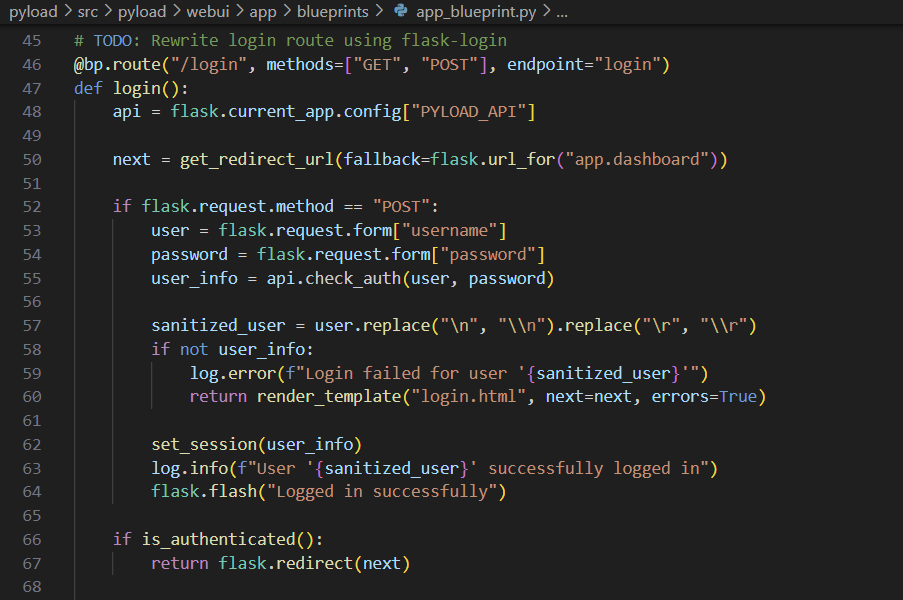\n\n\nThe URL entered in the `next` variable goes through the `is_safe_url` function, where a lack of validation can redirect the user to an arbitrary domain.\n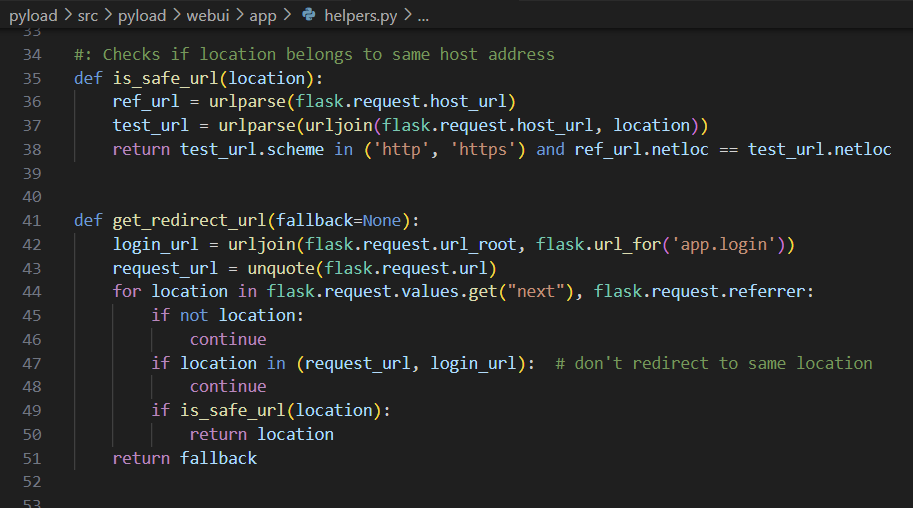\n\n\nThe documentation in the urllib library shows that improper URLs are recognized as relative paths when using the `urlparse` function. (https://docs.python.org/3/library/urllib.parse.html#urllib.parse.urlparse)\n\nFor example, When an unusual URL like `https:///example.com` is entered, `urlparse` interprets it as a relative path, but in the actual request it is converted to `https://example.com` due to url normalization.\n\n### PoC\n1. In the next variable, insert the URL to which you want to redirect the user.\n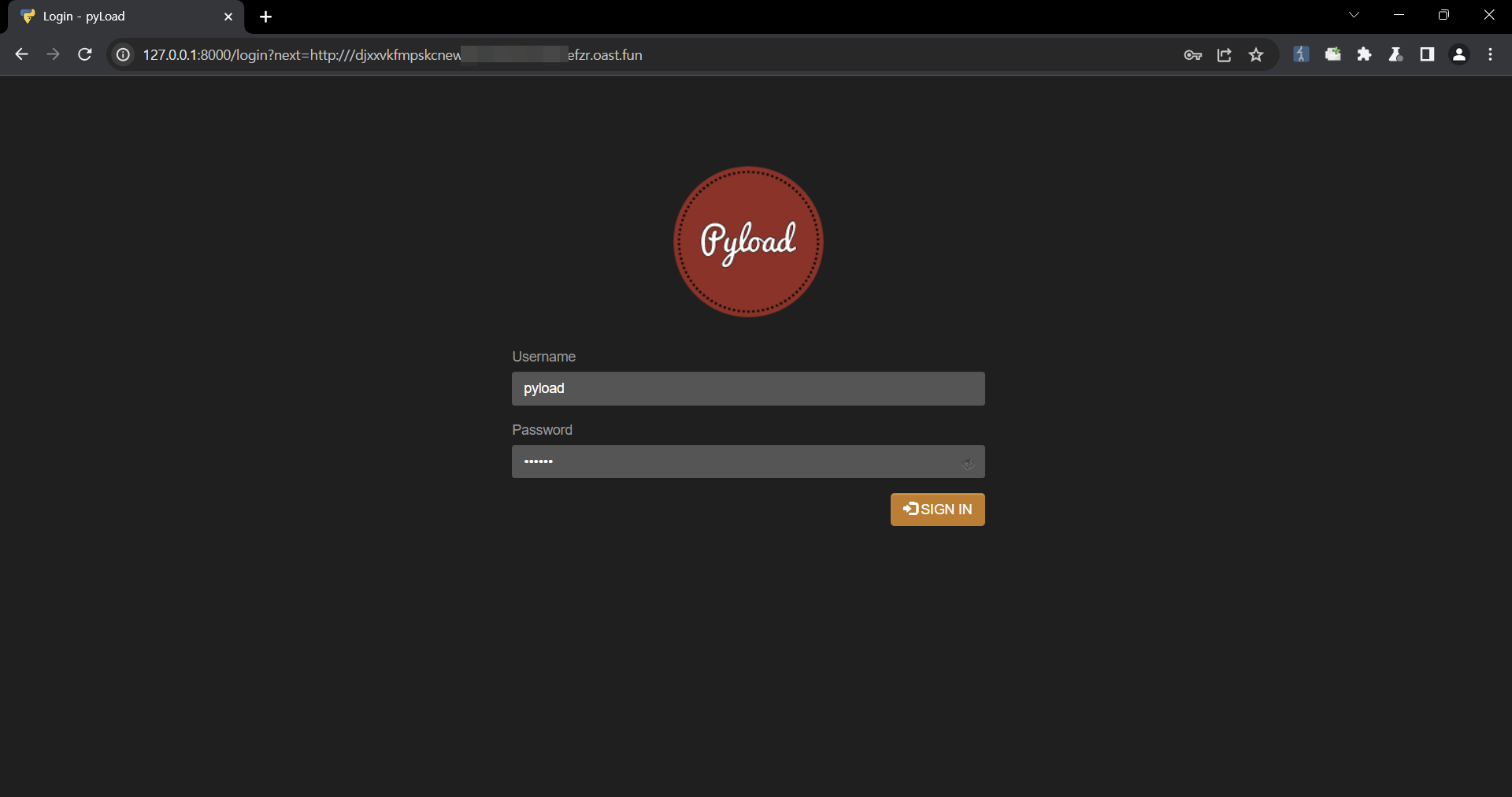\n\n\n\n2. Check that it is possible to bypass url validation and redirect users to an arbitrary url.\n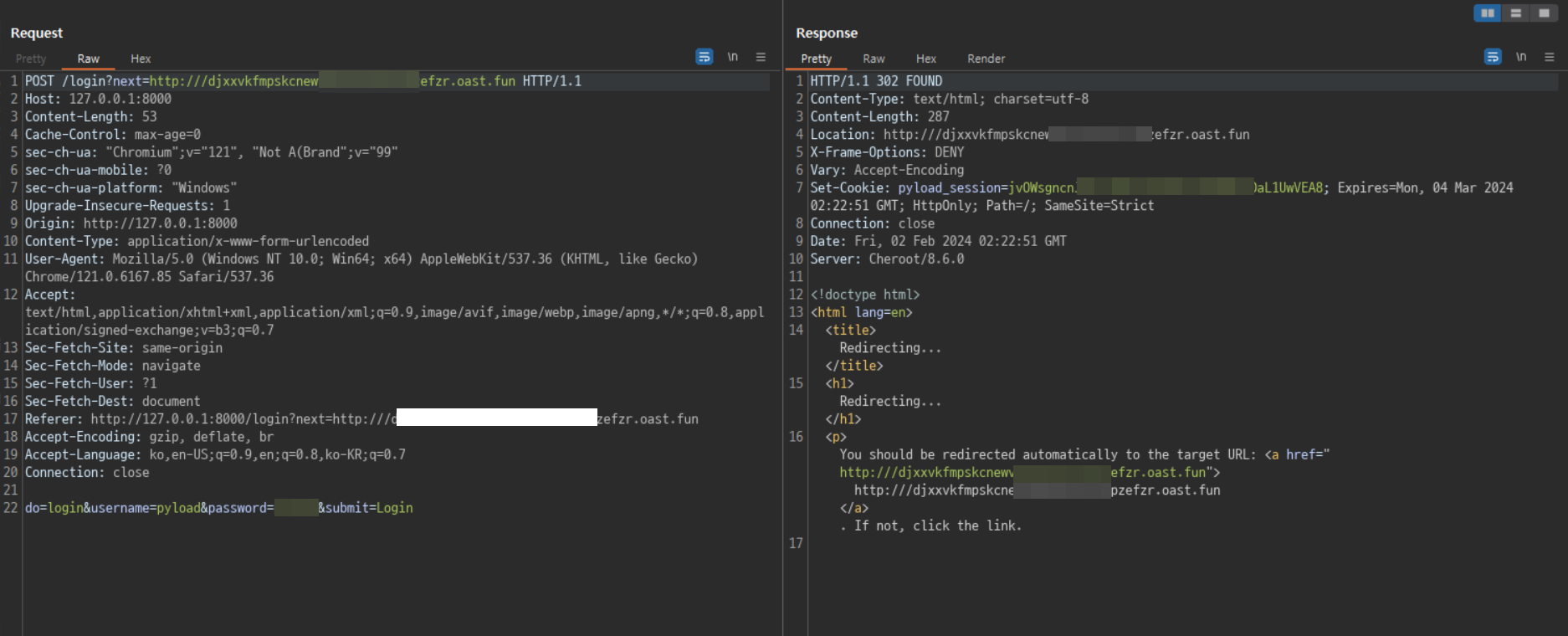\n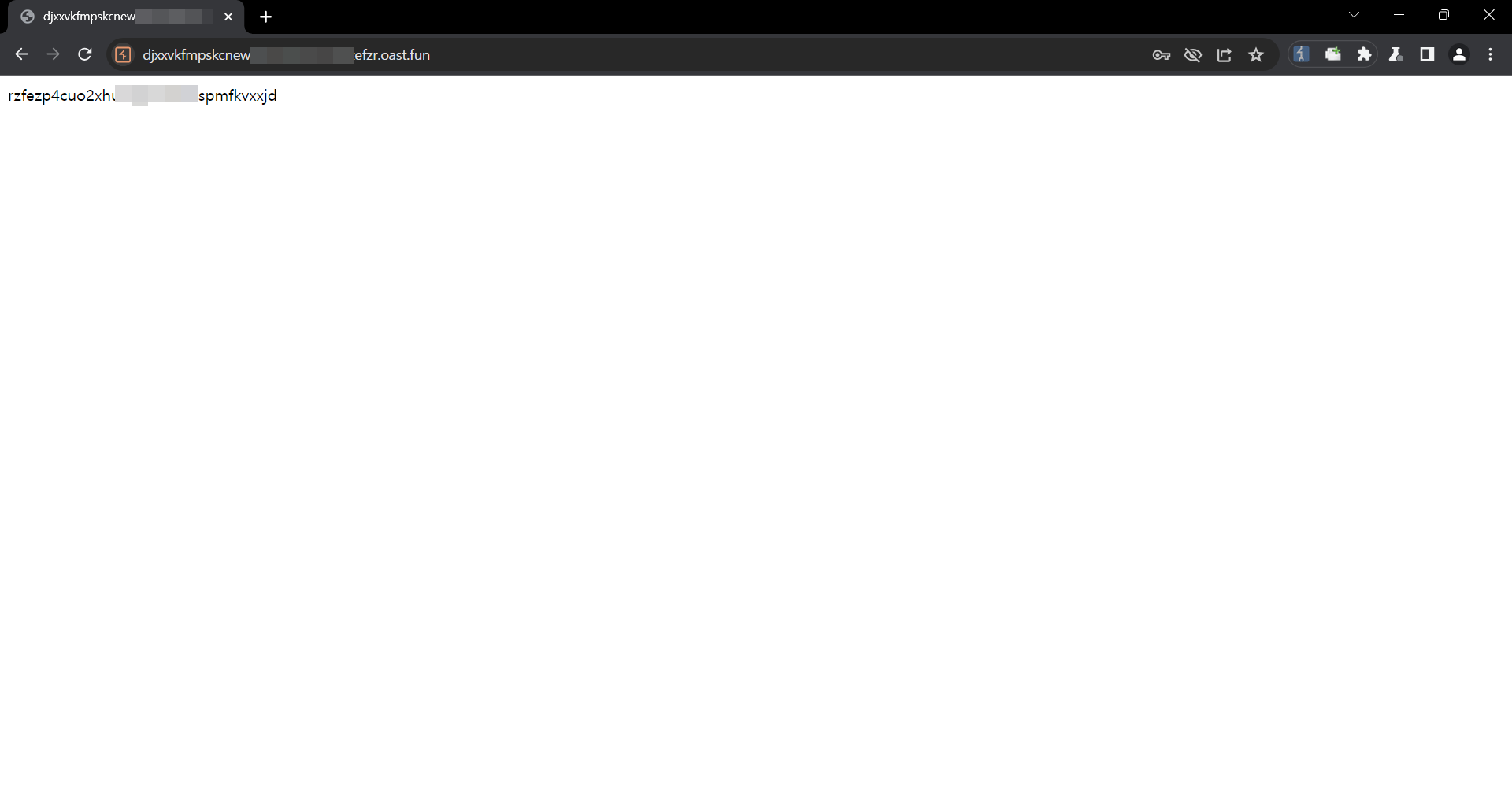\n\n\n\n### Impact\nAn attacker can use this vulnerability to redirect users to malicious websites, which can be used for phishing and similar attacks.\n",
"id": "GHSA-g3cm-qg2v-2hj5",
"modified": "2024-02-14T14:51:14Z",
"published": "2024-02-05T23:23:22Z",
"references": [
{
"type": "WEB",
"url": "https://github.com/pyload/pyload/security/advisories/GHSA-g3cm-qg2v-2hj5"
},
{
"type": "ADVISORY",
"url": "https://nvd.nist.gov/vuln/detail/CVE-2024-24808"
},
{
"type": "WEB",
"url": "https://github.com/pyload/pyload/commit/fe94451dcc2be90b3889e2fd9d07b483c8a6dccd"
},
{
"type": "PACKAGE",
"url": "https://github.com/pyload/pyload"
}
],
"schema_version": "1.4.0",
"severity": [
{
"score": "CVSS:3.1/AV:N/AC:L/PR:N/UI:R/S:C/C:L/I:L/A:N",
"type": "CVSS_V3"
}
],
"summary": "pyLoad open redirect vulnerability due to improper validation of the is_safe_url function"
}
GHSA-G3GF-MWJ7-2HC4
Vulnerability from github – Published: 2026-08-25 21:31 – Updated: 2026-08-25 21:31Coroot's unauthenticated MCP OAuth dynamic client registration endpoint accepts any syntactically valid redirect URI without validation, allowing attackers to register clients pointing to attacker-controlled hosts. Attackers can send authorization URLs to signed-in users, capture their authorization codes upon consent approval, and exchange them for access tokens to hijack MCP sessions.
{
  "affected": [],
  "aliases": [
    "CVE-2026-79786"
  ],
  "database_specific": {
    "cwe_ids": [
      "CWE-601"
    ],
    "github_reviewed": false,
    "github_reviewed_at": null,
    "nvd_published_at": "2026-08-25T19:16:54Z",
    "severity": "HIGH"
  },
  "details": "Coroot\u0027s unauthenticated MCP OAuth dynamic client registration endpoint accepts any syntactically valid redirect URI without validation, allowing attackers to register clients pointing to attacker-controlled hosts. Attackers can send authorization URLs to signed-in users, capture their authorization codes upon consent approval, and exchange them for access tokens to hijack MCP sessions.",
  "id": "GHSA-g3gf-mwj7-2hc4",
  "modified": "2026-08-25T21:31:29Z",
  "published": "2026-08-25T21:31:29Z",
  "references": [
    {
      "type": "ADVISORY",
      "url": "https://nvd.nist.gov/vuln/detail/CVE-2026-79786"
    },
    {
      "type": "WEB",
      "url": "https://github.com/coroot/coroot/issues/929"
    },
    {
      "type": "WEB",
      "url": "https://github.com/coroot/coroot"
    },
    {
      "type": "WEB",
      "url": "https://github.com/coroot/coroot/blob/v1.24.5/api/mcp_oauth.go"
    },
    {
      "type": "WEB",
      "url": "https://www.vulncheck.com/advisories/coroot-1.20.2-through-1.24.5-unvalidated-redirect-uri-in-mcp-oauth-client-registration"
    }
  ],
  "schema_version": "1.4.0",
  "severity": [
    {
      "score": "CVSS:3.1/AV:N/AC:L/PR:N/UI:R/S:U/C:H/I:L/A:N",
      "type": "CVSS_V3"
    },
    {
      "score": "CVSS:4.0/AV:N/AC:L/AT:N/PR:N/UI:A/VC:H/VI:L/VA:N/SC:N/SI:N/SA:N/E:X/CR:X/IR:X/AR:X/MAV:X/MAC:X/MAT:X/MPR:X/MUI:X/MVC:X/MVI:X/MVA:X/MSC:X/MSI:X/MSA:X/S:X/AU:X/R:X/V:X/RE:X/U:X",
      "type": "CVSS_V4"
    }
  ]
}
GHSA-G45Q-XH8V-2XR4
Vulnerability from github – Published: 2022-05-24 17:20 – Updated: 2022-11-16 12:00An issue was discovered in WSO2 Identity Server through 5.10.0 and WSO2 IS as Key Manager through 5.10.0. An open redirect exists.
{
  "affected": [],
  "aliases": [
    "CVE-2020-14446"
  ],
  "database_specific": {
    "cwe_ids": [
      "CWE-601"
    ],
    "github_reviewed": false,
    "github_reviewed_at": null,
    "nvd_published_at": "2020-06-18T18:15:00Z",
    "severity": "MODERATE"
  },
  "details": "An issue was discovered in WSO2 Identity Server through 5.10.0 and WSO2 IS as Key Manager through 5.10.0. An open redirect exists.",
  "id": "GHSA-g45q-xh8v-2xr4",
  "modified": "2022-11-16T12:00:19Z",
  "published": "2022-05-24T17:20:55Z",
  "references": [
    {
      "type": "ADVISORY",
      "url": "https://nvd.nist.gov/vuln/detail/CVE-2020-14446"
    },
    {
      "type": "WEB",
      "url": "https://cybersecurityworks.com/zerodays/cve-2020-14446-wso2.html"
    },
    {
      "type": "WEB",
      "url": "https://docs.wso2.com/display/Security/Security+Advisory+WSO2-2020-0713"
    }
  ],
  "schema_version": "1.4.0",
  "severity": [
    {
      "score": "CVSS:3.1/AV:N/AC:L/PR:N/UI:R/S:C/C:L/I:L/A:N",
      "type": "CVSS_V3"
    }
  ]
}
GHSA-G4C2-GHFG-G5RH
Vulnerability from github – Published: 2022-01-28 23:10 – Updated: 2024-10-21 20:59Impact
Plone is vulnerable to reflected cross site scripting and open redirect when an attacker can get a compromised version of the image_view_fullscreen page in a cache, for example in Varnish. The technique is known as cache poisoning. Any later visitor can get redirected when clicking on a link on this page. Usually only anonymous users are affected, but this depends on your cache settings.
Patches
A new version 3.0.6 of Products.ATContentTypes has been released with a fix. This version works on Plone 5.2 (Python 2 only) and will be included in Plone 5.2.7.
Note that the Products.CMFPlone package has the same problem in the 4.3 series.
plone.app.contenttypes has the same problem in all versions, see advisory.
For all unpatched versions of the three packages, you can use the following workaround.
Workaround
Make sure the image_view_fullscreen page is not stored in the cache. In Plone:
- Login as Manager and go to Site Setup.
- Go to the 'Caching' control panel. If this does not exist, or 'Enable caching' is not checked, you should normally not be vulnerable.
- Click on the tab 'Caching operations'.
- Under 'Legacy template mappings' locate the ruleset 'Content item view'.
- From the last column ('Templates') remove 'image_view_fullscreen'.
- Click on Save.
Reporter
This vulnerability was responsibly disclosed to the Plone Security Team by Gustav Hansen, F-Secure Consulting. Thank you!
For more information
If you have any questions or comments about this advisory, email us at security@plone.org This is also the correct address to use when you want to report a possible vulnerability. See our security report policy.
{
  "affected": [
    {
      "package": {
        "ecosystem": "PyPI",
        "name": "Products.ATContentTypes"
      },
      "ranges": [
        {
          "events": [
            {
              "introduced": "0"
            },
            {
              "fixed": "3.0.6"
            }
          ],
          "type": "ECOSYSTEM"
        }
      ]
    }
  ],
  "aliases": [
    "CVE-2022-23599"
  ],
  "database_specific": {
    "cwe_ids": [
      "CWE-601",
      "CWE-79"
    ],
    "github_reviewed": true,
    "github_reviewed_at": "2022-01-28T22:15:57Z",
    "nvd_published_at": "2022-01-28T22:15:00Z",
    "severity": "MODERATE"
  },
  "details": "### Impact\nPlone is vulnerable to reflected cross site scripting and open redirect when an attacker can get a compromised version of the image_view_fullscreen page in a cache, for example in Varnish.\nThe technique is known as cache poisoning.\nAny later visitor can get redirected when clicking on a link on this page.\nUsually only anonymous users are affected, but this depends on your cache settings.\n\n### Patches\nA new version 3.0.6 of Products.ATContentTypes has been released with a fix.\nThis version works on Plone 5.2 (Python 2 only) and will be included in Plone 5.2.7.\n\nNote that the Products.CMFPlone package has the same problem in the 4.3 series.\n`plone.app.contenttypes` has the same problem in all versions, see [advisory](https://github.com/plone/plone.app.contenttypes/security/advisories/GHSA-f7qw-5fgj-247x).\nFor all unpatched versions of the three packages, you can use the following workaround.\n\n### Workaround\nMake sure the image_view_fullscreen page is not stored in the cache.\nIn Plone:\n\n* Login as Manager and go to Site Setup.\n* Go to the \u0027Caching\u0027 control panel. If this does not exist, or \u0027Enable caching\u0027 is not checked, you should normally not be vulnerable.\n* Click on the tab \u0027Caching operations\u0027.\n* Under \u0027Legacy template mappings\u0027 locate the ruleset \u0027Content item view\u0027.\n* From the last column (\u0027Templates\u0027)  remove \u0027image_view_fullscreen\u0027.\n* Click on Save.\n\n### Reporter\nThis vulnerability was responsibly disclosed to the Plone Security Team by Gustav Hansen, F-Secure Consulting. Thank you!\n\n### For more information\nIf you have any questions or comments about this advisory, email us at [security@plone.org](mailto:security@plone.org)\nThis is also the correct address to use when you want to report a possible vulnerability.\nSee [our security report policy](https://plone.org/security/report).",
  "id": "GHSA-g4c2-ghfg-g5rh",
  "modified": "2024-10-21T20:59:14Z",
  "published": "2022-01-28T23:10:37Z",
  "references": [
    {
      "type": "WEB",
      "url": "https://github.com/plone/Products.ATContentTypes/security/advisories/GHSA-g4c2-ghfg-g5rh"
    },
    {
      "type": "ADVISORY",
      "url": "https://nvd.nist.gov/vuln/detail/CVE-2022-23599"
    },
    {
      "type": "WEB",
      "url": "https://github.com/plone/Products.ATContentTypes/commit/fc793f88f35a15a68b52e4abed77af0da5fdbab8"
    },
    {
      "type": "WEB",
      "url": "https://github.com/plone/Products.ATContentTypes"
    },
    {
      "type": "WEB",
      "url": "https://github.com/pypa/advisory-database/tree/main/vulns/products-atcontenttypes/PYSEC-2022-21.yaml"
    }
  ],
  "schema_version": "1.4.0",
  "severity": [
    {
      "score": "CVSS:3.1/AV:N/AC:L/PR:N/UI:R/S:U/C:L/I:N/A:N",
      "type": "CVSS_V3"
    },
    {
      "score": "CVSS:4.0/AV:N/AC:L/AT:N/PR:N/UI:P/VC:L/VI:N/VA:N/SC:N/SI:N/SA:N",
      "type": "CVSS_V4"
    }
  ],
  "summary": "Cross-site Scripting and Open Redirect in Products.ATContentTypes"
}
Mitigation MIT-5
Strategy: Input Validation
- Assume all input is malicious. Use an "accept known good" input validation strategy, i.e., use a list of acceptable inputs that strictly conform to specifications. Reject any input that does not strictly conform to specifications, or transform it into something that does.
- When performing input validation, consider all potentially relevant properties, including length, type of input, the full range of acceptable values, missing or extra inputs, syntax, consistency across related fields, and conformance to business rules. As an example of business rule logic, "boat" may be syntactically valid because it only contains alphanumeric characters, but it is not valid if the input is only expected to contain colors such as "red" or "blue."
- Do not rely exclusively on looking for malicious or malformed inputs. This is likely to miss at least one undesirable input, especially if the code's environment changes. This can give attackers enough room to bypass the intended validation. However, denylists can be useful for detecting potential attacks or determining which inputs are so malformed that they should be rejected outright.
- Use a list of approved URLs or domains to be used for redirection.
Mitigation
Use an intermediate disclaimer page that provides the user with a clear warning that they are leaving the current site. Implement a long timeout before the redirect occurs, or force the user to click on the link. Be careful to avoid XSS problems (CWE-79) when generating the disclaimer page.
Mitigation MIT-21.2
Strategy: Enforcement by Conversion
- When the set of acceptable objects, such as filenames or URLs, is limited or known, create a mapping from a set of fixed input values (such as numeric IDs) to the actual filenames or URLs, and reject all other inputs.
- For example, ID 1 could map to "/login.asp" and ID 2 could map to "http://www.example.com/". Features such as the ESAPI AccessReferenceMap [REF-45] provide this capability.
Mitigation
Ensure that no externally-supplied requests are honored by requiring that all redirect requests include a unique nonce generated by the application [REF-483]. Be sure that the nonce is not predictable (CWE-330).
Mitigation MIT-6
Strategy: Attack Surface Reduction
- Understand all the potential areas where untrusted inputs can enter your software: parameters or arguments, cookies, anything read from the network, environment variables, reverse DNS lookups, query results, request headers, URL components, e-mail, files, filenames, databases, and any external systems that provide data to the application. Remember that such inputs may be obtained indirectly through API calls.
- Many open redirect problems occur because the programmer assumed that certain inputs could not be modified, such as cookies and hidden form fields.
Mitigation MIT-29
Strategy: Firewall
Use an application firewall that can detect attacks against this weakness. It can be beneficial in cases in which the code cannot be fixed (because it is controlled by a third party), as an emergency prevention measure while more comprehensive software assurance measures are applied, or to provide defense in depth [REF-1481].
CAPEC-178: Cross-Site Flashing
An attacker is able to trick the victim into executing a Flash document that passes commands or calls to a Flash player browser plugin, allowing the attacker to exploit native Flash functionality in the client browser. This attack pattern occurs where an attacker can provide a crafted link to a Flash document (SWF file) which, when followed, will cause additional malicious instructions to be executed. The attacker does not need to serve or control the Flash document. The attack takes advantage of the fact that Flash files can reference external URLs. If variables that serve as URLs that the Flash application references can be controlled through parameters, then by creating a link that includes values for those parameters, an attacker can cause arbitrary content to be referenced and possibly executed by the targeted Flash application.